It helps to avoid bad habits. From the sound of your post you're already a player. That means you've probably either learned what you know by ear, or maybe had somebody show you. In your practicing, think of the names of the notes you're playing as you play them, whether or not you have to stop or slow down to accomplish it. You're learning the apphabet, not writing a paper on astrophysics. Just focus on learning the note names. Practice that until you are fluent up to the 7th fret or so. Then study some sheet music until you can identify those notes on a regular musical staff.
At that point you will be able to jot down whatever you can play, albeit without the benefit of key signatures, rests, time signatures, note durations, etc. Learn about those as you go. One good course in theory would get you to that point and beyond, and save you a lot of time. I learned it in high school.
A thing that helps in sight reading is getting to know what intervals sound like. 3rds, 5ths, etc. should be so familiar you can hear them in your head (I still use an old Link Wray tune to mentally visualize a 4th interval).
One more trade secret. Find a way to make it fun to do.
Good luck.
Tom
At that point you will be able to jot down whatever you can play, albeit without the benefit of key signatures, rests, time signatures, note durations, etc. Learn about those as you go. One good course in theory would get you to that point and beyond, and save you a lot of time. I learned it in high school.
A thing that helps in sight reading is getting to know what intervals sound like. 3rds, 5ths, etc. should be so familiar you can hear them in your head (I still use an old Link Wray tune to mentally visualize a 4th interval).
One more trade secret. Find a way to make it fun to do.
Good luck.
Tom




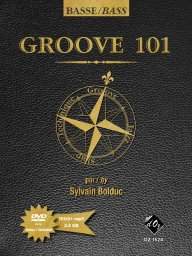
 What I do recommend, though, is to build a library of method books that interest you and alternate between them. It's good to follow a comprehensive method to completion and I advocate doing that, but it's also good to mix in exercises from other sources - ones that focus on other things or teach in a different way - because it forces you to read things that may not follow some of the familiar patterns of the method you use most of the time. Reading from other bass clef instruments can also be fun and challenging (trombone music can be fun to play on bass. And hard!). I also find it helpful to take exercises from texts and transpose them to all 12 keys and that's a good exercise you can do when you're away from the instrument.