
Enjoy the benefits of a premium membership!
Upgrade Account
-
TalkBass has been independent since 1998. Add your voice.
Create a free account to reply to discussions, view embedded media, and browse with fewer display ads.
Join free Log in
Want zero display ads or expanded classifieds tools? Compare plans.
You are using an out of date browser. It may not display this or other websites correctly.
You should upgrade or use an alternative browser.
You should upgrade or use an alternative browser.
Real Book Fun!!
- Thread starter RocketMusic
- Start date
More options
Who Replied?
Are they TI's you have on that bass, like your fretted?
Yep, I've got TI Jazz Flats on all my personal basses now. Roundwounds just feel wrong to my fingers. I may go back someday, but it'll probably be an all or nothing affair if I do...

I recently picked up a great new book that is really helping my reading. It's called "30 Etudes For String Bass" by Franz Simandl. Even better, I found a more recent book that repackages these old etudes along with 4 audio CDs that include piano accompaniment both with and without the bass part included. That second book is by Andrew Kohn, and I grabbed it here.
I'm forcing myself to read and play the parts before I listen to Mr Kohn's playing. What I had been doing previously was reading songs that I already knew, and that wasn't really helping me dissect the rhythms on the page. It was helping me identify the pitches, but that's about it. So now I'm moving onto deciphering rhythms on the fly, and it's getting easier the more I do it. I can't recommend this book enough if you're looknig to get better at reading. And I should tip the hat to Jerry's buddy Blyss who hipped me to this book in one of his youtube videos.
Anyway, here's a quick stab at recording the first etude in the book. I'm using my Roscoe fretless going direct through my REDDI by A-Designs. There are a few intonation and rhythm issues in the clip, but I have to tell you that I'm absolutely ecstatic to be able to say "I read that".
"Etude #1" (Franz Simandl)
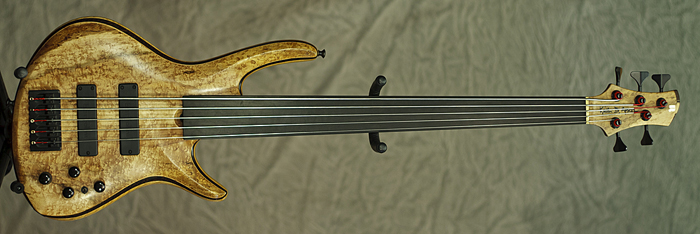
And in case you're wondering - no, classical is not my forte. I think I can honestly say this is the first time I've ever played anything classical on bass. It's a lot of fun, and it's definitely forcing me to play differently. Between rhythm, intonation, note duration, volume, vibrato & tone... there are a lot of factors to control!
Really cool Greg. I love the tone that you're getting with your fretless and definitely a cool sounding piece of music.
It is really challenging to read stuff like that for me. I was getting decent at it while I played with our church orchestra a couple of years ago but I really had issues turning pages and jumping from codas to specific places in the music. I finally started taping the sheets together and using 2 music stands to play.
What a different world from rock and roll!

By the way, I forgot just how nice your Roscoe fretless looked. Very good looking Roscoe!
.. and I like the TI flats too!
As an Amazon Associate, TalkBass may receive commissions from qualifying purchases made via links on this site.
LOL. Great story about the two stands, Joe. I could see myself doing that. Thankfully, these etudes are all just two pages or less, and the book is laid out so that no page turning is required.
Now that my youngest son is learning cello and I'm really pushing myself to learn to read, I find myself paying closer attention whenever I happen across any concert footage of an orchestra. One recurring thought I have is that these guys (in the orchestra) are not rocket scientists who are simply smarter than me. If they can read, I should be able to read. They've put in the work, and I haven't. Time to fix that. How's that for inspiration?!?
Now that my youngest son is learning cello and I'm really pushing myself to learn to read, I find myself paying closer attention whenever I happen across any concert footage of an orchestra. One recurring thought I have is that these guys (in the orchestra) are not rocket scientists who are simply smarter than me. If they can read, I should be able to read. They've put in the work, and I haven't. Time to fix that. How's that for inspiration?!?
If youse guys ever wanna' look at some big band charts, let me know. As if the little black dots aren't enough, try a nine-page chart, outdoors on a windy day, two clips, and one stand.
The Simandl 30 Etudes book is familar to anybody who has studied classical bass for sure. I was aware of but hadn't heard the accompaniments for them before. As a teaching tool I think they take away from the exercises (assuming your goal is learning to make a good sound with double bass and connect phrases), but for working on reading it is nice to have a reference. I hadn't thought of pulling any of those books out for electric bass but it's not a bad idea.
I have used and enjoyed these in the past, but not on my Roscoes. I picked up a set for my SKB that I've been holding off installing in case it sells. Pretty soon I think I will pull it from the market and set it up with the TI flats. It's a fantastic sounding bass and hearing Greg's clips with those strings is only inspiring me more... and I like the TI flats too!
Yeah, I just don't have the patience to sit through "reading" books that start with "Mary Had A Little Lamb" and work their way up to "Frere Jaques". These etudes are more challenging and more musically ambitious. I don't mind spending an hour working through 64 bars of interesting rhythm and harmony.
I think there's a lot to be learned by electric bassists from the long history of cello and double bass. Especially if you do any fretless playing. That will take you down a more classical path, for sure, which I guess you could debate whether there's any real value there for a Blues/R&B Bassist like myself. I personally think there is a great deal of value there, especially with regards to developing/improving my reading and vibrato skills.
At some point, I'm sure I'll revisit jazz with a hopefully better understanding of reading, theory and... all that jazz!
I think there's a lot to be learned by electric bassists from the long history of cello and double bass. Especially if you do any fretless playing. That will take you down a more classical path, for sure, which I guess you could debate whether there's any real value there for a Blues/R&B Bassist like myself. I personally think there is a great deal of value there, especially with regards to developing/improving my reading and vibrato skills.
At some point, I'm sure I'll revisit jazz with a hopefully better understanding of reading, theory and... all that jazz!
The great thing about these etudes vs. childhood songs is you don't know them already so you don't cut corners by playing what you know sounds right, you just play what is on the page.
It is interesting though. I learned to read on electric playing classical and jazz about equally in high school. In university I started playing double bass and continued studying classically on that, while continuing to play jazz on electric. Then to complicate things further I started tuning my double bass in fifths so my approach to reading is really separate from one instrument to the other. On electric I tend to think in a jazz (or pop/rock/etc.) context and 4 finger positions (+ extensions). On DB my brain thinks classical, fifths tuning and 3 finger positions (+ extensions).
It would probably do me some good to try to break down the mental barrier separating the two approaches, but for now they are very separate in my mind.
It is interesting though. I learned to read on electric playing classical and jazz about equally in high school. In university I started playing double bass and continued studying classically on that, while continuing to play jazz on electric. Then to complicate things further I started tuning my double bass in fifths so my approach to reading is really separate from one instrument to the other. On electric I tend to think in a jazz (or pop/rock/etc.) context and 4 finger positions (+ extensions). On DB my brain thinks classical, fifths tuning and 3 finger positions (+ extensions).
It would probably do me some good to try to break down the mental barrier separating the two approaches, but for now they are very separate in my mind.
Hah - is tuning a double bass in fifths common? I have to say that watching my son's fingers on cello hurts my head... the patterns are all different. The kids that are learning to play bass in the same strings program have their basses tuned E-A-D-G, while the cellos, violas and violins are all tuned in fifths.
Hah - is tuning a double bass in fifths common? I have to say that watching my son's fingers on cello hurts my head... the patterns are all different. The kids that are learning to play bass in the same strings program have their basses tuned E-A-D-G, while the cellos, violas and violins are all tuned in fifths.
Not really all that common. Red Mitchell tuned in 5ths and there are a handful of other players.
Correct, Red Mitchell is the notable jazz player for using that tuning although there are others. Classically it was once fairly common (as were many other tunings - the double bass is a relatively new instrument compared to other strings so they were still deciding on a standard until maybe 100 years ago). These days fourths from E are standard, which led to that being standard on the electric bass also. Orchestral music often calls for lower notes however which leads to people getting C extensions that go up over the scroll.
EADG with a C extension is probably the most common in the classical world, but 5 string double basses are starting to become more popular and tuning in fifths is having a bit of a revival for both the lower notes and also the intonation and phrasing being a lot more in line with what the other strings are doing, particularly when we double the cellos.
Joel Quarrington is probably the most well known contemporary player in fifths, though his students are now starting to proliferate orchestras around the world and are teaching students of their own. Joel is equally at home playing solo/chamber music or behind the stand in a section.
Some nice clips:
http://youtu.be/Bcz0q6yReTc
http://youtu.be/coC72ze2kew
Invalid Link Removed
Sorry for the thread derail! Oh wait, that's what we do around here...
EADG with a C extension is probably the most common in the classical world, but 5 string double basses are starting to become more popular and tuning in fifths is having a bit of a revival for both the lower notes and also the intonation and phrasing being a lot more in line with what the other strings are doing, particularly when we double the cellos.
Joel Quarrington is probably the most well known contemporary player in fifths, though his students are now starting to proliferate orchestras around the world and are teaching students of their own. Joel is equally at home playing solo/chamber music or behind the stand in a section.
Some nice clips:
http://youtu.be/Bcz0q6yReTc
http://youtu.be/coC72ze2kew
Invalid Link Removed
Sorry for the thread derail! Oh wait, that's what we do around here...
Wow.
That is all.
OK, thanks, too. Sheesh. That's some inspiration, eh?!?
Wow.
Wow.
That is all.
OK, thanks, too. Sheesh. That's some inspiration, eh?!?
Wow.
One more, not Joel, but I heard him play this piece live a few years back and that was enough to hook me:
If you want to see something difficult. Here's a fairly recently North Texas grad, Craig Butterfield, who I believe is now teaching in S. Carolina.
If you want to see something difficult. Here's a fairly recently North Texas grad, Craig Butterfield, who I believe is now teaching in S. Carolina.
Nobody should be that good.
 Congrats to him, he's a beast.
http://airturn.com/
Here ya go Joe. One of the guitarist at church uses this, pretty cool.
Very Cool Dave! I guess that it just goes to prove that if there's a need, someone will come up with something to address it!

With a light dusting of snow last night and the county's decision to close the schools today, I had the chance to spend the day with my youngest son at the store today. We had his cello, so we decided to record one of the little songs he's been working on in his cello lessons. This is probably a recording that only a father can love, but it gave me a chance to record another bass that I had yet to put in a sound clip. If you love slightly out of tune cello playing, by all means listen to the complete mix. If you just want to hear the Lull, skip to the naked bass track.
Oh - and I'm now able to sight read easy stuff like this!! Hoorah for me!!
Here are the clips:
"Lightly Row" (Complete Mix)
"Lightly Row" (Bass only)
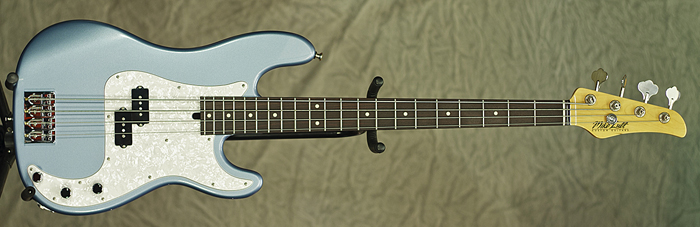
I played my part using this active Mike Lull P4 with the EQ set flat. The signal chain was: Lull P4 -> Invalid Link Removed -> A-Designs EM-Gold Preamp -> M-Audio FastTrack Ultra 8R USB Interface
Oh - and I'm now able to sight read easy stuff like this!! Hoorah for me!!
Here are the clips:
"Lightly Row" (Complete Mix)
"Lightly Row" (Bass only)
I played my part using this active Mike Lull P4 with the EQ set flat. The signal chain was: Lull P4 -> Invalid Link Removed -> A-Designs EM-Gold Preamp -> M-Audio FastTrack Ultra 8R USB Interface


