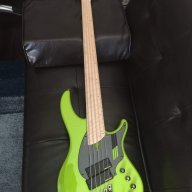
Hello fellow bassplayers,
This Saturday and Sunday I'm going out of town with my band to record at a professional music studio. Every one of my bandmates have already recorded before, however I haven't at least not professionally. We are only taking instruments since apparently the producer has loads of amps at his studio. I honesty have no worries, I always try to stay confident, but I do have a minor question in mind. Does it matter if I use a passive or active bass for the recording? If it does make a difference, which should I use? The active bass is an Ibanez SR605 and the passive bass is a Cort Action V. The Cort was my first bass and even though it was pretty cheap it has been very reliable and I consider it a good bass. The Ibanez, on the other hand, I love lol this may not be a big deal but oh well I would just like to know if the electronics will have a negative impact on my sound quality during the recording.
This Saturday and Sunday I'm going out of town with my band to record at a professional music studio. Every one of my bandmates have already recorded before, however I haven't
at least not professionally. We are only taking instruments since apparently the producer has loads of amps at his studio. I honesty have no worries, I always try to stay confident, but I do have a minor question in mind. Does it matter if I use a passive or active bass for the recording? If it does make a difference, which should I use? The active bass is an Ibanez SR605 and the passive bass is a Cort Action V. The Cort was my first bass and even though it was pretty cheap it has been very reliable and I consider it a good bass. The Ibanez, on the other hand, I love lol this may not be a big deal but oh well I would just like to know if the electronics will have a negative impact on my sound quality during the recording.