
I get that, but I will say, all of my "fender" stuff is warmothThat's a good option.warmoth has some nice stuff,but my bass is my bass.i want my body of my bass that I have now.

TalkBass has been independent since 1998. Add your voice.
Create a free account to reply to discussions, view embedded media, and browse with fewer display ads.
Join free Log in
Want zero display ads or expanded classifieds tools? Compare plans.
I get that, but I will say, all of my "fender" stuff is warmothThat's a good option.warmoth has some nice stuff,but my bass is my bass.i want my body of my bass that I have now.

Also what kind of paint is that old school vintage paint that fender used back in the day that is highly desirable? The paint that fades,chips,wears,scratches,dings and dents easy. Is that nitro or what is it?

$$ isn't an issue, and yes I love my p bass body.its the whole character of the bass.the work being done, the sanding a new paint. The refinish.the things it's been through. I wouldn't give that up for a new bodyCorrect - that is nitrocellulose. Also keep in mind that if you send a pro your body as it is, you're going to spend at least $350-400 on a refinish after shipping is factored in. Unless you absolutely love your existing P body (or for some reason it's sentimental), it may be best to buy a finished body from Warmoth or MJT and sell your old body.
You know, I've been using a heat gun on & off on a 96 MIM P body for months now and that shizzz takes forever to come off! On mine, there's like 5 layers of paint, some sort of sealer, and a clear layer that is almost like super glue near the edges of the body. It's super frustrating. I'm debating switching to a chemical stripper for the rest!!!

Also what kind of paint is that old school vintage paint that fender used back in the day that is highly desirable? The paint that fades,chips,wears,scratches,dings and dents easy. Is that nitro or what is it?
That looks very well done judging the picture. With that said, who is pat Williams?




I just had my Fender American Jazz Deluxe FMT refinished by Marty Bell. He does impeccable work (as does Pat Wilkins). It's least expensive if you take everything (yes everything) off the bass yourself. Then, since most modern mass-produced finishes are polyester for which there is no solvent, the finish has to be sanded off. There may be an upcharge for this. Then the refinishing can commence - sealer, color coats, clear coat, with sanding in between each coat. I did a thread on my recent refinish (I just got it back and reassembled it yesterday), but here are before and after pics.Just a quick thought and more or less just wondering about this... An idea has run through my head to have my black fender p bass sanded down and painted a different color. I won't won't be attempting to do this myself, I'm going to hire a professional. I know people have had their instruments refinished with a different color. I kinda would like a different color but I most likely won't have it done. Can anyone share their stories/experience refinishing and painted/changing the color. And can someone explain the whole process


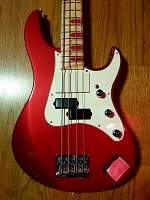
I don't know of anyone out there better than Pat - but Marty's just as good. Since you live in L.A. Pat's good for you. I used Marty because he's local to me. I have several basses that Pat put the finish on, including the pink Lakland. Mine took just under two weeks.I bought this mini P-bass ($150) a couple of weeks ago specifically to paint it sea foam green after I was pushed over the edge when seeing the color on a Les Paul, then later that day reading a thread here on sea foam green basses, then later watching a car restore program of a sea foam green 50s truck. Too many coincidences to let it go. I thought I would do it myself until I watched a YouTube video and realized I did not want to take that on. My luthier recommended Pat Wilkins and after I saw his web site, I immediately took it over to him in the Los Angeles valley. It will be about $270 and take about 2-3 weeks. Pat said I timed it well to be done quickly. (Good guy, had a nice conversation about the small basses I play.) I'm going to make a pearl pickguard and add pearl block fret markers.
View attachment 709475
I have several basses that Pat put the finish on, including the pink Lakland. Mine took just under two weeks.

Why did you choose poly instead of nitro if you don't mind me asking?I did my own refinish last spring because I had the time (two months) and the spring weather was nice for working outdoors. I took my bass to a local mandolin builder and he gave me lots of advice which I wrote down and followed. I waited 8 days between each coat of poly and after two coats I stopped - it really looks good with just two coats. Sanded it about 8 or 9 times total. Smooth and I get a kick when anyone comments on how nice it looks.

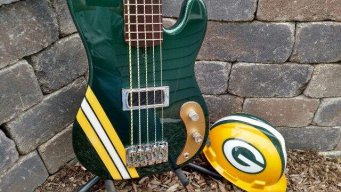
 I play a Warwick which as far as I know has never used Nitro. Sorry I didn't notice that this post is only for Fenders, so that is why no Nitro. Anyway I spent about 8 weeks working about two hours a day every day, then about one hour every 8 days. My neck and fingerboard are Wenge, and the body is Swamp Ash, and it was originally a matt finish of the wood - no color or sheen. It was very dirty when I purchased it back in 2005 but I'd never done a good cleaning. I have seen several re-do's of old Warwicks where they put on a color finish, then covered it with poly, so that's what I did. The builder down the street said the 'wood marks' go deep so I'd never get them all out. I'm just a beginner in all of this but I'm happy with the results. I added a few photos. Bass is a 1994 Warwick Fortress One 5-string, both active and passive. Maybe someone will begin with what I did and do a much better job themselves - with their Fender!
View attachment 712495 View attachment 712497 I play a Warwick which as far as I know has never used Nitro. Sorry I didn't notice that this post is only for Fenders, so that is why no Nitro. Anyway I spent about 8 weeks working about two hours a day every day, then about one hour every 8 days. My neck and fingerboard are Wenge, and the body is Swamp Ash, and it was originally a matt finish of the wood - no color or sheen. It was very dirty when I purchased it back in 2005 but I'd never done a good cleaning. I have seen several re-do's of old Warwicks where they put on a color finish, then covered it with poly, so that's what I did. The builder down the street said the 'wood marks' go deep so I'd never get them all out. I'm just a beginner in all of this but I'm happy with the results. I added a few photos. Bass is a 1994 Warwick Fortress One 5-string, both active and passive. Maybe someone will begin with what I did and do a much better job themselves - with their Fender!
Here is a quick description of the process: Howards' Feed and Wax on neck, Brasso on frets. Cleaned body with Tru Oil and paper towel, then with acetone and paper towel. Then began sanding with 320 grit and moving to 600 grit. (wet slightly w/mineral spirits). Then cleaned again with denatured alcohol. Sanded again. Cleaned again w/naptha. Sanded again. Began putting Danish Oil finish on, letting dry, then sanding a lot! After about 4 coats of Danish Oil I put on two coats of poly finish, letting it dry 8 days and sanding a lot with the 600 or 800 grit. I should have sanded more but I'm happy with the results. Total time in it is maybe 50 - 60 hours.View attachment 712495 View attachment 712497
View attachment 712495 View attachment 712497


