• TalkBass has been independent since 1998. Add your voice.
    Create a free account to reply to discussions, view embedded media, and browse with fewer display ads.
    Join freeLog in
    Want zero display ads or expanded classifieds tools? Compare plans.

Replacing a broken nut?

djbass28

Guest
Apr 15, 2014
91
26
My p bass fell down last night and the nut was smashed. I thought about taking it in to guitar center but when reading around on their prices I decided I didn't want to pay 40 dollars for something I could buy online and install myself for 10.
How hard is it to put a nut in a bass?
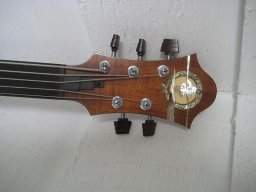
 
It's easy to put a nut on a bass. It's not as easy to fit it properly and get the slots cut to exactly the right depth. If you're handy and have a set of needle files, a good, sharp mill file, some emory boards (the kind used at beauty salons to polish nails), a couple of hours and a lot of patience, go for it. It's a very good thing to know how to do. You can probably find a dozen tutorials online (I'm guessing... I haven't looked.

On the other hand, if you just want it done, I suggest you just get it done by a pro.
 
  • Like
Reactions: lz4005 and Ewo
My p bass fell down last night and the nut was smashed. I thought about taking it in to guitar center but when reading around on their prices I decided I didn't want to pay 40 dollars for something I could buy online and install myself for 10.
How hard is it to put a nut in a bass?
Fell in your lap? "The" nut? Were you in a previous accident?
I would take it to a competent guitar tech/luthier. They will have the tools and experience. Of course you could buy tools and get some experience doing this. It is really your call. Me? I wouldn't do it, but that's me.
 
  • Like
Reactions: djbass28
OP, ya know how the bridge saddles determine the string height _at their end_ of the string? Well, the depth of the nut slots determines the string height at the headstock end of the fretboard. The replacement part is cheap, but as Lo-E said, above, the tricky part is the hand-fitting of the new nut to your bass so the action feels good. And there's more to it than just the depth: angle of the cut (witness point should be the edge of the nut nearest the frets) and width/contour of the slot matter, also.

It's a good thing to learn, if you're interested in learning to do your own maintenance. But don't feel too mad at yourself if you mess the first try up.
 
If you have never replaced a nut before, get 2, as you are very likely to make a mess of your virgin attempt. The first thing you have to determine is whether your nut has a flat or radius bottom, Purchase accordingly. From there, you in all likely hood need to cut the slots deeper. This is best done with dedicated nut files, but skilled hands can do it with Home Depot files. Me? I prefer having the nut files on hand as I have yet to see a bass roll out of a factory with the nut slots filed low enough. Most basses seem to come set up to pound the living snot out of open strings, which is not something I've ever found myself doing.
 
  • Like
Reactions: lz4005
You can find a good precut replacement on eBay specially made for you bass. Installed without glue. Install the strings aligned it. See if you have tho file the height. When everything is set take out the strings and glue it. Let it dry for a few hours. Install the strings and tune. Done deal! Save the $40 bucks.
 
A couple of things I would add regarding that video:
Put some masking tape on the fingerboard before you start filing. Two layers. Keeps you from marring the board when you slip (not if... when! ;) )
The file he used worked, but it was pretty big for that job. Try to get some cheap needle files or ignition files. They're a lot easier to control for this.
Feeler gauges are nice, but not necessary. Start with the strings too high and gradually lower them until it feels comfortable. If I hold the string down between the second and third fret, tapping the string at the first fret will generate just a light 'click' as the string hits the fret. That's what you're looking for: just a tiny gap between the string and the first fret when you hold the string down between the second and third. How big a gap? That's a matter of personal preference that hinges on how you play, how your truss rod is adjusted and what strings you use. Best to do a little at a time. Sometimes I'll stop short of perfect, play it for a week or two and then go back for the final adjustment.
Lastly, I wouldn't use superglue to hold a nut down. It's hard to release later if you need to. The strings do a fine job of holding a well-fitted nut down on their own, so if the fit is tight, I don't glue it at all. If it's not so tight, I use just a dot or two of plain, ol' Elmers white glue. It's more than enough.
 
Well yesterday I got the nut in. I took the one a bought and glued it to my old broken one so I could get it equal to the original. I used an exacto knife and sandpaper to shave it down. The one I bought was flat on the bottom but I had I give it a curve to fit the radius of the neck in the nut slot, but I think it worked. I put it in then sanded the string slots to be wider and lower.
I put strings in and it sounds the same as before so I think I did alright. Saved myself 40 bucks :)
 
Well yesterday I got the nut in. I took the one a bought and glued it to my old broken one so I could get it equal to the original. I used an exacto knife and sandpaper to shave it down. The one I bought was flat on the bottom but I had I give it a curve to fit the radius of the neck in the nut slot, but I think it worked. I put it in then sanded the string slots to be wider and lower.
I put strings in and it sounds the same as before so I think I did alright. Saved myself 40 bucks :)
Yay! Now you can give advice for the next nut question that pops up.
 
If the slots are good but the but nut is too high across the entire width, don't file the slots, sand down the bottom of the nut until the strings are the proper height. I've bought a couple of nice pre-slotted nuts off ebay that just needed sanding or shimming so I haven't had to invest in an expensive set of files.

To ensure the bottom stays flat and at a right angle, I put the sand paper on a piece of glass and use a board with a good edge as a sanding guide. Doesn't cost you anything extra if you already have the sand paper, a board, and a small piece of glass or some other really flat surface.