• TalkBass has been independent since 1998. Add your voice.
    Create a free account to reply to discussions, view embedded media, and browse with fewer display ads.
    Join freeLog in
    Want zero display ads or expanded classifieds tools? Compare plans.

Responsible use of amp power

New to amp power and speaker cabinet matching, as I’ve used combo amps most of my career.

I asked an Eminence tech if a speaker rated 225 watts was properly paired with an amp designed at 600/300.

His response: “If the cabinet was properly designed and you used the amp power responsibly, yes.”

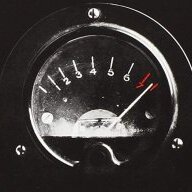
So what is responsible use - keep it at 7?

Nearly all manufacturers of mass-produced speaker cabs publish the "thermal" rating of the cab (that's the wattage that would melt the voice coil). A cab's *mechanical* rating (which most manufacturers wanna keep hush hush), is usually only about half its thermal rating. Manufacturers wanna sell speaker cabs, so they don't publish the less impressive sounding mechanical rating. So, for example, if you are looking at a cab rated at 500 watts, you should assume that it can actually safely handle about 250 watts before causing mechanical damage to the speaker (commonly referred to as "blowing the speaker"). As always, there are exceptions. Boutique cabs such as Barefaced, Audiokinesis, Bergantino, and Greenboy cabs are much more capable of handling their published wattage ratings.

Hope that info helps! :thumbsup:
 
  • Like
Reactions: Mike Whitfield
Everybody (not necessarily the OP) seems to want a magic combination of XXX watt speaker and XXX watt amp that works no matter what you do to it. The fact of the matter is you're not working with absolutes. If you were feeding a specific tone at a specific voltage to a specific amp, you might be able expect a predictable outcome. But your signal is dynamic and there are so many variables in that signal that nothing is predictable. Add some pedals in front of that and the variables just keep adding up. The only thing that came close to being indestructible, in my experience, would be an '80's era Peavey bass amp with un-defeatable DDT compression. We put those things through the ringer. Some of them still survive today.
 
Granted, I'm not a pro speaker designer, and a lot of what I "know" is theory. But I've played with modeling speakers using mixtures of harmonics rather than pure tones.

Something I've learned, that I think is worth mentioning, is that your EQ might affect the power handling of your speaker. If your amp has a relatively flat voicing and you leave the tone knobs alone, then your bass may be putting out mostly harmonics. In that case, the thermal limit of the driver might be more important than the mechanical limit.

Vice versa for the situation where you play with bass-heavy EQ voicing, in which case you're more likely to test the speaker's mechanical limits.
 
  • Like
Reactions: Mike Whitfield
when you hit the " fartout" factor which is a generic word for high distortion.
well that is the end.

its all common sense. you can run a 100 watt speaker with 1000 watts.
when you hit distortion that is about it. common sense would be to not push it any further.

the real issue is how much SPL or sound pressure level you need to reach.
basically how loud is your band. its not a matter of will the speaker be fine
it a matter of how many speakers do you need to reach the levels you want before distortion. 1x 2x 4x 8x etc etc drivers.

some guys even like a little speaker distortion. then it becomes a art of knowing how much power you can push.
riding a nice level of speaker breakup and distortion.

modeling can help see where cone excursion will be. but in the end usually now days
the thermal rating is way higher than when the speaker actually hits distortion.
thermal rating is how much heat the driver can dissipate. and has to do mainly with
the glues that hold the wires to the voicecoil former and the voicecoil former they are bonded too. eventually to much heat will expand and swell the former and it will rub or lock up in the gap. otherwise a " blown" speaker can be caused by pushing it to hard and it destroys the paper cone or literally smacks the back of the magnet gap

so a " 250" watt speaker speaker might hit 10% distortion at around 80 to 120 watts.
likewise if your using a " 400" watt amp you might only be using 200 to 250 watts.

assume a 3 to 4mm xmax live sound speaker to really do 60 to 80 watts per driver
and 5 mm driver to be around 90 to 160 watts.

so your basic 2x15 or 4x10 standards are good for about 250 to 330 watts before 10 to 15% distortion. and yes deep bass notes or boosted EQ below 100 hz can push that lower
assuming fairly typical 3 to 4mm xmax drivers.
how " loud" they get is not always a matter of wattage its the sensitivity of the system and how well they move air. some drivers being low for live sound around 91 to 94dB then some are very high around 98 to 100 dB.

and manufactures ratings are technically correct but its based on a average rating
so expect a ' 98 dB" speaker to most likely be about 2 to 3dB lower in the lowend.
that is kinda a blanket statement, and looking at the actual test chart or spl chart will give you a idea what the driver really does. likewise show you response peaks that make the average seem higher

also a modeled speaker wont average in response peaks from the cone. it gives a more real world sensitivity number based on the mechanical and electrical property of the voicecoil/cone. likewise shows the realistic bandwidth based upon the inductance of the voicecoil since the inductance will limit the highend response of the bandwidth, and the impedance curve and mechanical propertys of the cone has a highpass function and defines the low frequency response. volume or size of the enclosure will either lower or raise the impedance curve and the highpass function will change.
usually in simplicity the larger the box the more bass you get, the trade-off of that mechanical relation is less power handling or reaching distortion faster in the low end.
basically to make more bass the speaker will travel farther
 
Last edited:
Hi Robby :)

So what is responsible use - keep it at 7?

Always use common sense.

exactly! :D

subway_wd-800-front-panel.jpg


greetings

Wise(b)ass
 
IMHO, this is a good recipe for blowing speakers.

FYI, people normally think of RMS as the speaker's continuous power rating, but I believe it's more accurate to call it an average power rating. Speakers are often given an RMS rating with a 6dB crest factor, so a speaker with a 200W RMS rating would handle short transients up to 800W, basically +6dB and called Peak Power. This is probably where the idea of using amps rated at four times the speakers power rating comes from.

There are two problems I can think of: 1. This relates to the thermal rating and doesn't tell you anything about the mechanical power handling limit of the driver, which is often less than the RMS rating. 2. How do you ensure the average power stays under 200W?

Another thing to consider is the power handling standard used to rate the driver. Some of the standards specify the driver must survive for as little as 2 hours. I think most of us would like our speakers to last a bit longer than 2 hours, so maybe it's not a good idea to push them to their Peak Power limits.

If it's your system and you run it and monitor the amps closely, it may be okay, unless you have an accident. But if you let others run the system, it's likely they will push the power amps into the red and blow drivers.
I thought I explained that pretty well. I did use the "I heard" about the 3-4 times power rating of the amp because really it just would have to stay clean to get the most out of the driver -- maybe even not that clean if only driving a woofer, since the harmonics would move the spectrum away from the fundamental. With multi-way systems, generating harmonics is bad because the midrange and tweeter are almost never rated the full power rating of the whole speaker. Hi-fi tweeters really are more like 10W. I blew a very expensive hifi midrange once playing Diamanda Galas, apparently her voice was higher than crossover frequency!

But yes, the problem with that is how do you regulate the power then? Certainly for GUITAR I would recommend a "bulletproof" setup where no position of the knobs can ever cause damage. As to who ever runs solid state at 100% distortion, anyone in a jam session that gets drowned out and is using a SS amp might well do so. However I would expect anyone running modern high power bass amps e.g. 800W to not run them flat out... Calculating the power of a square wave of the same peak amplitude as a sine wave using the RMS method, the power is exactly doubled with the square wave (into a resistive load). Overdriven amps can also cause some DC/subharmonic generation, but this has nothing to do with the square, flat topped shape of the waveform.

As to mechanical limits, with very low frequencies and compliant suspension, it's possible to hit the mechanical limits with very little power. For example, 10-15W on a hifi 10". Drivers with very high ratings may well indicate they're not actually good drivers for putting out deep lows because they're more built to protect themselves. Note that a "breeze" or puffs of air coming out a port is NOT an indication bass is being made. The puffs indicate frequencies below the port tuning and produce little or no sound except wind noise.
 
OP, to me, a bulletproof rig - or one that comes as close as you can get - would be a cab or cabs that have at least twice the wattage rating as the head, not the other way around. if you have a 500 watt head and 1200 watts of cabs, you can still damage your cabs, but it's a lot less likely than the setup you described in your initial post.
 
I use a 4ohm 10" speaker rated at 300 watts with a 600 watt class D amp for small drumless gigs once in a while. But I never even come close to pushing the speaker hard at all and I don't need lots of low end which draws more power. Plus, if I do ever happen to blow up that speaker I won't care that much. I think if I was having to listen for signs of stress I wouldn't use a rig like that.

Get a rig that has more power and volume than you need.
 
Give yourself some credit; you will most likely be able to sense when you aren’t getting any more out of your rig and need more driver capacity. Just be mindful.

Most of us suffer from two factors that can compromise @Wisebass ’s Common Sense knob. First, we all enjoy a good slamming bass rig. Second, many gigs do not discipline themselves sufficiently to play with ears on the whole mix; and the result is an unnecessary escalation in volume due to the “more me” syndrome.

On this latter point, it is really important to discuss mix objectives with your band mates. Understanding your reference mix, if covering a studio track, is a good place to start. Playing with proper dynamics is musical and not to be ignored. Plus, it’s just good musicianship to listen to and appreciate your band mates vs trying to bury them.

Back to the OP, your ability to use the Common Sense knob may depend on the gig context. Do your best, and GL.
 
Distorted amps do not damage speakers.

The white sheet that the info comes from is referring to high frequency drivers being damaged by distortion. This is one of the places that the myth of underpowering a speaker comes from.

If amp distortion killed speakers, please explain guitar amps.

Distortion killls tweeters - if is it CLIPPING. Square waves (A clipped amp) are made of high frequencies harmonics. . A badly clipped amp will push full power through the tweeter that is designed to see no more than 25 W or so and " POOF! - the tweeter and/or crossover are history. I have replaced so many tweeters in low powered audio systems where the bass was always cranked into clipping.

Regarding common sense use of the amp - sure you can run it at a lower level to be safe, but an unexpected transient or super loud noise can generate much higher power than expected. The old rule of thumb was that the speakers should handle twice the power of the amp to be safe from peaks and transients. Doing the other way around is inviting Murphy to pay a visit.
 
Last edited:
  • Like
Reactions: Wasnex
I thought I explained that pretty well. I did use the "I heard" about the 3-4 times power rating of the amp because really it just would have to stay clean to get the most out of the driver -- maybe even not that clean if only driving a woofer, since the harmonics would move the spectrum away from the fundamental. With multi-way systems, generating harmonics is bad because the midrange and tweeter are almost never rated the full power rating of the whole speaker. Hi-fi tweeters really are more like 10W. I blew a very expensive hifi midrange once playing Diamanda Galas, apparently her voice was higher than crossover frequency!

But yes, the problem with that is how do you regulate the power then? Certainly for GUITAR I would recommend a "bulletproof" setup where no position of the knobs can ever cause damage. As to who ever runs solid state at 100% distortion, anyone in a jam session that gets drowned out and is using a SS amp might well do so. However I would expect anyone running modern high power bass amps e.g. 800W to not run them flat out... Calculating the power of a square wave of the same peak amplitude as a sine wave using the RMS method, the power is exactly doubled with the square wave (into a resistive load). Overdriven amps can also cause some DC/subharmonic generation, but this has nothing to do with the square, flat topped shape of the waveform.

As to mechanical limits, with very low frequencies and compliant suspension, it's possible to hit the mechanical limits with very little power. For example, 10-15W on a hifi 10". Drivers with very high ratings may well indicate they're not actually good drivers for putting out deep lows because they're more built to protect themselves. Note that a "breeze" or puffs of air coming out a port is NOT an indication bass is being made. The puffs indicate frequencies below the port tuning and produce little or no sound except wind noise.

In general I think running an amp that matches the speaker's power rating and not clipping the amp is a good strategy, at least with solid state. Most of the quality solid state amps I have used were capable of producing the continuous power (clean) they were rated for, and they were also capable of producing clean transients with program material that exceeded their RMS rating. Music is dynamic so as long as you don't push the amp into hard clipping it will most likely power the speaker somewhere between its RMS and Peak power rating. You do still have to be mindful of the mechanical power handling limits, in case the program material has heavy low end.

If you are running a tube amp and plan to push it into heavy distortion you might want to be a bit more conservative with how you match up your amp and speakers. As you mention, a square wave of the same peak amplitude as a sine wave carries double the power, but in my experience the power supply will sag in a tube amp and you are probably not going to push a tube amp to 100% saturation because it will sound awful. Also many tube amps don't make their full, rated power clean; you have to push them a bit into light distortion. Still it's a good idea to make sure your speaker is up to the task. Pushing a 100W Marshall 1960 cab flat out with a 100W Marshall tube head is probably not the best idea, although I have read Celestions power handling specs are conservative. Definitely more of a risk with bass than guitar.
 
  • Like
Reactions: Wisebass
Distorted amps do not damage speakers.

The white sheet that the info comes from is referring to high frequency drivers being damaged by distortion. This is one of the places that the myth of underpowering a speaker comes from.

If amp distortion killed speakers, please explain guitar amps.

True.... clipping of a solid state amp tends to damage high frequency drivers.
Guitar amp distortion is generally the harmonic, musically pleasing type. Not the harsh solid state clipping type.

From JBL Pro Speakers:
  • Ideally you should pick an amplifier that can deliver power equal to twicethe speaker's continuous IEC power rating. This means that a speaker with a "nominal impedance" of 8 ohms and a continuous IEC power rating of 350 watts will require an amplifier that can produce 700 watts into an 8 ohm load. For a stereo pair of speakers, the amplifier should be rated at 700 watts per channel into 8 ohms.
JBL Tech Note - Danger Low Power: [Invalid or Expired Link Removed]
 
So I’m hearing you say (not putting words in your mouth) that a 500 Watt Fender Rumble solid state amp matched with a cabine bearing a 225 Watt Eminence 15 Speaker is the right match without overdrive and a volume set reasonably low - maybe 4 or 5 on a scale of 10?

True.... clipping of a solid state amp tends to damage high frequency drivers.
Guitar amp distortion is generally the harmonic, musically pleasing type. Not the harsh solid state clipping type.

From JBL Pro Speakers:
  • Ideally you should pick an amplifier that can deliver power equal to twicethe speaker's continuous IEC power rating. This means that a speaker with a "nominal impedance" of 8 ohms and a continuous IEC power rating of 350 watts will require an amplifier that can produce 700 watts into an 8 ohm load. For a stereo pair of speakers, the amplifier should be rated at 700 watts per channel into 8 ohms.
JBL Tech Note - Danger Low Power: [Invalid or Expired Link Removed]
 
  • Like
Reactions: basscooker
So I’m hearing you say (not putting words in your mouth) that a 500 Watt Fender Rumble solid state amp matched with a cabine bearing a 225 Watt Eminence 15 Speaker is the right match without overdrive and a volume set reasonably low - maybe 4 or 5 on a scale of 10?
The main thing I would try to communicate is to not worry about too much amp power. Especially with bass information. I have a pretty nice home theater man cave with two pro cinema 15" JBL passive subs. I paired these subs up with a variety of amps. What I can confirm is that the highest powered amps made these subs sound the best. Very solid, rock solid. Not louder, just firm. I think the same is true with bass guitar amplification. More power is more solid sounding - more dynamic headroom. You will feel the punch at more reasonable sound pressure levels, too, and not be as tempted to turn it up.