• TalkBass has been independent since 1998. Add your voice.
    Create a free account to reply to discussions, view embedded media, and browse with fewer display ads.
    Join freeLog in
    Want zero display ads or expanded classifieds tools? Compare plans.

Double Bass Rib Bending

yeah well I'm glad we discovered that too! Easy to remember, and easier to use than a fretcalc. Now, how about checking my theory that the bottom of the neck is 5/12 string length? I'll have look at my basses today.

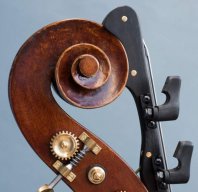
This neck is 477 from nut to butt end. 5/12 is 433mm, so it is pretty far off.

The point where the neck meets the plate edge seems to me to be more significant in terms of the ratio. Mine is almost a perfect fit for neck length = 5/12. My body stop is 600 and neck length is 430.
 
i am about to start bending the ribs for a 3/4 upright bass that i am building.
the ribs are 2mm thick sycamore.
my design for the bass incorporates violin type corners.
should the ribs be bent such as the fit to the blocks is
(a) slightly overbent so that they need springing to fit
(b) slightly underbent so that they need pulling in to fit, or
(c) like in Goldilocks and the three bears...just right.

any thoughts and advice are welcomed

Just wanted to add a thought back to rib bending, (novice to novice advice).

Different types of wood work better for bending; walnut and ash bend like a dream, maple bends o.k. I have not tried sycamore.

The straighter the grain, the less chance of warping or distortion.

If you have the time... leaving the rib clamped to the mould (unglued) for as long as possible, this can help correct small inconstancies in the fit.
 
Just wanted to add a thought back to rib bending, (novice to novice advice).

Different types of wood work better for bending; walnut and ash bend like a dream, maple bends o.k. I have not tried sycamore.

The straighter the grain, the less chance of warping or distortion.

If you have the time... leaving the rib clamped to the mould (unglued) for as long as possible, this can help correct small inconstancies in the fit.

sycamore is a european maple, as I understand it,and certainly the pieces that I have for ribs are beautifully close and straight grained. clamping up for a period before gluing sounds like good stategy...and i have the time in abundance.
 
this whole discussion about bass design has brought me to take a closer look at the theory behind ff hole placement....but i'm not sure whether the right thing is to start a new thread.

I am curious to know how this f shape was arrived at and how to establish the optimum configuration of their placing...i appreciate that they are used to pinpoint the bridge position and that they have to be placed in conjunction with the bass bar's position but what other design factors are functionally relevant ( i'm steering clear of the aesthetic factors for now, although they are obviously of great relevance in the whole picture)