• TalkBass has been independent since 1998. Add your voice.
    Create a free account to reply to discussions, view embedded media, and browse with fewer display ads.
    Join freeLog in
    Want zero display ads or expanded classifieds tools? Compare plans.

Right hand fingering technique problem

I use the raking technique, and whenever I try to dig harder my fingers sort of hook the string and it delays the note by a 16th or so. I'm trying to figure out what the problem is. I'm having it both with rough steel rounds and smooth flats (but more apparent on the steels).

Anyone else had to deal with this?
 
How are you plucking the string?

The impression your issue gives me is that you are putting too much finger underneath the string, and pulling it. Or that you're putting too much force into your plucks. A rest stroke should start more on top of the string, and easily glide off into the string below it. It should almost be as if you're plucking the string towards the body of the bass, and not much force is required. You shouldn't be pulling or popping the string, your finger should easily glide across it and roll off.

It's a bit hard to describe, but this video shows what I'm talking about

With proper plucking technique raking should just be a simple continuous motion across the strings.
 
  • Like
Reactions: Lobster11
I play with fingernails, not too long, though. If I rake I kinda do it with my fingers at a slight angle to the strings. Also, if I don't keep my nails trimmed they can hang up even when not raking due to the way my nails curve downward when they get too long (on guitar especially).

Try trimming your nails back some if you don't need them to also play guitar. There's a point at which they will no longer hang up.
 
How are you plucking the string?

The impression your issue gives me is that you are putting too much finger underneath the string, and pulling it. Or that you're putting too much force into your plucks. A rest stroke should start more on top of the string, and easily glide off into the string below it. It should almost be as if you're plucking the string towards the body of the bass, and not much force is required. You shouldn't be pulling or popping the string, your finger should easily glide across it and roll off....

With proper plucking technique raking should just be a simple continuous motion across the strings.
That's what it sounds like to me too. When raking your finger needs to just brush across the top of the string, not "dig in" or "hook" the string. For that matter, that's the way I think it's usually best to pluck strings in general, not just when raking. Try turning up the amp and playing with a softer touch.
 
Last edited:
I tend to dig in as well, although it's generally better to let the amp do most of the work. In any case, if your fingers are getting hung up on the strings, try moving closer to the bridge where there is less "play" in the strings.
 
I play with fingernails, not too long, though. If I rake I kinda do it with my fingers at a slight angle to the strings. Also, if I don't keep my nails trimmed they can hang up even when not raking due to the way my nails curve downward when they get too long (on guitar especially).

Try trimming your nails back some if you don't need them to also play guitar. There's a point at which they will no longer hang up.
Yeah.
Fingernail problem
This is what I do.
03012552_Snapshot_20170503.jpg
03012626_Snapshot_20170503_1.jpg
 
Last edited:
A couple thoughts in addition to what's already been posted...

1) Be aware of where on the string your finger engages the string. As you can imagine from the illustration, the lower to the center of the string you address the string the more your fingers will have to overcome to get through the string for the pluck. If you address the string below the center point it doesn't take much to see the issue. Higher up will provide less to overcome. So you have to be aware of where you contact the string for the most dig with the least delay in follow thru. Additionally the angle at which you attack the string will make a difference too. But don't forget, the angle that you pull and where you touch the string are inter-related.

string_resistance_illustration.jpg
string_resistance_angle.jpg
string_resistance_illustration_angled.jpg

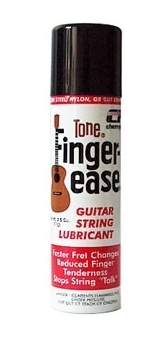
2) General friction. Some strings just don't let your fingers slide through as easily as others. I sometimes have the same issue as you and I find that a light coat of Finger-Ease wiped on where my right hand plucks help reduce the friction and delay. $4. Frankly, I don't know why more bass players don't use this product, especially with round wound strings.

EASE.jpg
 
Last edited:
  • Like
Reactions: JEBassman
Ah I see. Yeah, I dig in and pull hard. I should probably calm down, but I get really excited during rehearsals/gigs

couple thoughts in addition to what's already been posted...

1) Be aware of where on the string your finger engages the string. As you can imagine from the illustration, the lower to the center of the string you address the string the more your fingers will have to overcome to get through the string for the pluck. If you address the string below the center point it doesn't take much to see the issue. Higher up will provide less to overcome. So you have to be aware of where you contact the string for the most dig with the least delay in follow thru. Additionally the angle at which you attack the string will make a difference too. But don't forget, the angle that you pull and where you touch the string are inter-related.

Nicely described. I've always had a limited right hand technique. I played other instruments before the bass, years ago. I switched to electric bass and was hooked! I eventually got into double bass. On both electric and acoustic I lead with a heavy right hand. On double bass, without an amp, you have to pull hard on the strings to produce a a good tone. It sounded awesome. I came to keep the same strong plucking style when alternating between acoustic and electric.

I never quite went back later to take more electric bass lessons, and learn economy of motion. That's something I'm focusing on more.

It's been years since I played upright. Now I'm trying different right hand fingering techniques. I'll think about your string diagram and where I make contact with the strings. Thank you so much for your post. :)