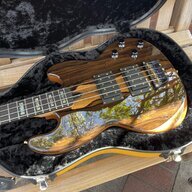
I agree with that, just not that we can isolate it from the rest of the instrument with our ears. Kind of like if I gave Bill Gates $5 it would be a difference but he aint gonna noticeMacGroove said:I do believe the FB does make a contribution.


TalkBass has been independent since 1998. Add your voice.
Create a free account to reply to discussions, view embedded media, and browse with fewer display ads.
Join free Log in
Want zero display ads or expanded classifieds tools? Compare plans.
I agree with that, just not that we can isolate it from the rest of the instrument with our ears. Kind of like if I gave Bill Gates $5 it would be a difference but he aint gonna noticeMacGroove said:I do believe the FB does make a contribution.
Moo said:I agree with that, just not that we can isolate it from the rest of the instrument with our ears. Kind of like if I gave Bill Gates $5 it would be a difference but he aint gonna notice


 But when you really think about it, these are magnetic pickups, how can wood have a direct effect on them at all? ) and sent through the preamp and into the amp.
Drake Kennedy said:I, along with pretty much everyone else, see these threads all the time. "Blah, blah, TONE blah blah blah." It gets really old after a while. I for one dislike the term 'tone' because EVERYONE just throws it around as fact. Ugh...
Ok, so now the point of this post. I have come up with what I believe is a pretty logical explanation of tone, from reading on here, talking 1 on 1 with luthiers, and even a little cynicism. I do not claim any of this is fact, it's just my belief, however for clarity I'll state it as fact when describing it.
The tone of an instrument is widely subjective, but what contributes to the actual sound is almost entirely physics. The way stringed instruments (be it bass, guitar, etc...) work is pretty basic. Assuming that most of us know basic properties of soundwaves and the way strings work, it's like this - the string is tuned to a pitch, and is shortened to make a desired pitch. I'm sure we can all agree on that, yes? Ok, so that means that the string is resonating from the bridge to either the nut, or where it's being held down on a fret or fingerboard.
Now, one could have a narrow view and say "Since the string only connects at the bridge and fingerboard then only the strings, frets and pickups make any difference on tone." This would be wrong. Don't get me wrong, I think the strings and pickups have one of the greatest effects on the overall tone (outside of the non-bass stuff; amps, etc...), but that's not it. In theory, the string would vibrate independently and nothing else on the instrument would move. However, this is not the case on Earth. When the string vibrates, everything else on the instrument does too. I believe this is called 'sympathetic vibration'.
Going from there, the instrument is now resonating with the string, but the wood itself doesn't actually have a direct effect on tone, like most people think. One person in this thread even expressed his ignorance by saying "The pickups are down in the body, that is where you get the tonal differences in your wood on the bass".
Here's the catcher though. The wood vibrates from sympathetic vibration, some coming from the string against the fret, some from the bridge into the body, some just from the frequency, and this vibration then causes the strings to vibrate more, and differently*. So all of these vibrations are occurring simultaneously, and causing overtones of the strings, which are producing different vibrations in the wood, which in turn creates more overtones, and it goes on and on. So the way the wood vibrates, both independently and in conjunction with the rest of the woods and metal, makes the strings vibrate differently, which in turn changes the tone of the bass. All these overtones are picked up by the pickup (
So....In conclusion, the woods have a great (albeit indirect) effect on tone. If you want some proof of this, plug your bass in, and listen to how the notes character changes as it sustains, and eventually decays. That's the woods' effect.
*As a sidenote, the density, stiffness, and evenness all are contributing factors to these vibrations. Very dense wood vibrates differently to softer wood. The way these woods are glued or bolted together also has an effect on the resonance. The 'cleaner' the excecution of all of this will result in a more detailed tone, and an uneven production will yield opposite results. Also, wood is very inconsistent, as most luthiers will tell you, and even pieces of the same board can sound different.
Again - these are not my personal findings, just what I've come up with from all the info I've observed.
Hope it helps, it took me a while to write out
Peace,
Drake

Drake Kennedy said:I, along with pretty much everyone else, see these threads all the time. "Blah, blah, TONE blah blah blah." It gets really old after a while. I for one dislike the term 'tone' because EVERYONE just throws it around as fact. Ugh...
Ok, so now the point of this post. I have come up with what I believe is a pretty logical explanation of tone, from reading on here, talking 1 on 1 with luthiers, and even a little cynicism. I do not claim any of this is fact, it's just my belief, however for clarity I'll state it as fact when describing it.
The tone of an instrument is widely subjective, but what contributes to the actual sound is almost entirely physics. The way stringed instruments (be it bass, guitar, etc...) work is pretty basic. Assuming that most of us know basic properties of soundwaves and the way strings work, it's like this - the string is tuned to a pitch, and is shortened to make a desired pitch. I'm sure we can all agree on that, yes? Ok, so that means that the string is resonating from the bridge to either the nut, or where it's being held down on a fret or fingerboard.
Now, one could have a narrow view and say "Since the string only connects at the bridge and fingerboard then only the strings, frets and pickups make any difference on tone." This would be wrong. Don't get me wrong, I think the strings and pickups have one of the greatest effects on the overall tone (outside of the non-bass stuff; amps, etc...), but that's not it. In theory, the string would vibrate independently and nothing else on the instrument would move. However, this is not the case on Earth. When the string vibrates, everything else on the instrument does too. I believe this is called 'sympathetic vibration'.
Going from there, the instrument is now resonating with the string, but the wood itself doesn't actually have a direct effect on tone, like most people think. One person in this thread even expressed his ignorance by saying "The pickups are down in the body, that is where you get the tonal differences in your wood on the bass".
Here's the catcher though. The wood vibrates from sympathetic vibration, some coming from the string against the fret, some from the bridge into the body, some just from the frequency, and this vibration then causes the strings to vibrate more, and differently*. So all of these vibrations are occurring simultaneously, and causing overtones of the strings, which are producing different vibrations in the wood, which in turn creates more overtones, and it goes on and on. So the way the wood vibrates, both independently and in conjunction with the rest of the woods and metal, makes the strings vibrate differently, which in turn changes the tone of the bass. All these overtones are picked up by the pickup (
So....In conclusion, the woods have a great (albeit indirect) effect on tone. If you want some proof of this, plug your bass in, and listen to how the notes character changes as it sustains, and eventually decays. That's the woods' effect.
*As a sidenote, the density, stiffness, and evenness all are contributing factors to these vibrations. Very dense wood vibrates differently to softer wood. The way these woods are glued or bolted together also has an effect on the resonance. The 'cleaner' the excecution of all of this will result in a more detailed tone, and an uneven production will yield opposite results. Also, wood is very inconsistent, as most luthiers will tell you, and even pieces of the same board can sound different.
Again - these are not my personal findings, just what I've come up with from all the info I've observed.
Hope it helps, it took me a while to write out
Peace,
Drake


A dead spot is a result of fret installation and instrument resonance. Not the fingerboard material.godsbassman2000 said:Does this mean that a dead spot is the result of the fret as opposed to the fretboard?

Drake Kennedy said:Good, I'm glad both of you got my point. By the way, what I really meant to say was EBONY > ALL. I just slipped and typed all that up.

Drake Kennedy said:I, along with pretty much everyone else, see these threads all the time. "Blah, blah, TONE blah blah blah." It gets really old after a while. I for one dislike the term 'tone' because EVERYONE just throws it around as fact. Ugh...
Ok, so now the point of this post. I have come up with what I believe is a pretty logical explanation of tone, from reading on here, talking 1 on 1 with luthiers, and even a little cynicism. I do not claim any of this is fact, it's just my belief, however for clarity I'll state it as fact when describing it.
The tone of an instrument is widely subjective, but what contributes to the actual sound is almost entirely physics. The way stringed instruments (be it bass, guitar, etc...) work is pretty basic. Assuming that most of us know basic properties of soundwaves and the way strings work, it's like this - the string is tuned to a pitch, and is shortened to make a desired pitch. I'm sure we can all agree on that, yes? Ok, so that means that the string is resonating from the bridge to either the nut, or where it's being held down on a fret or fingerboard.
Now, one could have a narrow view and say "Since the string only connects at the bridge and fingerboard then only the strings, frets and pickups make any difference on tone." This would be wrong. Don't get me wrong, I think the strings and pickups have one of the greatest effects on the overall tone (outside of the non-bass stuff; amps, etc...), but that's not it. In theory, the string would vibrate independently and nothing else on the instrument would move. However, this is not the case on Earth. When the string vibrates, everything else on the instrument does too. I believe this is called 'sympathetic vibration'.
Going from there, the instrument is now resonating with the string, but the wood itself doesn't actually have a direct effect on tone, like most people think. One person in this thread even expressed his ignorance by saying "The pickups are down in the body, that is where you get the tonal differences in your wood on the bass".
Here's the catcher though. The wood vibrates from sympathetic vibration, some coming from the string against the fret, some from the bridge into the body, some just from the frequency, and this vibration then causes the strings to vibrate more, and differently*. So all of these vibrations are occurring simultaneously, and causing overtones of the strings, which are producing different vibrations in the wood, which in turn creates more overtones, and it goes on and on. So the way the wood vibrates, both independently and in conjunction with the rest of the woods and metal, makes the strings vibrate differently, which in turn changes the tone of the bass. All these overtones are picked up by the pickup (
So....In conclusion, the woods have a great (albeit indirect) effect on tone. If you want some proof of this, plug your bass in, and listen to how the notes character changes as it sustains, and eventually decays. That's the woods' effect.
*As a sidenote, the density, stiffness, and evenness all are contributing factors to these vibrations. Very dense wood vibrates differently to softer wood. The way these woods are glued or bolted together also has an effect on the resonance. The 'cleaner' the excecution of all of this will result in a more detailed tone, and an uneven production will yield opposite results. Also, wood is very inconsistent, as most luthiers will tell you, and even pieces of the same board can sound different.
Again - these are not my personal findings, just what I've come up with from all the info I've observed.
Hope it helps, it took me a while to write out
Peace,
Drake

Another great post by one of our more thoughtful members!SMASH said:Rosewood vs. Maple. Wow, is it the 3rd Friday of the month already? Time flies.
Great posts on this topic, Moo. PLEASE add magic cables to the testing !!?
I used to think there was a difference I could hear, simply because of the differences in one bass (J) with rosewood vs. another (Stingray) with maple. How riduculous eh?! But that's no different than someone comparing two different J's. Even luthiers will say that "exact" same basses with the same woods throughout can sound quite different, but some guys can isloate the sonic diff. of the fingerboard veneer on different basses with different pickups and different strings? I seriously doubt that, and blind testing would prove my doubts correct I'll wager.
I've swapped as similar neck as I could find into a bass, one with rosewood and one with maple, recorded onto different tracks without being told which was which, and could tell zero difference nor could my g/f who has an excellent musical ear and gr. 10 piano.
It could be that the necks had other properties which negated the fingerboard difference, but then that just proves my point that you can't isolate the fingerboard difference or guess reliably how it'll interact with one neck to the next.
As for what luthiers say, they're salesmen and woodworkers and can make mistakes or outright BS you or themselves too. Same as cable manufacturers and cabinet makers - do we trust all claims of magic cables and switches? And luthiers contradict each other on the topic in any case - there's no consensus I've ever seen.
So to have my cake and eat it too, I concur with both these posts!Fretless5verfan said:Maple is brighter because it's yellow...rosewood is darker because it's brown...and ebony is better than both of them because black eats other colors.



Whoa, tone differences MAYBE, but action? How exactly does Ebony allow for a lower action than any other wood board?SamJ said:Ebony is certainly very bright, and allows for a very low action.. I've decided to use it in my next Jazz Bass.... it should prove to be a very good slap / funk bass.
JAUQO III-X said:can any one tell the difference if a guitar player was using a nylon,graphite,copper,brass,etc. pic all the same gauge