• TalkBass has been independent since 1998. Add your voice.
    Create a free account to reply to discussions, view embedded media, and browse with fewer display ads.
    Join freeLog in
    Want zero display ads or expanded classifieds tools? Compare plans.

Rosewood vs Pau Ferro

Turnaround

Commercial User
May 6, 2004
11,522
24,794
Toronto Canada
Disclosures
Independent Instrument Technician - Retired
I've heard and seen quite a few discussions about how manufacturers are using Pau Ferro now in place of Rosewood because of CITES regulations. And there seems to be a significant negative reaction to the use of Pau Ferro. I'd like to understand better what it is about Pau Ferro that some find objectionable. Most of the objection I have heard centres around the appearance of Pau Ferro - how it doesn't look as good as Rosewood.

The problem is that there are so many variations on Rosewood, it's hard to make a comparison. And since manufacturers have been dying their Rosewood fretboards dark for years, it becomes an almost meaningless discussion.

However, I decided to put up photos of some Pau Ferro, Indian Rosewood and Brazilian Rosewood for comparison and discussion. So here they are. Care to guess which is which?
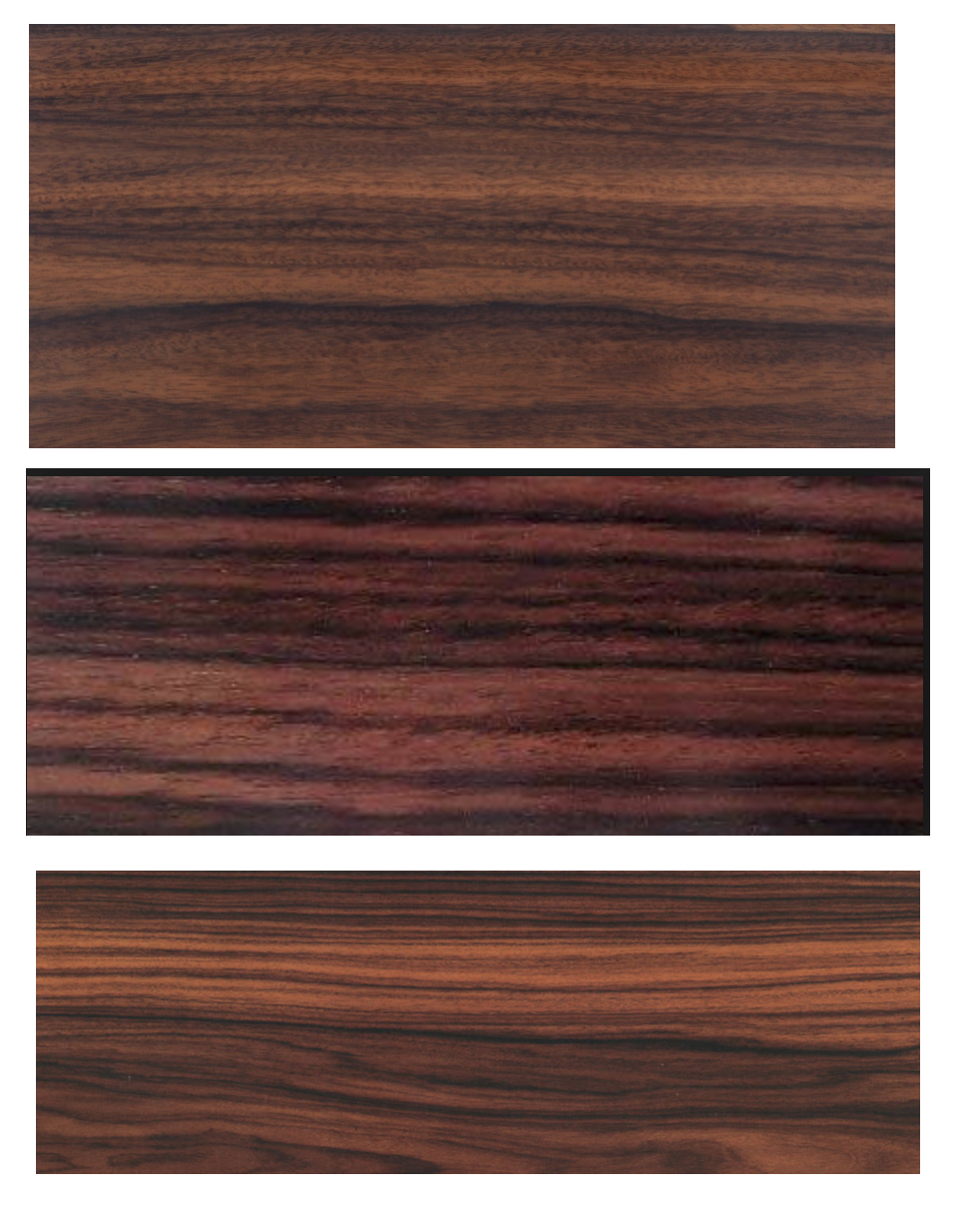

upload_2018-10-30_13-46-10.png
 
Nice looking pau ferro is fine by me but most of the boards I’ve seen have looked pale and anemic. Like dirty rosewood. The nicer examples of any wood are gonna look better right? I’m sure there’s plenty of ugly rosewood out there.
You bet! Like this:

upload_2018-10-30_13-58-14.png
 

Attachments

  • upload_2018-10-30_13-57-14.png
    upload_2018-10-30_13-57-14.png
    423.6 KB · Views: 120
Most of the objection I have heard centres around the appearance of Pau Ferro - how it doesn't look as good as Rosewood.
the cats who object the most are playing fretted instruments = which proves the issue is about looks! :laugh:


sorry, i'm no help with your understanding: i'm with the group who just wants a reliable fingerboard (fretless)...any suitable material will do (doesn't have to be wood!).


edit: i like all of the picture samples. i'm guessing the 3rd one is pau ferro.
 
I played a Mustang the other day with a pau ferro board. I don't think it felt or sounded any different. But it did look slightly pinkish. Kind of odd but I'm sure I'll get used to seeing them. I'm all for the using more sustainable woods so the color is something I could live with.
 
  • Like
Reactions: Thick McRunfast
I’ll guess Top one is Pau Ferro, middle Brazilian, and the bottom being Rosewood. I’m sure I’m not completely right . I think on the right body Pau Ferro looks beautiful. I don’t like how it looks on painted bodies for some reason ( obviously each slab of would looks different ). As for tone I find it to be somewhere between maple and rosewood. I also think it is almost impossible to tell the difference between Brazilian rosewood and Indian rosewood in a blind sound test ( could probably be the same with Pau Ferro. My US Masters bass had a Pau Ferro board and it looked great on the mahogany Body. The bass had a really punchy tone, even unplugged ( most likely the mahogany body played a big part in the tone ). Nice photos, thanks for the post.
 
I won't keep everyone guessing. From top to bottom they are Pau Ferro, Indian Rosewood and Brazilian Rosewood.

There really is very little to distinguish visually Pau Ferro from Indian Rosewood or Brazilian Rosewood. You can find light and dark, rich and pasty, warm and cool examples of each. But I can say that much of the Indian Rosewood I have seen over the last ten to fifteen years has been of inferior quality and has often been stained or dyed to improve its appearance. These days a lot of ebony is also being dyed since it is increasingly greyish with lighter streaks that appeals less to the masses.

In terms of it's durability, Pau Ferro is significantly better than most of the Rosewood I have seen for years. That's probably because it is still possible to get quality Pau Ferro boards, much easier than comparable quality Rosewood. But beware - high quality woods are becoming harder and harder to get and are commanding higher prices.