

Enjoy the benefits of a premium membership!
Upgrade Account
-
TalkBass has been independent since 1998. Add your voice.
Create a free account to reply to discussions, view embedded media, and browse with fewer display ads.
Join free Log in
Want zero display ads or expanded classifieds tools? Compare plans.
You are using an out of date browser. It may not display this or other websites correctly.
You should upgrade or use an alternative browser.
You should upgrade or use an alternative browser.
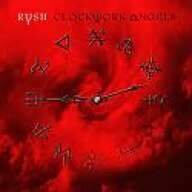
RUSH Clockwork Angels
- Thread starter 4001
- Start date
More options
Who Replied?
Interesting talk about analog/vinyl.... Apart from poor SNR, records cannot approach the fidelity of 16-bit/44.1 kHz digital. While some might prefer the sound of vinyl, there is practically no quantifiable way to demonstrate its superiority over CD. And that discussion is really a side-issue anyway, as Clockwork Angels only makes use of about 20 dB of the 96 dB range of CD audio. That's a recording/mixing/mastering issue... not an analog/digital issue.
False. It is dynamic compressed to peak limiting, I've metered it. You can't do that on vinyl. Plain and simple. So yes it is a Analog/Digital issue.
The vinyl copy will be more dynamic due to the fact the CD master is smashed. A vinyl master matching the CD wouldn't keep a needle on it.
As long as engineers keep blowing CD masters up, vinyl will be the better listening experience. I wish it wasn't that way.
False. It is dynamic compressed to peak limiting, I've metered it. You can't do that on vinyl. Plain and simple. So yes it is a Analog/Digital issue.
The vinyl copy will be more dynamic due to the fact the CD master is smashed. A vinyl master matching the CD wouldn't keep a needle on it.
As long as engineers keep blowing CD masters up, vinyl will be the better listening experience. I wish it wasn't that way.
Totally agree!!!!
This album is epic, a true masterpiece. Geddy's voice has become like a fine wine, enabling him to have an emotion in some of the vocals that he otherwise would not have been capable in his younger years. It is truly amazing how it is not just a matter of these guys being better than ever as it is being able to adapt and progress as they have done all these years and still able to amaze with each album...Kudos to the guys!!

I just got it off of iTunes last night and am listening to it at work today..... I had already downloaded Headlong Flight since it was pre released a few weeks ago and I love it.
I just finished my first listening and I really have to say that Garden is a really really fresh and beautiful song. I think it might be my favorite modern Rush tune because it is so musical and so "un Rush" yet only in the way way Rush could do it...LOL. In that one tune I really hear the full maturity of songwriting that has been honed for decades.
Wish Them Well.... that is a tune that makes me think of a combination of elements of Snakes and Arrows and Presto.
Really digging Alex's playing on Halo Effect. I hear some Grace Under Pressure in there too.
I just finished my first listening and I really have to say that Garden is a really really fresh and beautiful song. I think it might be my favorite modern Rush tune because it is so musical and so "un Rush" yet only in the way way Rush could do it...LOL. In that one tune I really hear the full maturity of songwriting that has been honed for decades.
Wish Them Well.... that is a tune that makes me think of a combination of elements of Snakes and Arrows and Presto.
Really digging Alex's playing on Halo Effect. I hear some Grace Under Pressure in there too.
Interesting talk about analog/vinyl.... Apart from poor SNR, records cannot approach the fidelity of 16-bit/44.1 kHz digital. While some might prefer the sound of vinyl, there is practically no quantifiable way to demonstrate its superiority over CD. And that discussion is really a side-issue anyway, as Clockwork Angels only makes use of about 20 dB of the 96 dB range of CD audio. That's a recording/mixing/mastering issue... not an analog/digital issue.
16/44.1 was a good compromise in the 80's when CDs were new and the data space was limited on the 5" disc due to the infrared laser (780nm I think) that was used to read, however this has the terrible side effect of turning signals with a lot of very high harmonic content into noise due to sample errors and decimation filters to reduce digital hash and noise. In other words, cymbals turn into noise rather than the sound of metal, out of polarity information which is what gives sonic space and imaging gets squashed and the sound becomes smaller, and the sound is rendered rather than reproduced.
I remember back in the 90s when Panasonic released the first consumer DVD-A player and it was a technical marvel and the demo disc included with it had an acoustic drum demo and the cymbals once again sounded like metal, not white noise.
In the years since then SACD with it's DSD sampling method won the digital audio SQ wars, but Sony was always ridiculously expensive when it came to licensing it and people didn't think they needed to buy a disc that they already own AGAIN for the purported sound quality when the playback systems weren't really going to highlight that difference anyway.
I'll take vinyl any day; I don't mind the pops and the clicks and the surface noise, or having to put the record into the cleaner and then wipe it with a carbon fibre brush and then repeat that every 25 minutes. The music sounds more alive, but that's only when it was originally recorded to play back well.
To shift gears:
In my opinion, Rush hasn't done anything different since Test for Echo. After that record Alex made a solo CD, Geddy made a solo CD, Neil's family died and he toured the continent on a motorcycle and eventually they made Vapor Trails which sounds like a mashup of the Alex/Geddy solo projects.
While it is novel to have a new Rush record every 4-5 years, they just aren't very good anymore. I like the sound of "Headlong Flight", but it's too much "Bastille Day" and "Bytor and the Snowdog".
Their golden years were 30 years ago. I don't believe that future musicians will hold this record up as an influence in their playing, that honor still belongs to Permanent Waves/Moving Pictures/Signals.

Going to pick up the CD later.
here's a CBC interview with Geddy about Clockwork Angels. Starts at the 27 minute mark. http://www.cbc.ca/video/#/News/TV_Shows/The_National/Latest_Broadcast/1274378385/ID=2244809027
here's a CBC interview with Geddy about Clockwork Angels. Starts at the 27 minute mark. http://www.cbc.ca/video/#/News/TV_Shows/The_National/Latest_Broadcast/1274378385/ID=2244809027
16/44.1 was a good compromise in the 80's when CDs were new and the data space was limited on the 5" disc due to the infrared laser (780nm I think) that was used to read, however this has the terrible side effect of turning signals with a lot of very high harmonic content into noise due to sample errors and decimation filters to reduce digital hash and noise. In other words, cymbals turn into noise rather than the sound of metal, out of polarity information which is what gives sonic space and imaging gets squashed and the sound becomes smaller, and the sound is rendered rather than reproduced.
I remember back in the 90s when Panasonic released the first consumer DVD-A player and it was a technical marvel and the demo disc included with it had an acoustic drum demo and the cymbals once again sounded like metal, not white noise.
In the years since then SACD with it's DSD sampling method won the digital audio SQ wars, but Sony was always ridiculously expensive when it came to licensing it and people didn't think they needed to buy a disc that they already own AGAIN for the purported sound quality when the playback systems weren't really going to highlight that difference anyway.
I'll take vinyl any day; I don't mind the pops and the clicks and the surface noise, or having to put the record into the cleaner and then wipe it with a carbon fibre brush and then repeat that every 25 minutes. The music sounds more alive, but that's only when it was originally recorded to play back well.
To shift gears:
In my opinion, Rush hasn't done anything different since Test for Echo. After that record Alex made a solo CD, Geddy made a solo CD, Neil's family died and he toured the continent on a motorcycle and eventually they made Vapor Trails which sounds like a mashup of the Alex/Geddy solo projects.
While it is novel to have a new Rush record every 4-5 years, they just aren't very good anymore. I like the sound of "Headlong Flight", but it's too much "Bastille Day" and "Bytor and the Snowdog".
Their golden years were 30 years ago. I don't believe that future musicians will hold this record up as an influence in their playing, that honor still belongs to Permanent Waves/Moving Pictures/Signals.
I can't possibly disagree with you more.
Well I bought the album today. It is very good and I'm looking forward to their tour this year. Here's my review:
Caravan 10/10: This is one of the best songs on the album. It has so much energy and killer riffing. I like the instrumental jam near the end of the song.
BU2B 10/10: This song is so powerful. It has a heavy metal sound to it and is very energetic and filled with great riffs much like Caravan. I like the heavy guitar and flamenco bass techniques in this song.
Headlong Flight 10/10: This is a great 7 minute jam. Reminds me of Bastille Day and By Tor And The Snow Dog. The bass sounds sick in this song, the drumming is out of this world, and the guitar solo rocks.
Clockwork Angels 10/10: This. Song. ROCKS!!! Screaming guitar, a bass that sounds like a pack of wolves, and killer drumming and percussion. This song sounds very modern, very Rush like, and a little experimental all at once. I hope they play this song when I go to see them live...
The Anarchist 9/10: This song is cool! The bass sounds a lot like Geddy's Rickenbacker, although I think he said he recorded this song with Jazz basses. The strings are awesome and the riffing is cool.
Carnies 10/10: This song is VERY awesome! It starts off with carnival sounds, and then Alex's guitar kicks in and plays a riff that sounds so nasty and heavy metal. The riffs in this song are AMAZING! I love the guitar feedback Alex Lifeson uses during the verses. This is definitely one of the guitar highlights of the album... Oh, and the drums and bass ROCK, of course.
Halo Effect 10/10: This song is very good! It is a great blend of acoustic and electric (sort of like Lessons from 2112, although they don't sound similar other than that).
Seven Cities Of Gold 10/10: The bass highlight of the album. The bass sounds like a snarling wolf and GROOVES SO MUCH in the song intro! And the main riff rocks. A lot. The guitar noise at the end is cool.
The Wreckers 5/10: There are some cool riffs, but this song doesn't have as much energy as the others IMO. The vocals in this song are driving and the strings are great.
BU2B2 9/10: This is a very dark, powerful, short song.
Wish Them Well 4/10: The beginning of this song is great, but I think it lacked some energy compared to the rest of the tunes. It has sort of a Presto/90s Rush sound, so if you liked that, you'll probably like this song.
The Garden 10/10: Wow....... This is amazing. It is incredibly captivating. I actually had to stop typing this post because I was listening to it while I was typing and it is just so amazing. The strings, guitar, lyrics, vocals, and bass are the best. Definitely one of the album's best tunes.
Caravan 10/10: This is one of the best songs on the album. It has so much energy and killer riffing. I like the instrumental jam near the end of the song.
BU2B 10/10: This song is so powerful. It has a heavy metal sound to it and is very energetic and filled with great riffs much like Caravan. I like the heavy guitar and flamenco bass techniques in this song.
Headlong Flight 10/10: This is a great 7 minute jam. Reminds me of Bastille Day and By Tor And The Snow Dog. The bass sounds sick in this song, the drumming is out of this world, and the guitar solo rocks.
Clockwork Angels 10/10: This. Song. ROCKS!!! Screaming guitar, a bass that sounds like a pack of wolves, and killer drumming and percussion. This song sounds very modern, very Rush like, and a little experimental all at once. I hope they play this song when I go to see them live...
The Anarchist 9/10: This song is cool! The bass sounds a lot like Geddy's Rickenbacker, although I think he said he recorded this song with Jazz basses. The strings are awesome and the riffing is cool.
Carnies 10/10: This song is VERY awesome! It starts off with carnival sounds, and then Alex's guitar kicks in and plays a riff that sounds so nasty and heavy metal. The riffs in this song are AMAZING! I love the guitar feedback Alex Lifeson uses during the verses. This is definitely one of the guitar highlights of the album... Oh, and the drums and bass ROCK, of course.
Halo Effect 10/10: This song is very good! It is a great blend of acoustic and electric (sort of like Lessons from 2112, although they don't sound similar other than that).
Seven Cities Of Gold 10/10: The bass highlight of the album. The bass sounds like a snarling wolf and GROOVES SO MUCH in the song intro! And the main riff rocks. A lot. The guitar noise at the end is cool.
The Wreckers 5/10: There are some cool riffs, but this song doesn't have as much energy as the others IMO. The vocals in this song are driving and the strings are great.
BU2B2 9/10: This is a very dark, powerful, short song.
Wish Them Well 4/10: The beginning of this song is great, but I think it lacked some energy compared to the rest of the tunes. It has sort of a Presto/90s Rush sound, so if you liked that, you'll probably like this song.
The Garden 10/10: Wow....... This is amazing. It is incredibly captivating. I actually had to stop typing this post because I was listening to it while I was typing and it is just so amazing. The strings, guitar, lyrics, vocals, and bass are the best. Definitely one of the album's best tunes.

Hmmm... that's not what I meant. I did not claim that vinyl could be pressed with constant brickwall limiting. Even so, that's due a serious limitation of vinyl, not some sort of technical superiority.False. It is dynamic compressed to peak limiting, I've metered it. You can't do that on vinyl. Plain and simple. So yes it is a Analog/Digital issue.
The vinyl copy will be more dynamic due to the fact the CD master is smashed. A vinyl master matching the CD wouldn't keep a needle on it.
As long as engineers keep blowing CD masters up, vinyl will be the better listening experience. I wish it wasn't that way.
The lack of dynamic range on the album has nothing to do with it being digital. There's nothing preventing the CD from having 90 db plus dynamic range - easily more than the best turntable. The problem lies in the mixing/mastering, a problem caused by humans, not technology. Hopefully the 96/24 version won't be so crushed....
16/44.1 was a good compromise in the 80's when CDs were new and the data space was limited on the 5" disc due to the infrared laser (780nm I think) that was used to read, however this has the terrible side effect of turning signals with a lot of very high harmonic content into noise due to sample errors and decimation filters to reduce digital hash and noise. In other words, cymbals turn into noise rather than the sound of metal, out of polarity information which is what gives sonic space and imaging gets squashed and the sound becomes smaller, and the sound is rendered rather than reproduced.
Not going to get into this much further... other than to say that the above seems to represent a misunderstanding of Nyquist–Shannon sampling theorem. In short, humans cannot hear the harmonics of a 20 kHz waveform.... and all the relevant harmonics that are sampled are accurately recreated in the D/A converter (assuming a high quality converter). If bats made up the listening audience, 44.1 kHz would present a limitation... for humans, no so much....
Not going to get into this much further... other than to say that they above seems to represent a misunderstanding of NyquistShannon sampling theorem. In short, humans cannot hear the harmonics of a 20 kHz waveform.... and all the relevant harmonics that are sampled are accurately recreated in the D/A converter (assuming a high quality converter). If bats made up the listening audience, 44.1 kHz would present a limitation... for humans, no so much....
False. Nakamichi has shown in their research in the Nakamichi Theater that the human body will show responses to harmonic content in excess of 100kHz. The Nyquist-Shannon sampling theorem is a convenient way to accommodate for spurious frequency aliasing within the _average_ frequency response for most human ears. I'm fully aware of the Nyquist Theorem.
This has been a long debate in the audio community. CDs are sure convenient, but they don't sound as good as vinyl.

Speaking of it, has anyone splurged on it?
[Invalid or Expired Link Removed]
I was thinking of going that route instead of downloading from Amazon or iTunes or buying the CD.
[Invalid or Expired Link Removed]
I was thinking of going that route instead of downloading from Amazon or iTunes or buying the CD.
Hopefully the 96/24 version won't be so crushed....
Why does everyone compare everything to the old stuff. Time moves on, people "progress{ive}"-no pun intended of course. It's not Moving Pictures or Permanent Waves, nor is it meant to be. It's Clockwork Angels. You either enjoy it, or you don't. I just think comparing anything regardless of whether it's Rush albums or whatever is apples and oranges. I think and act differently than I did a year ago, hopefully that's a progression of the most part. If you hear something identical to 20 years ago, buy an AC/DC album! JUST KIDDING!!
RUSH is one of the few rock bands that have aged well, still making pertinent, cutting edge records.
With so many bands, it is true that their glory days were way back when....but this has never been true of RUSH.
Amazon says it has been delivered. I can't wait to get home!
With so many bands, it is true that their glory days were way back when....but this has never been true of RUSH.
Amazon says it has been delivered. I can't wait to get home!


Just picked up the cd and listend to it once already - very good, seeing them in seattle in Nov.


