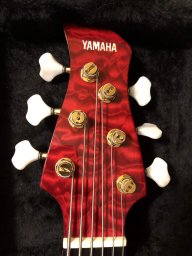
I took a break from Bach cello suites to learn this 14th century dance. I'm playing on 6-string bass strung piccolo, B-b, pretending that it's E-e for the sake of reading treble clef.
It looks like a no-brainer until you see that the tempo is "dotted quarter=126". In other words, the piece books. Normally, this is played on a pipe, but it's a wonderful dance, and I took the chance that my fingers were up to it.
It pretty much stays in one position, but there are some interesting finger crossings/replacements involved, and I encourage a liberal use of hammer-ons and pull-offs.
Now, as a harper, I would tell you that what's on the page is only a beginning. Transpose, create new melodies based on what's written, shift to other modes...sky's the limit. With some imagination and daring, you can keep the rave going until the participants drop (or your fingers bleed).
For those historically inclined, this piece is written in "bar form", meaning we have a series of melodies that have identical first and second endings.
Have fun!

B.
It looks like a no-brainer until you see that the tempo is "dotted quarter=126". In other words, the piece books. Normally, this is played on a pipe, but it's a wonderful dance, and I took the chance that my fingers were up to it.
It pretty much stays in one position, but there are some interesting finger crossings/replacements involved, and I encourage a liberal use of hammer-ons and pull-offs.
Now, as a harper, I would tell you that what's on the page is only a beginning. Transpose, create new melodies based on what's written, shift to other modes...sky's the limit. With some imagination and daring, you can keep the rave going until the participants drop (or your fingers bleed).
For those historically inclined, this piece is written in "bar form", meaning we have a series of melodies that have identical first and second endings.
Have fun!
B.
Last edited: