
Attached is the wiring diagram that someone posted early in this thread. You'll have to do some trouble shooting using a multi meter.Hey all, I just got one of these in a trade and I'm having some issues I'm hoping somebody can help me with.
Volume and tone work great, but the middle position on the coil configuration knob is so low-output it may as well be unplugged. I'm talking like .01% of the volume of the other settings. It is putting volume out and it's louder when the tone knob is all the way up, but at first I thought there was zero output. The electronics look clean, no broken solders that I can see...could it be an issue with the pickup?
Any troubleshooting options/help/advice anyone can offer would be greatly appreciated! It's a fun bass for sure, I just need all those options to work!

Enjoy the benefits of a premium membership!
Upgrade Account
-
TalkBass has been independent since 1998. Add your voice.
Create a free account to reply to discussions, view embedded media, and browse with fewer display ads.
Join free Log in
Want zero display ads or expanded classifieds tools? Compare plans.
You are using an out of date browser. It may not display this or other websites correctly.
You should upgrade or use an alternative browser.
You should upgrade or use an alternative browser.
SBMM Stingray Short scale
- Thread starter dralionux
- Start date
-
- Tags
- short scale bass
More options
Who Replied?
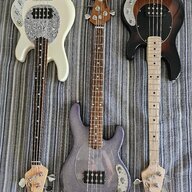
Here’s a short demo of my defretted SBMM which I did at the request of @Treblefree on the short scale list. I include my EBMM for comparison’s sake.

Here’s a short demo of my defretted SBMM which I did at the request of @Treblefree on the short scale list. I include my EBMM for comparison’s sake.
Wow @Djadja; that was awesome! The SBMM is legit for fretless. What a great sound and I thought your chops are very nice with the slides and vibrato and the sliding through the passing notes too. Really accentuated the beauty of a fretless. I am certain now that I am converting my SBMM to fretless to shamelessly copy you!
Your EBMM is a work of art and sounds wonderful just like mine.
Thank you!Wow @Djadja; that was awesome! The SBMM is legit for fretless. What a great sound and I thought your chops are very nice with the slides and vibrato and the sliding through the passing notes too. Really accentuated the beauty of a fretless. I am certain now that I am converting my SBMM to fretless to shamelessly copy you!
Your EBMM is a work of art and sounds wonderful just like mine.
There was a period when I played fretless exclusively on a Bee Bass Groovebee. My fretless chops were very good then. It went away when I moved to short scales and picked up the EBMM. I got the SBMM with the express purpose of converting it. My tech, John Mooy, did a great job. My only issue is that he doesn’t coat fingerboard which, because of the soft rosewood used for the fingerboard, pretty much required me to use some kind of flatwound. I tried a bunch before settling on the white tapes. I still may take it somewhere one day to get it coated and go back to rounds… or maybe not. The tapes do sound good on it.
I’m glad to hear that my EBMM is not an outlier.
That's interesting about the fretboard. Mine is the dropped copper, so I have the maple fretboard. I need to see if that is suitable or what coating I may need. I was thinking of DIY on this, but I would probably be better suited taking this to a pro. My only problem is I'm pretty rural, so would have to ship it somewhere and hope I picked the right luthier.Thank you!
There was a period when I played fretless exclusively on a Bee Bass Groovebee. My fretless chops were very good then. It went away when I moved to short scales and picked up the EBMM. I got the SBMM with the express purpose of converting it. My tech, John Mooy, did a great job. My only issue is that he doesn’t coat fingerboard which, because of the soft rosewood used for the fingerboard, pretty much required me to use some kind of flatwound. I tried a bunch before settling on the white tapes. I still may take it somewhere one day to get it coated and go back to rounds… or maybe not. The tapes do sound good on it.
I’m glad to hear that my EBMM is not an outlier.
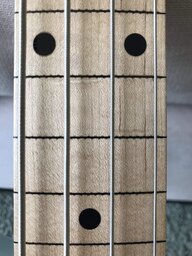
I have maple neck defret and use rounds with it. It’s holding up well with just a true oil finish. My profile pic shows it.
My luthier did a decent job of the process but it’s far from perfect. Nothing like yours, @Djadja - she’s a beaut!
My luthier did a decent job of the process but it’s far from perfect. Nothing like yours, @Djadja - she’s a beaut!
Very good to know; thanks! Any reason you use rounds instead of flats?I have maple neck defret and use rounds with it. It’s holding up well with just a true oil finish. My profile pic shows it.
My luthier did a decent job of the process but it’s far from perfect. Nothing like yours, @Djadja - she’s a beaut!
I just like the sound. I have a stock fretless epoxied sx with flats and enjoy it too. It’s a neck diver, so I play it in smaller doses. SX Ursa 3 JR MN ALDER BK Fretless Short Scale Bass w/Bag
Last edited:
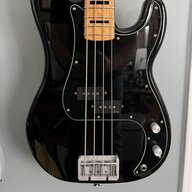
Attached is the wiring diagram that someone posted early in this thread. You'll have to do some trouble shooting using a multi meter.
Thanks for posting that! The wiring in my bass is all exactly as it is in the diagram. I do have one additional wire from the bridge to the tone pot though. I finally found my multimeter and tested the resistance of the 3 different pickup selections with volume and tone knobs turned all the way up:
Position 1: 111 kOhms <--Loudest (parallel)
Position 2: 334 kOhms <--This is the position where there is practically no output (single coil)
Position 3: 288 kOhms <--Fairly quiet (series...should be the loudest)
Another thing that is possibly relevant - when measuring the resistance, the measurement at Position 1 (P1) was very static - no fluctuation whatsoever. The other two positions continued to fluctuate as I held the probes in place.
Last edited:

Just because it's wired correctly doesn't mean it's working. 3 things to consider - bad solder joints, bad pickup and/or bad switch.Thanks for posting that! The wiring in my bass is all exactly as it is in the diagram. I do have one additional wire from the bridge to the tone pot though. I finally found my multimeter and tested the resistance of the 3 different pickup selections with volume and tone knobs turned all the way up:
Position 1: 111 kOhms <--Loudest (parallel)
Position 2: 334 kOhms <--This is the position where there is practically no output (single coil)
Position 3: 288 kOhms <--Fairly quiet (series...should be the loudest)
Another thing that is possibly relevant - when measuring the resistance, the measurement at Position 1 (P1) was very static - no fluctuation whatsoever. The other two positions continued to fluctuate as I held the probes in place.
I'd start by using a soldering iron to remelt the solder on the switch. Failing that I'd remove the wiring from the switch and try hard-wiring - if it works then the issue is likely the switch, if it doesn't then the issue may be with the bridge pickup.

I am not really sure what you have measured. These values do not really make sense to me. The single pickup coil should normally have a resistance value in the 5 kOhm range, plus or minus a few kOhms. Parallel mode should yield in half of that value (2 coils in parallel) and series mode should result in twice that value (2 coils in series). I suggest to start measuring at the pickup coils directly and then move forward towards the output jack from there.Thanks for posting that! The wiring in my bass is all exactly as it is in the diagram. I do have one additional wire from the bridge to the tone pot though. I finally found my multimeter and tested the resistance of the 3 different pickup selections with volume and tone knobs turned all the way up:
Position 1: 111 kOhms <--Loudest (parallel)
Position 2: 334 kOhms <--This is the position where there is practically no output (single coil)
Position 3: 288 kOhms <--Fairly quiet (series...should be the loudest)
Another thing that is possibly relevant - when measuring the resistance, the measurement at Position 1 (P1) was very static - no fluctuation whatsoever. The other two positions continued to fluctuate as I held the probes in place.
Thanks for posting that! The wiring in my bass is all exactly as it is in the diagram. I do have one additional wire from the bridge to the tone pot though. I finally found my multimeter and tested the resistance of the 3 different pickup selections with volume and tone knobs turned all the way up:
Position 1: 111 kOhms <--Loudest (parallel)
Position 2: 334 kOhms <--This is the position where there is practically no output (single coil)
Position 3: 288 kOhms <--Fairly quiet (series...should be the loudest)
Another thing that is possibly relevant - when measuring the resistance, the measurement at Position 1 (P1) was very static - no fluctuation whatsoever. The other two positions continued to fluctuate as I held the probes in place.
This /\I am not really sure what you have measured. These values do not really make sense to me. The single pickup coil should normally have a resistance value in the 5 kOhm range, plus or minus a few kOhms. Parallel mode should yield in half of that value (2 coils in parallel) and series mode should result in twice that value (2 coils in series). I suggest to start measuring at the pickup coils directly and then move forward towards the output jack from there.
It would be best to measure the pickup coils individually. Where did you measure for each value? Below is an image of the wiring colors off the pickup.
It could be that the pickups were wired incorrectly from the factory. You can check to see if each coil of the pickup is in phase. See link below.Just because it's wired correctly doesn't mean it's working. 3 things to consider - bad solder joints, bad pickup and/or bad switch.
I'd start by using a soldering iron to remelt the solder on the switch. Failing that I'd remove the wiring from the switch and try hard-wiring - if it works then the issue is likely the switch, if it doesn't then the issue may be with the bridge pickup.
[Invalid or Expired Link Removed]
That's highly possible.It could be that the pickups were wired incorrectly from the factory. You can check to see if each coil of the pickup is in phase. See link below.
[Invalid or Expired Link Removed]
When I bought my Yamaha back in the 1990s it had a wiring issue from the factory. After I selected the bass the sales guy got one NIB from the stockroom but had to do some resoldering before I could take it. I asked him about it and he said there was a service note on the bass from Yamaha to correct the stock wiring, so something like flipping wires is very possible.
Just running each pickup directly to the output jack eliminates pickups being the issue if they work. From there it could be how they are wired to the pots and/or switch so going step-by-step is the best way to figure it out.
Thanks everyone for the replies!
The pickup wire colors to correspond to the wiring diagram linked here earlier, so unless the the colors are wrong or there's something more going on inside the pickup I think the wiring is ok.
When I took my original readings, I was testing the resistance using an instrument cable (It was proposed on the Seymour Duncan site) since I didn't want to get out the soldering iron...but it looks like I'm going to have to do that to be sure!
I'll post back with results when I have 'em! I'm wondering if one of the coils is "bad"...even the settings with volume don't sound quite "right".
The pickup wire colors to correspond to the wiring diagram linked here earlier, so unless the the colors are wrong or there's something more going on inside the pickup I think the wiring is ok.
When I took my original readings, I was testing the resistance using an instrument cable (It was proposed on the Seymour Duncan site) since I didn't want to get out the soldering iron...but it looks like I'm going to have to do that to be sure!
I'll post back with results when I have 'em! I'm wondering if one of the coils is "bad"...even the settings with volume don't sound quite "right".
Alright, I de-soldered the pickup and here are the readings I got (please beware, I am handy but measurements of electricity/power/current/amperage/etc. is something that has always been difficult for me to fully grasp).
Total Pickup Resistance (series?):
- I twisted Red & White together then put the probes on Black & Green
- I measured 1.0 M Ohms (I have it set to 'auto' for the range, and if I adjust it manually to kOhms nothing registers)
North Coil Resistance:
- No wires twisted with each other, probes on White & Black
- I measured 1.5 M Ohms
South Coil Resistance:
- No wires twisted with each other, probes on Red & Green
- I measured 1.0 M Ohms
Another thing is that once the probes were attached, the resistance would typically start to drop immediately so I'm reporting the initial values that I got. Also, when I was measuring total resistance above I un-twisted the Red & White to see what would happen, and the reading did not change...not sure if this is significant or not.
Total Pickup Resistance (series?):
- I twisted Red & White together then put the probes on Black & Green
- I measured 1.0 M Ohms (I have it set to 'auto' for the range, and if I adjust it manually to kOhms nothing registers)
North Coil Resistance:
- No wires twisted with each other, probes on White & Black
- I measured 1.5 M Ohms
South Coil Resistance:
- No wires twisted with each other, probes on Red & Green
- I measured 1.0 M Ohms
Another thing is that once the probes were attached, the resistance would typically start to drop immediately so I'm reporting the initial values that I got. Also, when I was measuring total resistance above I un-twisted the Red & White to see what would happen, and the reading did not change...not sure if this is significant or not.
I will also add some context to the crazy readings I was getting before (111-334kOhms). I turned the volume up all the way, then connected the leads of the multimeter to the sleeve and tip of an instrument cable that was plugged into the bass.
I did a similar exercise with my Fender American Pro II Jazz bass and got readings of 7.85kOhms and 7.5kOhms for the individual pickups, and 3.95kOhms with both pickups full on. The values are very stable and do not continue to fluctuate after the initial reading.
I also did the same exercise with my Charvel dual-humbucker guitar and got readings of 7.0kOhms for the neck (and 3.5 when that pickup is split to a single coil) and 14.2 for the bridge (and 7.18 when that pickup is split to a single coil).
With that information, it seems like I am using the multimeter correctly, but I'm suspicious that there is something wrong with the pickup. Either it is damaged, or the wire colors are mixed up...I'll probably order a cheap pickup from Amazon and see how the readings for that one net out.
I did a similar exercise with my Fender American Pro II Jazz bass and got readings of 7.85kOhms and 7.5kOhms for the individual pickups, and 3.95kOhms with both pickups full on. The values are very stable and do not continue to fluctuate after the initial reading.
I also did the same exercise with my Charvel dual-humbucker guitar and got readings of 7.0kOhms for the neck (and 3.5 when that pickup is split to a single coil) and 14.2 for the bridge (and 7.18 when that pickup is split to a single coil).
With that information, it seems like I am using the multimeter correctly, but I'm suspicious that there is something wrong with the pickup. Either it is damaged, or the wire colors are mixed up...I'll probably order a cheap pickup from Amazon and see how the readings for that one net out.
Your work is commendable but all you need to do to check a pickup is unsolder it and run it directly to the output jack then into an amp. I have alligator clips for this sort of thing. It's fast and you will know immediately if the pickup works or not.I will also add some context to the crazy readings I was getting before (111-334kOhms). I turned the volume up all the way, then connected the leads of the multimeter to the sleeve and tip of an instrument cable that was plugged into the bass.
I did a similar exercise with my Fender American Pro II Jazz bass and got readings of 7.85kOhms and 7.5kOhms for the individual pickups, and 3.95kOhms with both pickups full on. The values are very stable and do not continue to fluctuate after the initial reading.
I also did the same exercise with my Charvel dual-humbucker guitar and got readings of 7.0kOhms for the neck (and 3.5 when that pickup is split to a single coil) and 14.2 for the bridge (and 7.18 when that pickup is split to a single coil).
With that information, it seems like I am using the multimeter correctly, but I'm suspicious that there is something wrong with the pickup. Either it is damaged, or the wire colors are mixed up...I'll probably order a cheap pickup from Amazon and see how the readings for that one net out.
Thanks! I think what adds confusion for me is the fact that in a couple of positions, there is actually output from the bass. As I said, this is not a strong suit of mine so I can use as much advice as people are willing to give!Your work is commendable but all you need to do to check a pickup is unsolder it and run it directly to the output jack then into an amp. I have alligator clips for this sort of thing. It's fast and you will know immediately if the pickup works or not.
Most definitely something wrong with the pickup. Since you have it desoldered, I would check resistance between different combinations of wires. I.e., black and green, red and white, etc. You should contact Sterling customer service and ask if they can send you another pickup or assist you in trouble shooting.Alright, I de-soldered the pickup and here are the readings I got (please beware, I am handy but measurements of electricity/power/current/amperage/etc. is something that has always been difficult for me to fully grasp).
Total Pickup Resistance (series?):
- I twisted Red & White together then put the probes on Black & Green
- I measured 1.0 M Ohms (I have it set to 'auto' for the range, and if I adjust it manually to kOhms nothing registers)
North Coil Resistance:
- No wires twisted with each other, probes on White & Black
- I measured 1.5 M Ohms
South Coil Resistance:
- No wires twisted with each other, probes on Red & Green
- I measured 1.0 M Ohms
Another thing is that once the probes were attached, the resistance would typically start to drop immediately so I'm reporting the initial values that I got. Also, when I was measuring total resistance above I un-twisted the Red & White to see what would happen, and the reading did not change...not sure if this is significant or not.
1-888-989-7266
[email protected]


