
Enjoy the benefits of a premium membership!
Upgrade Account
-
TalkBass has been independent since 1998. Add your voice.
Create a free account to reply to discussions, view embedded media, and browse with fewer display ads.
Join free Log in
Want zero display ads or expanded classifieds tools? Compare plans.
You are using an out of date browser. It may not display this or other websites correctly.
You should upgrade or use an alternative browser.
You should upgrade or use an alternative browser.
Double Bass Schoeps Line Audio CM4, DPA 4099...
- Thread starter tito mangialajo
- Start date
More options
Who Replied?

Grenadier's live setup is about much more than the mic - he uses a powered speaker up on a speaker stand positioned just right so that the mic is less likely to feed back. In that configuration, most mics will have much better sound and useful gain than through an amp on the floor. Plus, he's Larry Grenadier, which contributes a lot to the final sound.
Having said all of that, if the Schoeps that he uses has a similar polar pattern to the Line Audio mics, I doubt many people in any audience would be able to tell much difference between the two in a live performance setting if he lost his regular mic one night and someone offered him a CM4 to use until he could replace it. I use the CM3 mics for recording, and I think they're great. My thoughts about them can be found here.
Having said all of that, if the Schoeps that he uses has a similar polar pattern to the Line Audio mics, I doubt many people in any audience would be able to tell much difference between the two in a live performance setting if he lost his regular mic one night and someone offered him a CM4 to use until he could replace it. I use the CM3 mics for recording, and I think they're great. My thoughts about them can be found here.

Well,
It’s not a Schoeps, but they sound great for recording and at least one TB member has used it for live performances to good result. Since the CM4 is a Cardoid pattern it’s more prone to feedback than the Schoeps MK41 which is a hypercardoid or the DPA 4099 Dvote Core which is miniature hypercardoid designed like the shotgun microphones used in broadcasting.
It’s not a Schoeps, but they sound great for recording and at least one TB member has used it for live performances to good result. Since the CM4 is a Cardoid pattern it’s more prone to feedback than the Schoeps MK41 which is a hypercardoid or the DPA 4099 Dvote Core which is miniature hypercardoid designed like the shotgun microphones used in broadcasting.
I just got my CM4 two days ago... and the first impressions are really really good..even compared with my Brauner Phantom Classic and the Remic Red. It seems to be very, very "natural" and linear.. not such an "huge amount" of output, but with the Felix no problem...the Brauner sounds a bit "nicer" and "more dynamic", but I'm there with Chris.. I doubt, that anyone in a "normal audience" would hear any difference..I didn't check it out in a live context even with drums, but it might collect a bit more "noise" as the Remic... I couldn't compare it to the Schoeps, but I will, when I was able to get one 
The CM3's I own seem to have a very small discreet pickup area considering they are cardoid's. I guess it's because the capsule is so small.
Here are the three spec sheets for the Schoeps, Line Audio, and DPA 4099 Dvote.
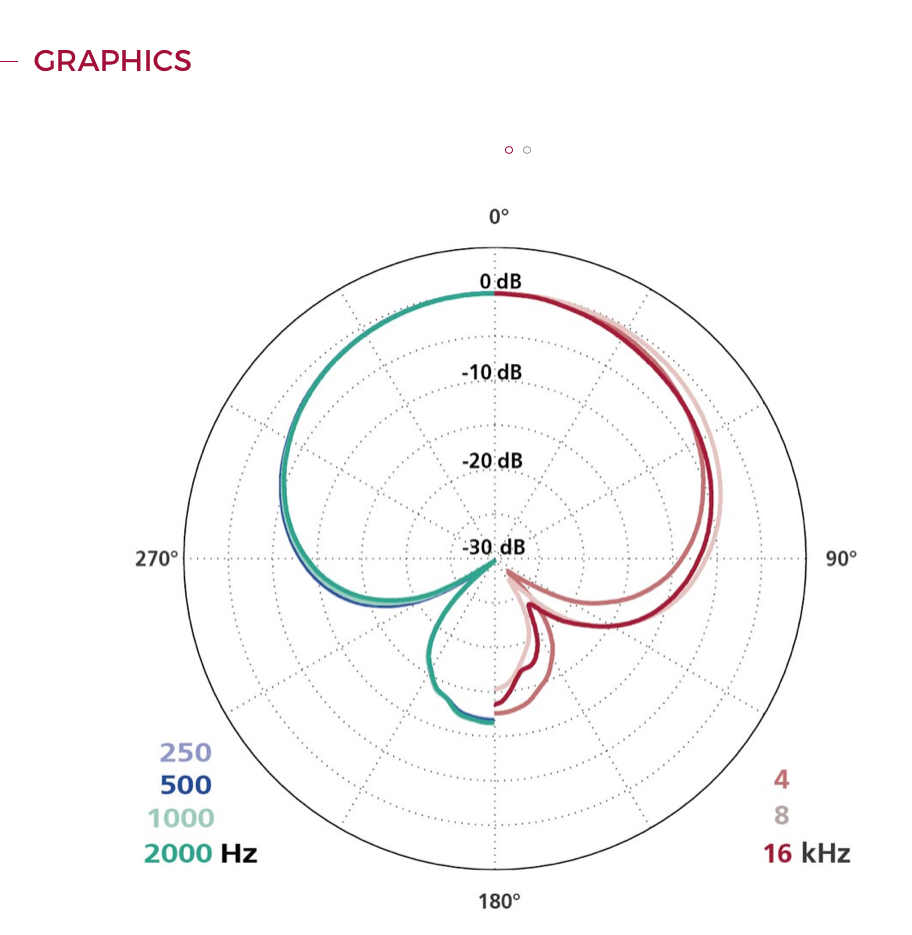
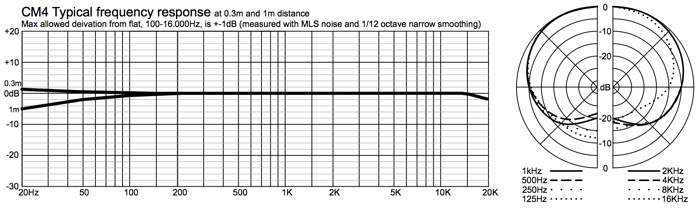
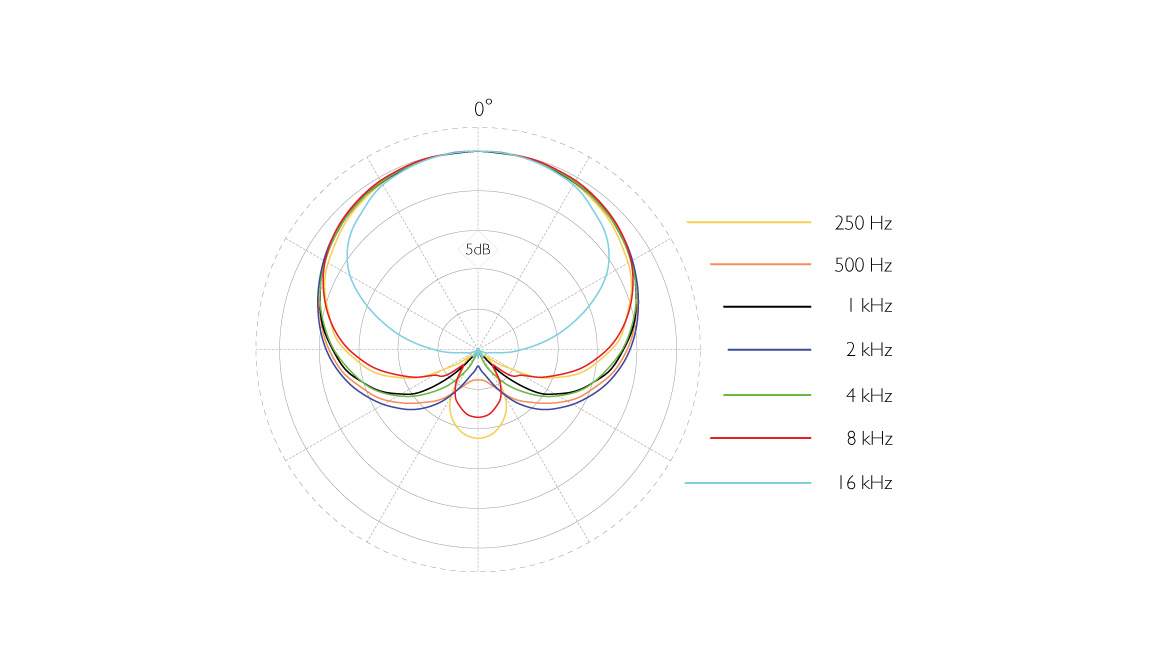 1. Schoeps 2. Line Audio 3. DPA 4099Dvote.
Seems like the CM4 has a wide cardioid, so in between a (regular) cardioid and an omni. The sensitivity at 180 degrees for every frequency is larger than zero.
Hello,
I have been using DPA 4099 for quite a few years. But it gradually started to distort certain notes, adding an eerie"mwah" effect... At first I thought it's the instrument, only to find out it was the mic.
Of course, when it happened, I was not in a good financial situation, so I was desperate to find a decent mic for little money. I found that in Elcetro-Voice PL37. Tried it in studio, live, live TV broadcast from a concert hall... It keeps on amazing me how good it sounds, and how inexpensive it is.
Untill now, I have used it on a short stand. One day I will wrap it in rubber foam and stick it under the bridge, just to hear how that works.
I have been using DPA 4099 for quite a few years. But it gradually started to distort certain notes, adding an eerie"mwah" effect... At first I thought it's the instrument, only to find out it was the mic.
Of course, when it happened, I was not in a good financial situation, so I was desperate to find a decent mic for little money. I found that in Elcetro-Voice PL37. Tried it in studio, live, live TV broadcast from a concert hall... It keeps on amazing me how good it sounds, and how inexpensive it is.
Untill now, I have used it on a short stand. One day I will wrap it in rubber foam and stick it under the bridge, just to hear how that works.

I did some testing with the CM4 if you want to listen here are the links.
Two microphone
One microphone
I don't talk in the video it's only comparaison between placement and what not. I did not try the microphone in a live situation.
Two microphone
One microphone
I don't talk in the video it's only comparaison between placement and what not. I did not try the microphone in a live situation.
Reviving a year old thread but... I'm interested if anyone uses the CM4 (or CM3) through an amp/speaker live? And, even better, with a drummer?
Reviving a year old thread but... I'm interested if anyone uses the CM4 (or CM3) through an amp/speaker live? And, even better, with a drummer?
There is only one player I know that uses this setup his non de plume is Kaspar Vadsholt here on talkbass.
Last edited:

There is only one player I know that uses this setup his non de plume is Kaspar Vanderschott here on talkbass.
I think you mean Kaspar Vadsholt.
Some other Schoeps users identified in this thread: Look What Arrived for Tonight’s Gig | TalkBass.com
Some of the users are very happy with the Schoeps, but make sure you dig in and form a realistic idea for how good the mic is at rejecting bleed, and how much gain before feedback is available. IMHO both are too low for my needs.
In my experience bleed from the cymbals is likely to be louder than the bass. Also, since much of the bleed is actually the sound hitting the curved face of the bass before being reflected back into the front of the mic, the cymbals tend to take on a rather nasty phasey quality. AFAIK the phasey quality is because the sound coming off the curved surface has traveled multiple paths with slightly different lengths. Also, the reflected sound coming off the face of the bass will not have the same frequency response as the original sound.
If you try to run the mic through an on-stage amp, gain before feedback will tend to be rather low. IMHO these problems are really not about mic quality. Rather, the biggest problem is the acoustic volume of an upright is extremely low to begin with. Keep in mind the mic will also pickup and try to amplify the sound coming from the amp. If the SPL from the amp at the mics capsule is anywhere close to the acoustic SPL of the bass, then you get serious degradation of the sound, followed by feedback as you turn the gain up.
You do have the inverse square rule working for you. Inverse square rule says SPL drops off by 6dB for each doubling of distance. You want the mic as close to the bass as possible, so the SPL at the capsule is as loud as possible. A couple of problems: 1. If the mic is directional, you're going to get proximity effect...I.E. the low frequencies will be exaggerated. You will need to apply some corrective EQ if you want a natural sound. 2. Focusing the mic's pickup pattern on a very small part of the bass is not a great recipe for capturing a natural upright tone. You generally need some distance between the mic and bass to get a nice representative sound of the entire instrument. Some people suggest using an omni right that is almost touching the bass. This should help improve the sound of the upright in the mic, but an omni is not generally a great tool for rejecting bleed or increasing gain before feedback.
Some of the users are very happy with the Schoeps, but make sure you dig in and form a realistic idea for how good the mic is at rejecting bleed, and how much gain before feedback is available. IMHO both are too low for my needs.
In my experience bleed from the cymbals is likely to be louder than the bass. Also, since much of the bleed is actually the sound hitting the curved face of the bass before being reflected back into the front of the mic, the cymbals tend to take on a rather nasty phasey quality. AFAIK the phasey quality is because the sound coming off the curved surface has traveled multiple paths with slightly different lengths. Also, the reflected sound coming off the face of the bass will not have the same frequency response as the original sound.
If you try to run the mic through an on-stage amp, gain before feedback will tend to be rather low. IMHO these problems are really not about mic quality. Rather, the biggest problem is the acoustic volume of an upright is extremely low to begin with. Keep in mind the mic will also pickup and try to amplify the sound coming from the amp. If the SPL from the amp at the mics capsule is anywhere close to the acoustic SPL of the bass, then you get serious degradation of the sound, followed by feedback as you turn the gain up.
You do have the inverse square rule working for you. Inverse square rule says SPL drops off by 6dB for each doubling of distance. You want the mic as close to the bass as possible, so the SPL at the capsule is as loud as possible. A couple of problems: 1. If the mic is directional, you're going to get proximity effect...I.E. the low frequencies will be exaggerated. You will need to apply some corrective EQ if you want a natural sound. 2. Focusing the mic's pickup pattern on a very small part of the bass is not a great recipe for capturing a natural upright tone. You generally need some distance between the mic and bass to get a nice representative sound of the entire instrument. Some people suggest using an omni right that is almost touching the bass. This should help improve the sound of the upright in the mic, but an omni is not generally a great tool for rejecting bleed or increasing gain before feedback.


