• TalkBass has been independent since 1998. Add your voice.
    Create a free account to reply to discussions, view embedded media, and browse with fewer display ads.
    Join freeLog in
    Want zero display ads or expanded classifieds tools? Compare plans.

Setting up an old bass

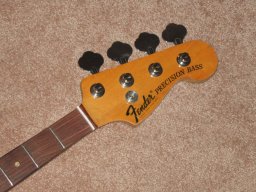
Hey guys, so I have an old P-bass copy thats been sitting in my closet for a few years with no strings on it, and one broken tuning peg. So I decided to fix it up and ordered a new set of tuning pegs and strings.

My question is, since it hasn't had strings on it in a long time, what should I do when putting new ones on to make sure the neck is ok? Is there any special consideration I should take because it hasn't had strings in a while? How would you recommend going about setting it up? Any advice would be great. Thanks guys!

 
Sounds good, the neck is perfectly straight and I'm hoping it stays that way when I throw strings on it. My main bass is a T-bird but I haven't played this P since I was young with a crappy practice amp and im wondering how it will sound through my rig.
 
No experience with your situation, but if it was mine, I would use a standard 45-105 set of strings and tune and set up for BEAD tuning. Then slowly, over about a week or two, tune up and set relief for EADG tuning. If truss rod is under tension, I would loosen and make sure it turns freely, then slowly tighten as necessary to keep correct relief as you bring up to pitch.
 
I just went through exactly the same thing except it did have strings. It was completely unplayable. I had to order a new nut and level the frets. I also shimmed the neck and adjusted the truss rod. You aren't going to know till you start putting it together. It may end up just needing a little adjustment here and there. I would think saddle heights and truss rod adjustment would be first considerations and of course intonation. I also checked the tightness of every screw on the bass and I think that would be a good idea. You won't know about the neck until you put the strings on it. Good luck and have fun with it.
 
From what I remember, this bass was set up fine, although the action was a little high for my taste. And since I haven't touched it since then, other than removing the strings, I am hoping it will still be relatively nice. I'm sure I'll have to adjust the action, and even the truss rod but thats no biggie. I just hope its nothing too much more but if so, no big deal because it's not my main bass, and I can take my time and learn how to set it up properly.
 
No experience with your situation, but if it was mine, I would use a standard 45-105 set of strings and tune and set up for BEAD tuning. Then slowly, over about a week or two, tune up and set relief for EADG tuning. If truss rod is under tension, I would loosen and make sure it turns freely, then slowly tighten as necessary to keep correct relief as you bring up to pitch.

Two weeks is a bit much. I was thinking more like an hour.
 
If the trussrod nut is removable, it would be a good idea to lube the threads first, before tension is applied.
Other than that, I'd follow 'unclebass's advice.
Best to be conservative and safe, since it has not been set up for so long.
 
You shouldn't have to wait a week or two. The bass doesn't know if it had strings on it or not. The neck will do what the neck will do in and hour or a week unless you are moving from the arctic circle to the tropics the humidity won't change that much.
Just string up the bass and tune it to pitch. You should be able to adjust the truss rod right away.

Do you guys think repair shops take that long to set up a bass? How about at the factory when they are being built? Basses can be set up and truss rods adjusted without any waiting. The wood and the rod don't care!
 
Two weeks is a bit much. I was thinking more like an hour.


I see that and raise you immediate. Fer the love of all nice things, ITS A PIECE OF MAPLE!

Consider a bass new at the factory: it has never had strings on it. They don't wait two weeks. They slap it together and ship it across the ocean. The fail (warp) rate is only a function of wood defects, not string tension.