If you were to get a short scale bass, do you prefer the “30 scale or the “32 scale? What’s the difference? I’ve never had one and, they seem to be very popular and they look really cool. What’s the pros and cons?

Enjoy the benefits of a premium membership!
Upgrade Account
-
TalkBass has been independent since 1998. Add your voice.
Create a free account to reply to discussions, view embedded media, and browse with fewer display ads.
Join free Log in
Want zero display ads or expanded classifieds tools? Compare plans.
You are using an out of date browser. It may not display this or other websites correctly.
You should upgrade or use an alternative browser.
You should upgrade or use an alternative browser.
Short scale bass 30 or 32
- Thread starter PleyswethSqwerl
- Start date
More options
Who Replied?
32" is generally considered Medium Scale. I think it's the best option.
30" can be too muddy for my liking. If you play with Flats, 30" can be a poor choice due the tension and clarity.
32" is easy to play, you don't lose too much tension and clarity.
30" can be too muddy for my liking. If you play with Flats, 30" can be a poor choice due the tension and clarity.
32" is easy to play, you don't lose too much tension and clarity.

This is a good response. That’s what I was thinking.32" is generally considered Medium Scale. I think it's the best option.
30" can be too muddy for my liking. If you play with Flats, 30" can be a poor choice due the tension and clarity.
32" is easy to play, you don't lose too much tension and clarity.
Another suggestion, with the tension difference, if you play with a hard attack or a pick would also factor in making a decision.
As well as, a good setup and higher tensioned strings for a short scale can make a world of difference.
As well as, a good setup and higher tensioned strings for a short scale can make a world of difference.

As with many things the answer is: it depends. What are you going to use the bass for mainly? What do you expect to get out of it? A 30" scale can be just fine for some things but you cannot expect a 30" low B on a 5 string to be anything but flabby, for example. On the other hand, the upper register can be great. Neck and fretboard woods make a difference also. This is what I have and these work well for my needs:
Kinal Kompact 30" fretted 5 string, tuned E>C. Maple neck, Pau Ferro fretboard. This works great for melodic and chord things. It would be great accompaniment in an acoustic duo or trio.
Keith 32" fretless 5 string, tuned B>G. Mahogony neck, Macassar ebony fingerboard. The low B is passable for melodic and soft jazz, and otherwise suggesting or intimating an upright bass sound but it will never be "thunderous".
Keith 30-33" fretted 6 string multi-scale, tuned B>C. Ash neck, Macassar ebony fingerboard. This has the best of both of the above - easy to get around in the upper register and a taut, authoritative low B (which Martin attributes in part to the hard ash neck wood, and I agree).
In short, in my experience it is unrealistic to expect a 30" bass to cover all the basses well. Each variation has its place.
Kinal Kompact 30" fretted 5 string, tuned E>C. Maple neck, Pau Ferro fretboard. This works great for melodic and chord things. It would be great accompaniment in an acoustic duo or trio.
Keith 32" fretless 5 string, tuned B>G. Mahogony neck, Macassar ebony fingerboard. The low B is passable for melodic and soft jazz, and otherwise suggesting or intimating an upright bass sound but it will never be "thunderous".
Keith 30-33" fretted 6 string multi-scale, tuned B>C. Ash neck, Macassar ebony fingerboard. This has the best of both of the above - easy to get around in the upper register and a taut, authoritative low B (which Martin attributes in part to the hard ash neck wood, and I agree).
In short, in my experience it is unrealistic to expect a 30" bass to cover all the basses well. Each variation has its place.

Nordy Cats and Starplayers and a number of other European and Euro inspired shortys are 30.7. I pick that.
Another excellent point, not explicitly said by Ken. It also depends who is making it?As with many things the answer is: it depends. What are you going to use the bass for mainly? What do you expect to get out of it? A 30" scale can be just fine for some things but you cannot expect a 30" low B on a 5 string to be anything but flabby, for example. On the other hand, the upper register can be great. Neck and fretboard woods make a difference also. This is what I have and these work well for my needs:
Kinal Kompact 30" fretted 5 string, tuned E>C. Maple neck, Pau Ferro fretboard. This works great for melodic and chord things. It would be great accompaniment in an acoustic duo or trio.
Keith 32" fretless 5 string, tuned B>G. Mahogony neck, Macassar ebony fingerboard. The low B is passable for melodic and soft jazz, and otherwise suggesting or intimating an upright bass sound but it will never be "thunderous".
Keith 30-33" fretted 6 string multi-scale, tuned B>C. Ash neck, Macassar ebony fingerboard. This has the best of both of the above - easy to get around in the upper register and a taut, authoritative low B (which Martin attributes in part to the hard ash neck wood, and I agree).
In short, in my experience it is unrealistic to expect a 30" bass to cover all the basses well. Each variation has its place.
There are amazing short scales made by Custom Luthiers, not the same as buying an Epiphone EB-3.
In Australia, we have Polaris basses.
Link Removed
This is a 30" Multiscale.
Attachments

I like and have both. That said, my preference is actually right between. I build my own basses these days and they are 31" scale. None of my basses are muddy at all, regardless of scale. They all are strung up with flats of various sorts.. LaBella, Dunlop, DR Legends and Fender. I use Bartollini, Nordstrand and ZR pick ups and all are active with John East and Noll preamps. The certainly thump when I want that, but not inherently muddy.


D
For me, 30" doesn't have a night/day difference in tension compared to 34". It's mainly down to string choice, as Neon Blues mentioned. I also don't notice muddiness from my Fender Junior Jazz (30"), but it has nickel rounds and single coils. YMMV, depending on your setup.
Comfort-wise, some players feel 30" is cramped, but I find them very comfortable, especially when playing closer to the nut. 32" basses fall into no man's land in my opinion. I'd either want 30" for more comfort, or a full 34" for more tension and string options. I also find that there are fewer bespoke 32" string sets on the market compared to 30" and 34".
Sub/super short scale basses (<28") a la the Ibanez miKro/Squier Mini P-Bass also exist, but those border on too small for me. Be sure to give all the scales a try at your local music store, so you can learn which is best for you.
Comfort-wise, some players feel 30" is cramped, but I find them very comfortable, especially when playing closer to the nut. 32" basses fall into no man's land in my opinion. I'd either want 30" for more comfort, or a full 34" for more tension and string options. I also find that there are fewer bespoke 32" string sets on the market compared to 30" and 34".
Sub/super short scale basses (<28") a la the Ibanez miKro/Squier Mini P-Bass also exist, but those border on too small for me. Be sure to give all the scales a try at your local music store, so you can learn which is best for you.
Thanks everybody these are really goo Feedback responses. Probably some of the most informative I’ve seen.
Besides, if you are going to go short scale, at least do it properly...
I actually just ordered this.
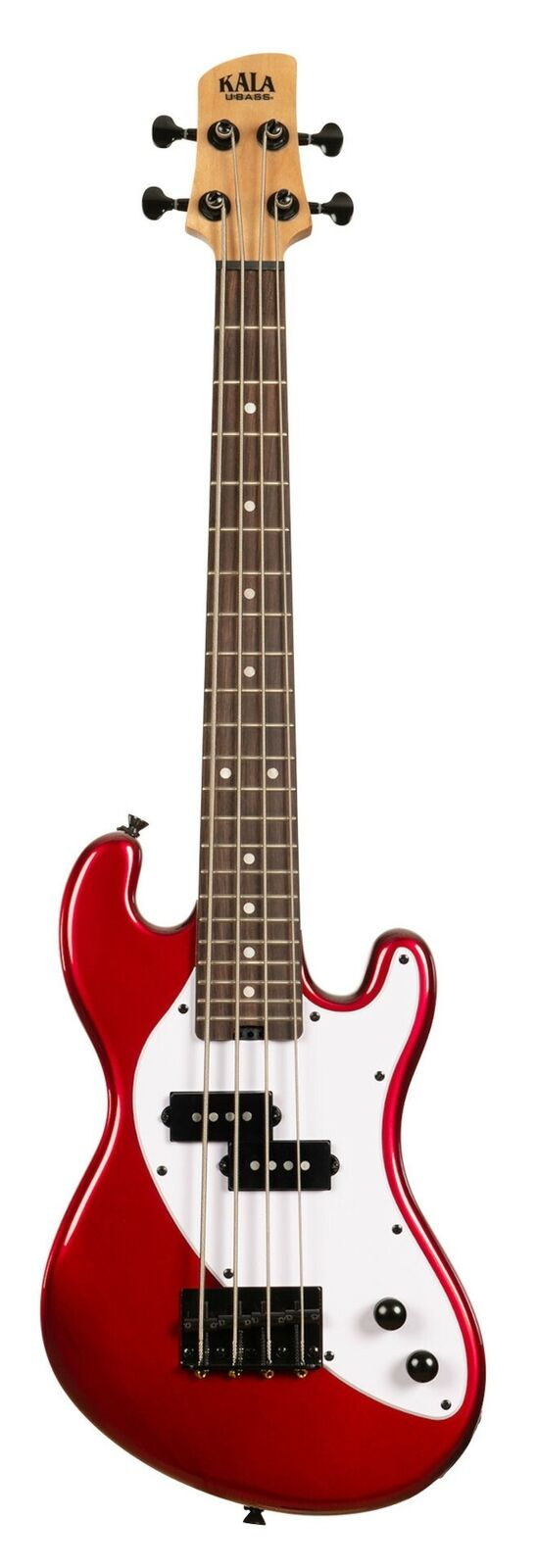
I actually just ordered this.
That looks cool. It looks like it has a 12 inch fretboard radiusBesides, if you are going to go short scale, at least do it properly...
I actually just ordered this.
View attachment 6984665

I love a 30" scale with LaBella LTFs. My favorite is actually a 30.75" Guild Starfire. YMMV.

Honestly there's no wrong answers. It depends on what kind of sound/feel you are looking for.If you were to get a short scale bass, do you prefer the “30 scale or the “32 scale? What’s the difference? I’ve never had one and, they seem to be very popular and they look really cool. What’s the pros and cons?
Mike Bendy has a "31 scale fodera with 6 stings. Likewise, Tony Grey has a "30.75 scale Headless fodera with 6 strings.
The shorter the scale, the less clarity of the sound... and you would probably need thicker strings to have a similar tension compared to a "34. On the other hand, it is easier to play, for the hand and wrists, and to do faster runs. Also, if your thing is a vintage 60's thumpy sound, then a shorter scale bass can give you killer tone.

Strings can really make a difference on a 30”. Some like my SG with Babicz need med scale strings to clear the nut. But the tension varies on different sets.

I have two 32" scale basses, a custom Dave Pushic and an Ibanez AGBV AND three 30" scale basses, G&L Fallout Tribute, Fender Coronado II and a Gibson SG. Each are fun to play and have unique characteristics but I HAD to go to shorter scale basses due to shoulder arthritis. I've been playing bass for almost 50 years and the scale length has made it possible to continue playing.If you were to get a short scale bass, do you prefer the “30 scale or the “32 scale? What’s the difference? I’ve never had one and, they seem to be very popular and they look really cool. What’s the pros and cons?

I've got 3x short scales, a 30 and 2x 32. To me the scale length isn't as noteworthy as other variables such as neck width, string spacing, pickup position, number of frets and string choice.
Interestingly, once I started playing short, medium and long scale basses my playing overall improved and I was able to quickly adapt from instrument to instrument. Versatility was really helpful for me. I used to worry about details but now I trust that my hands and brain will adapt to almost any bass.
If you're interested in one, get your hands on one for a demo and start your journey!
Interestingly, once I started playing short, medium and long scale basses my playing overall improved and I was able to quickly adapt from instrument to instrument. Versatility was really helpful for me. I used to worry about details but now I trust that my hands and brain will adapt to almost any bass.
If you're interested in one, get your hands on one for a demo and start your journey!