
• TalkBass has been independent since 1998. Add your voice.
    Create a free account to reply to discussions, view embedded media, and browse with fewer display ads.
    Join freeLog in
    Want zero display ads or expanded classifieds tools? Compare plans.
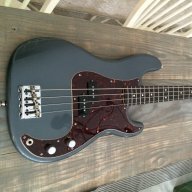
Should I return new bass for replacement?

They didn't tune it that way at the factory. It went out of tune after it left.

Set it up or take it to someone who can, then make your decision. Buzzing can mean alot of things. A bass with a great low setup and perfect frets can be "buzzy" if you don't have a light touch. A single high fret can cause a specific kind of buzz that's problematic and needs to be fixed (easy fix). A bad neck can be buzzy and can't be fixed.

If you're not sure which is which, take it to someone who does setups and get their opinion.
 
Unless the bass has some damage, there's no reason to return it. Sounds like you're somewhat new to set-ups which this bass obviously needs. I don't know your background but unless you're buying a "high dollar" instrument, you can't expect the set-up / fretwork to be flawless.
I purchase most of my instruments from Sweetwater and I've yet to have the first problem with them. We're talking 12+ instruments.
 
So, one gets a new bass through an online store. They yank it out of the box, tune it, no setup, and expect it to be good? Uh, no comes to mind. It played wonderful right out of the box? Never seen that! Chuck the strings, and do a "full and complete " setup, IF capable?! Don't bitch if no setup is done and something is off. IF you aren't capable, take it to someone that is! Tuning out of the box is irrelevant!
 
So, just to be clear, you’re wondering if the Sire V5 comes from the factory designed and set up to be played in Bb, Eb, Ab, Db, A, which is a tuning no one has ever heard of before?
Whatever you do, don't pass up the return opportunity the retailer offers. Take to a technician and let them give you their assessment and cost to setup, etc.

If it takes more work than you can do - or afford someone else to do - I'd send it back and try again. You didn't buy an instrument to repair it, did you?
I prefer a relatively perfect instrument out of the box over one that has obvious flaws that were ignored at the factory.
 
As to the G string being tuned the wrong way...

1- On a Sire 5 string, the G is the only tuning peg facing the other way on the bottom of the headstock. Someone in the shipping department might be following a "Down-tune before shipping" policy, and just twisted all the tuners the same way without thinking or knowing or realizing, and every string was loosened except the G that got inadvertently tightened.

2- It could have been in-tune and set-up perfectly, but it's a brand new bass with brand new strings. Brand new strings stretch and de-tune on their own a bit, internally or at the post. The neck might need to settle. The shipping could have jostled it enough to encourage the string stretching and neck settling or bumping the tuners. And the shipping could have also "flattened" the G string tuner, and by chance turning it to a flat position just happened to tune it sharp.

First response by @Geri O was the right response: The bass just needs a proper professional setup.

Only high-end basses come perfectly set up from the factory/builder, and even then, if it's shipped it'll probably need a mild setup upon delivery. Sires have a reputation of being pretty close to set up right out of the box. But sometimes not. Mass production has margin for error.

This bass just needs a proper setup. If you take it to a pro who knows what they're doing and they say a setup won't fix the issues, then a replacement bass is warranted. And even then, when that next bass shows up, it'll probably also need a setup.
 
GC does no setup whatsoever on it's basses, it's just out of the box and onto the wall, so the setup you get is the accumulated temperature and humidity change between wherever it was shipped from and your local GC. I remember when the Squier VM Jazz basses first came out, I took my son to try one at a GC and the one they had was literally unplayable, with 1/4" high action at the 12th. It might have been fine after a full setup, I'll never know. Lots' of good setup videos on YT, this 4-part series is the best I've found so far:


I wonder if this bass was a return and reship? I would suspect that if given the one string being tuned the way it was and packaging being shoddy.

I got a good deal on a "new" acoustic bass one time from MF, and the packaging looked like it was opened before, then when I went to plugin the bass, the preamp made no sound, add to that it buzzed all over the place. I sent that thing back within a couple of hours after receiving it.
 
The tuning is probably meaningless, could have bumped the tuner putting it in the case. Opinions vary, but a lot of people recommend just tuning a bass down a half step before shipping. If the truss rod and bridge adjustments work, it should be possible to do a basic setup. As long as you don’t file the nut or way over tighten the trussrod, it’s still under warranty. If it can’t be set up with no buzz, send it back.
 
Just had a new Sire V5 5-string bass delivered.

Several of the frets buzz (only two of which on the low B). The guitar also was delivered in a tuning a half-step down with the G string actually a whole step up (totalling 3 away from being where E flat standard above be)

1) I assume this guitar was set up before shipment. Does that mean that they set it up with this tuning in mind, potentially causing the to change things? I noticed the action is a bit high (I imagine to compensate the low tuning potential buzz, yet it still buzzes). I assume they didn’t switch strings, so I assume the nut hasn’t been fiddled with.
2) Will the fret buzz likely go away as the bass adapts to the humidity? The state it delivered from should have roughly the same climate. I’d think it’d be more uniform fret buzz that would be due to climate, not this seemingly across the board random buzz.

Also the packaging of the bass in the box was horrible. Hardly any protection: a thin (non-formfitted) box inside a thin box, few small pieces of styrofoam not really holding the bass in place, 2 brown paper streaks, and absolutely no bubble/air wrap. Can damage in transit cause this fret buzz? Surprisingly the outer box had minimal noticeable damage.


The tuning things make it seem like maybe this was the demo bass played inside the local store by potential customers. No idea why else the tuning would be that way. It comes from American Musical Supply FYI.


I’m thinking of just demanding a replacement, but I don’t want to wait for another bass. Maybe they’ll send it before I have to ship this one out. Anyway… any thoughts? Thank you!

It seems if I was shipping a bass, I would want (as a shipper or for the receiver of said instrument) to have neither a full, standard tuned bass with all of it's tension on the neck, NOR completely devoid of ANY tension. It would seem to me that tuning the instrument down to G#, C#, F#, A#, D# (or thereabouts) would be the preferred middle-ground.

Anyone suggest otherwise, and WHY?
 
Thank you again to those actually wanting to help. The snobs and smug keyboard warriors are an unfortunate and bored inevitability of internet forums (good, there's room for their mental growth just like my severely lacking bass knowledge base).

I did not bring it to the shop to set it up today because I want to mess around on it myself more, as well as play it. Honestly might want to get thicker strings for it too before I set it up. But I played it through an amp (multiple amps and an amp sim actually) and there's something that has popped up that I don't think is normal (although it might be - have at it, trolls).

There's a slight (somewhat soft but very noticeable) pop around 9.5/10 when moving my neck pickup knob (going either direction). I'm certain it's from the pickup (like you all probably are) as it sounds like when you flick the tone control switch on a 6 string electric. Also because the bridge pickup knob does the same thing, only much, much quieter (barely audible). I do expect some sort of noise since it's a passive bass, but not something that stands out like that, especially considering how the bridge pickup knob doesn't do it that badly.

But on top of that there's quite a large tonal difference between 9.5-10 and 9, much more than I think there should be. At 9.5-10 it sounds like you'd expect a (Sire) Jazz clone to sound with both pickups and volume maxed. Along 0 to 9.5 it also does sound mostly like what I'd expect it to with significantly less neck pickup, it's just that the tonal jump from 9 to 9.5 (and vice versa) seems way too drastic, almost like a different bass altogether; 9 sounds like what I'd expect 3-5 to sound like. Is this normal enough for Jazz basses and their clones??? Because I wouldn't expect so.
 
It seems if I was shipping a bass, I would want (as a shipper or for the receiver of said instrument) to have neither a full, standard tuned bass with all of it's tension on the neck, NOR completely devoid of ANY tension. It would seem to me that tuning the instrument down to G#, C#, F#, A#, D# (or thereabouts) would be the preferred middle-ground.

Anyone suggest otherwise, and WHY?

Because when tuned normally the tension of the strings are balanced perfectly with that from the neck (wood + truss rod). If you change one of the two alone, the neck is no longer balanced.

Whether any of this makes any practical difference is debatable, so make of that what you will.
 
Thank you again to those actually wanting to help. The snobs and smug keyboard warriors are an unfortunate and bored inevitability of internet forums (good, there's room for their mental growth just like my severely lacking bass knowledge base).

Dude....

I've read through this entire thread and I've yet to see a smug or snobbish reply. You actually seem to be spoiling for a fight. Well, tell you what....

I take back my common-sense advice.

Yer on yer own.

NOW you have a smug response.