

Howdy folks,
I've recently acquired a KSM353 for my studio. I don't think I would ever take this mic out on a gig, but supposedly it was built to do so. I just think it is too expensive to do that not to mention the weight. Anyway, I started putting it on some sources to see what it sounds like.
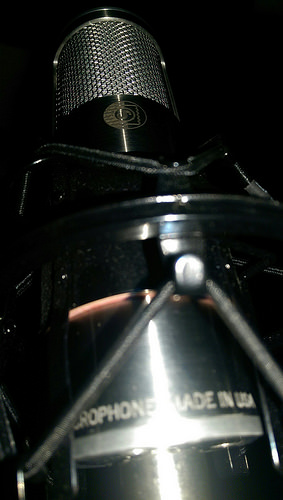
Here is a really short sample using 5 instruments you see in this picture (not the drums though):
[Invalid or Expired Link Removed]
It's really loose, because I am rusty, but you will get an idea of the overall sound of the mic as the sources stack. I put a little delay on some of the instruments to make space for everything. I'm talking 1-4ms slightly varied on each side of the stereo return channel, 1 per instrument, except the double bass. Filtered the delay to pass above 5-600hz, sometimes way higher so to not interfere with the body sound of the mics and blended really really low in the mix. I bypassed and checked to make sure it didn't alter the sonics so you could hear what was actually recorded but have a tiny stereo field. No processing except for the dash of delay. Signal chain: KSM353->Pendulum Audio MDP1->Lynx converters.
Nice mic. I'm really beginning to like it. It's so mellow on the bass and accurate. The mic was placed a foot away pointing at the bridge but slightly off axis toward an ff.
The tambourine sound amazes me. I've recorded so many of them over the years and the one I have here is a piece of junk, really. I find it really musical and I actually like listening to it! A few other observations is the attack on everything is, well, smooth. In a normal mix I find myself putting a lot of acoustics, close mic mind you, through a compressor with a gentle slope at the signal peak to soften them so the apparent body of the instrument and harmonic content is better revealed and to sit them in a mix. This is really fascinating to me because I haven't had this caliper of a ribbon mic in here before. Big eye opener. I plan on using it through some other gear with different impedances to see what comes out of it. Really interested what it does with the mindprint dtc as the impedance is 5kΩ whereas the MDP1 is 1.5KΩ. Should have some interesting findings.
I've recently acquired a KSM353 for my studio. I don't think I would ever take this mic out on a gig, but supposedly it was built to do so. I just think it is too expensive to do that not to mention the weight. Anyway, I started putting it on some sources to see what it sounds like.
Here is a really short sample using 5 instruments you see in this picture (not the drums though):
[Invalid or Expired Link Removed]
It's really loose, because I am rusty, but you will get an idea of the overall sound of the mic as the sources stack. I put a little delay on some of the instruments to make space for everything. I'm talking 1-4ms slightly varied on each side of the stereo return channel, 1 per instrument, except the double bass. Filtered the delay to pass above 5-600hz, sometimes way higher so to not interfere with the body sound of the mics and blended really really low in the mix. I bypassed and checked to make sure it didn't alter the sonics so you could hear what was actually recorded but have a tiny stereo field. No processing except for the dash of delay. Signal chain: KSM353->Pendulum Audio MDP1->Lynx converters.
Nice mic. I'm really beginning to like it. It's so mellow on the bass and accurate. The mic was placed a foot away pointing at the bridge but slightly off axis toward an ff.
The tambourine sound amazes me. I've recorded so many of them over the years and the one I have here is a piece of junk, really. I find it really musical and I actually like listening to it! A few other observations is the attack on everything is, well, smooth. In a normal mix I find myself putting a lot of acoustics, close mic mind you, through a compressor with a gentle slope at the signal peak to soften them so the apparent body of the instrument and harmonic content is better revealed and to sit them in a mix. This is really fascinating to me because I haven't had this caliper of a ribbon mic in here before. Big eye opener. I plan on using it through some other gear with different impedances to see what comes out of it. Really interested what it does with the mindprint dtc as the impedance is 5kΩ whereas the MDP1 is 1.5KΩ. Should have some interesting findings.





