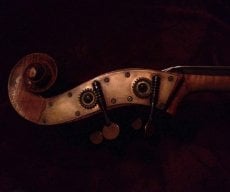
This bass was originally sold as a “Slap King” bass...the owner was quite happy with it, playing rockabilly gigs. But he tripped while carrying the bass, and bashed three holes through the lower treble bout.
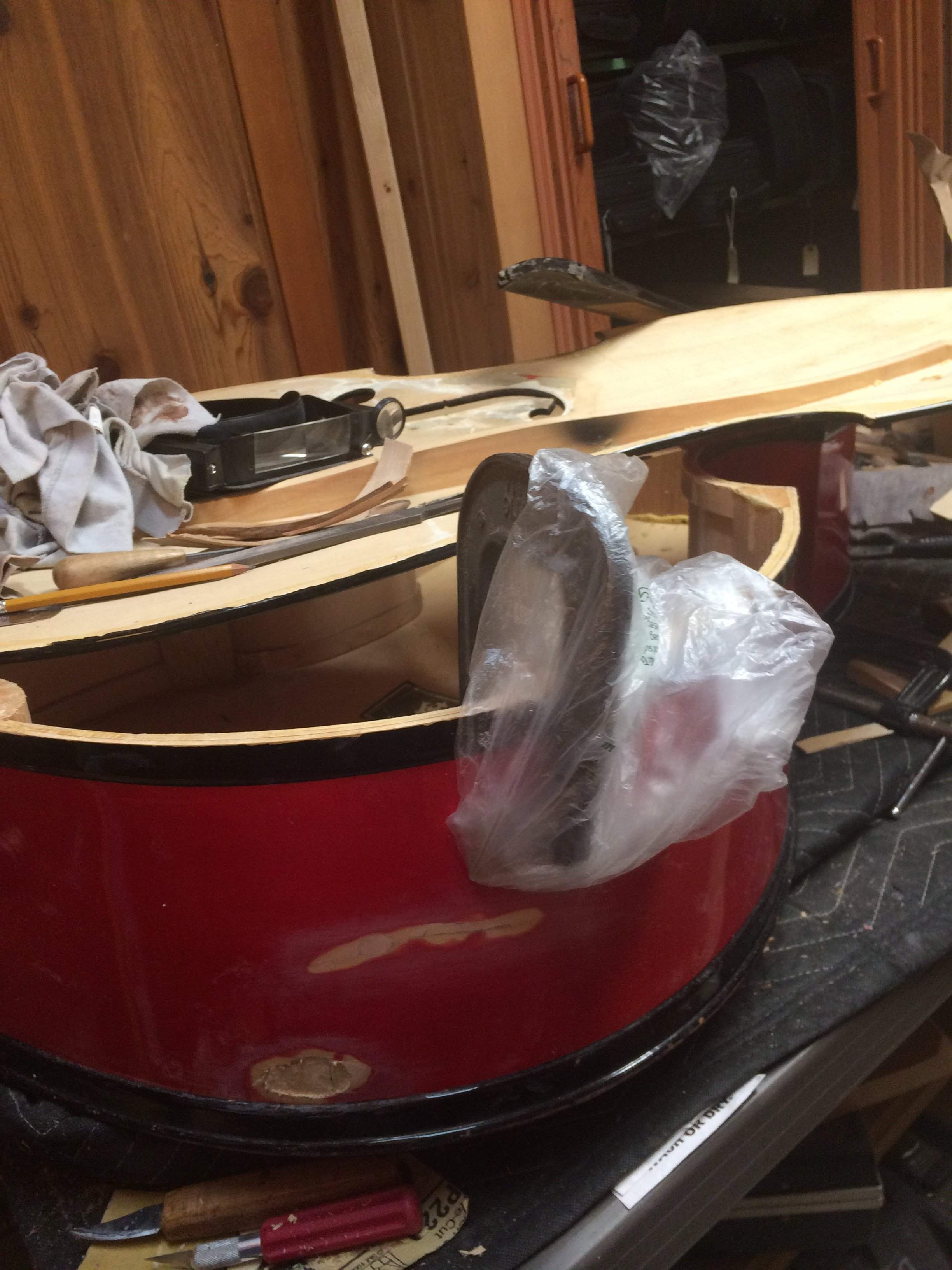
I neglected to get a good photo from the outside of the “before”. Here’s one of the inside, after I removed the top.
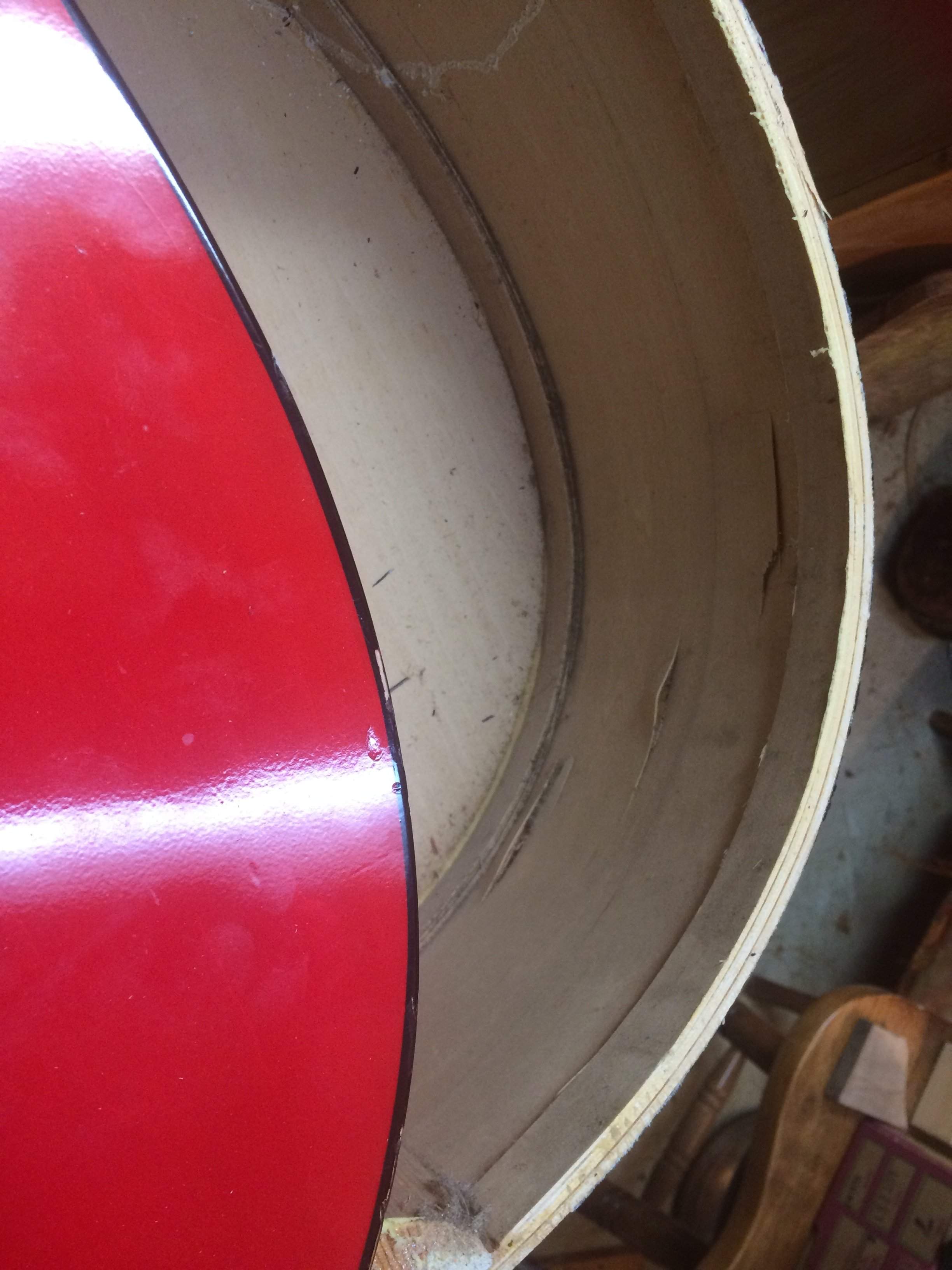
I’m not sure what he fell on, to get three holes, evenly spaced along a diagonal line, but the plywood in the center of each hole was pretty well pulverized.
I saturated the “wounds” with glue, shoving them to the outside so that the remaining plywood was fairly close to flush with the outside curve, then added a diagonal patch of 1/16” plywood from the inside, gluing, clamping and bracing, to get a very tight fit.
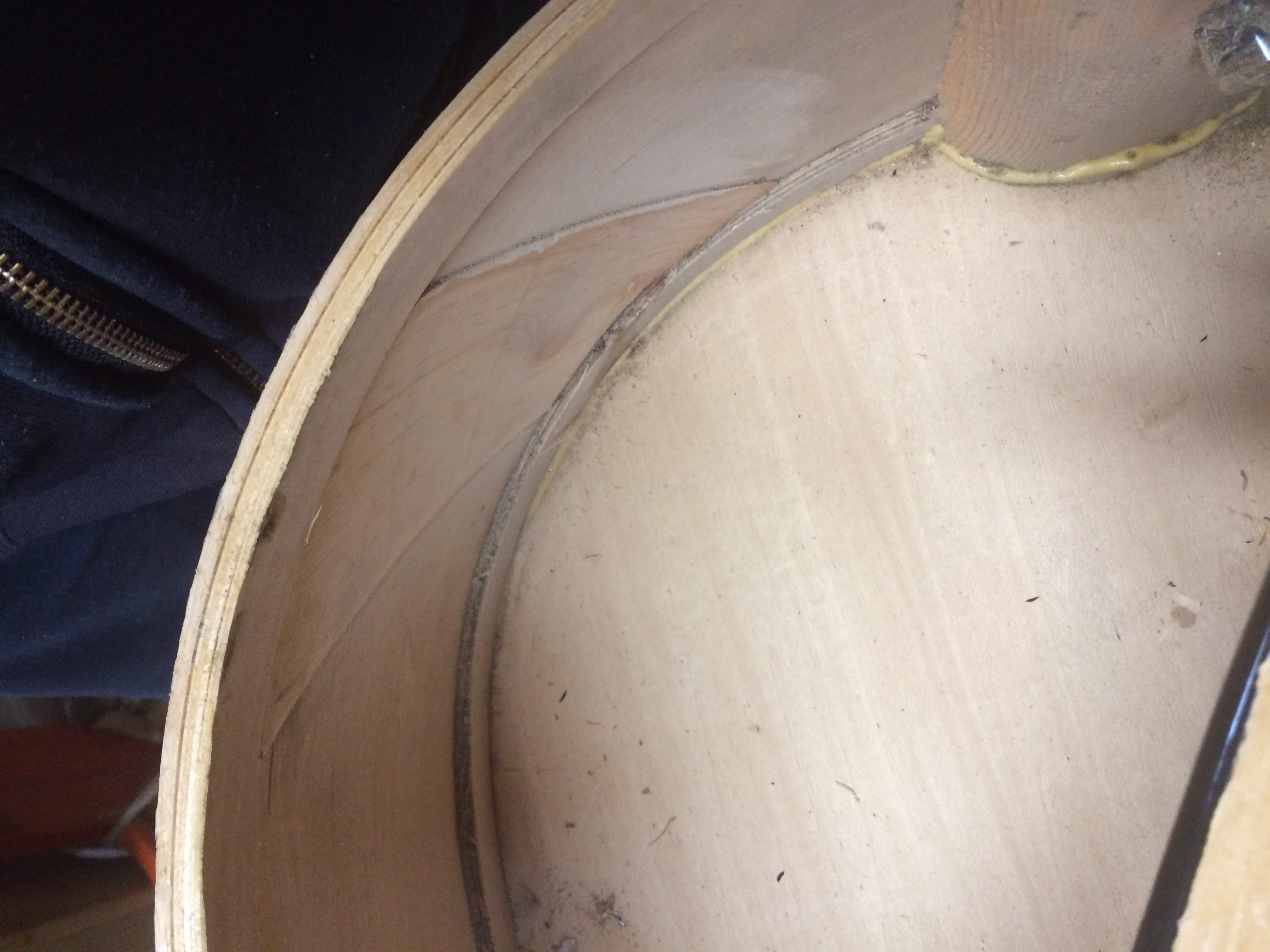
I ended up having to add a small linen patch on one side, as the inner ply had a crack extending further along the bout.
Then I began excising the pulverized splinters from the strike-zones, and replacing the wood with ovals cut from solid maple rib-stock.
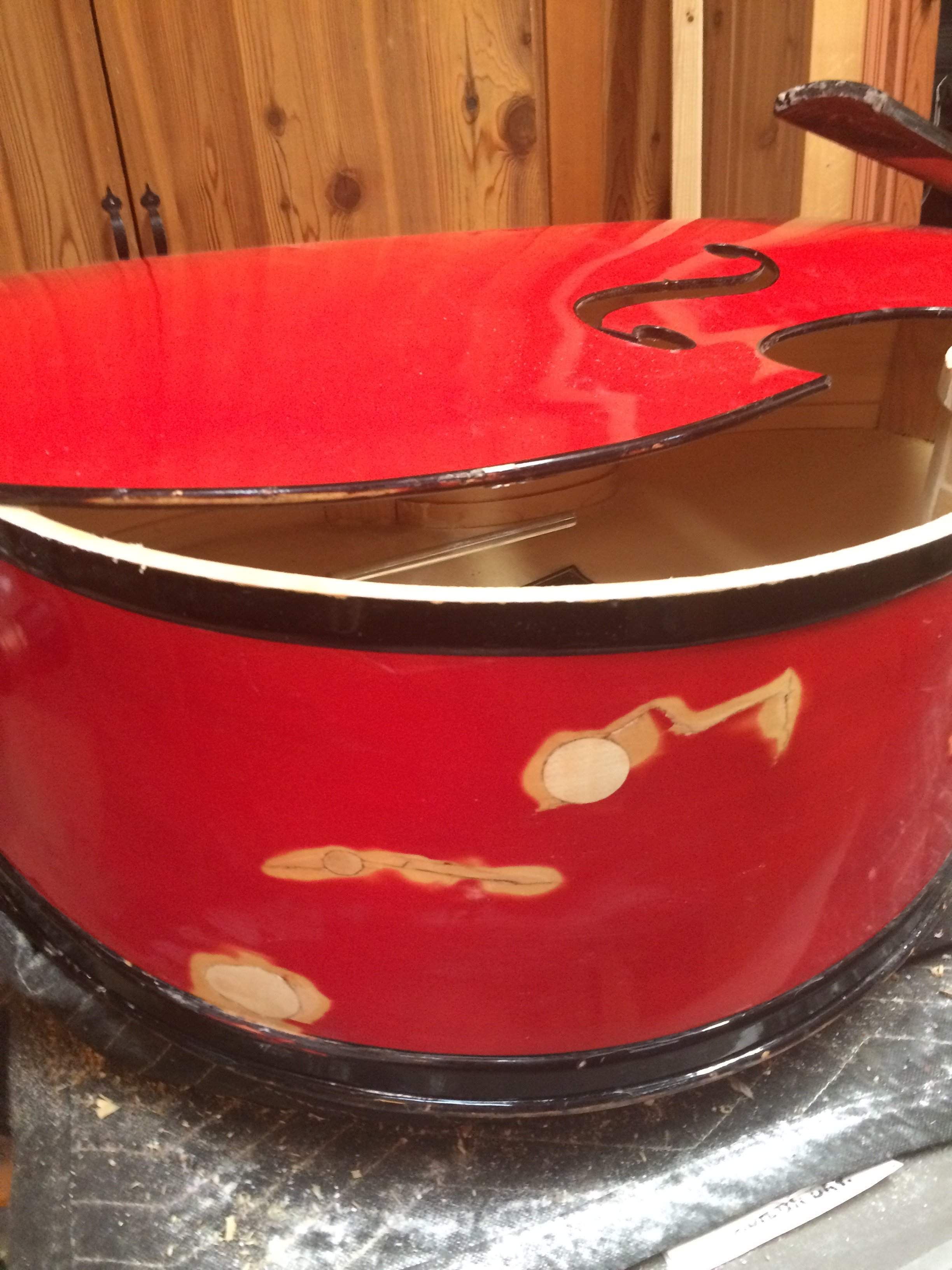
Then I closed the top, and continued working on the scars:

Eventually all was close enough to smooth and flush that I began the retouch process:
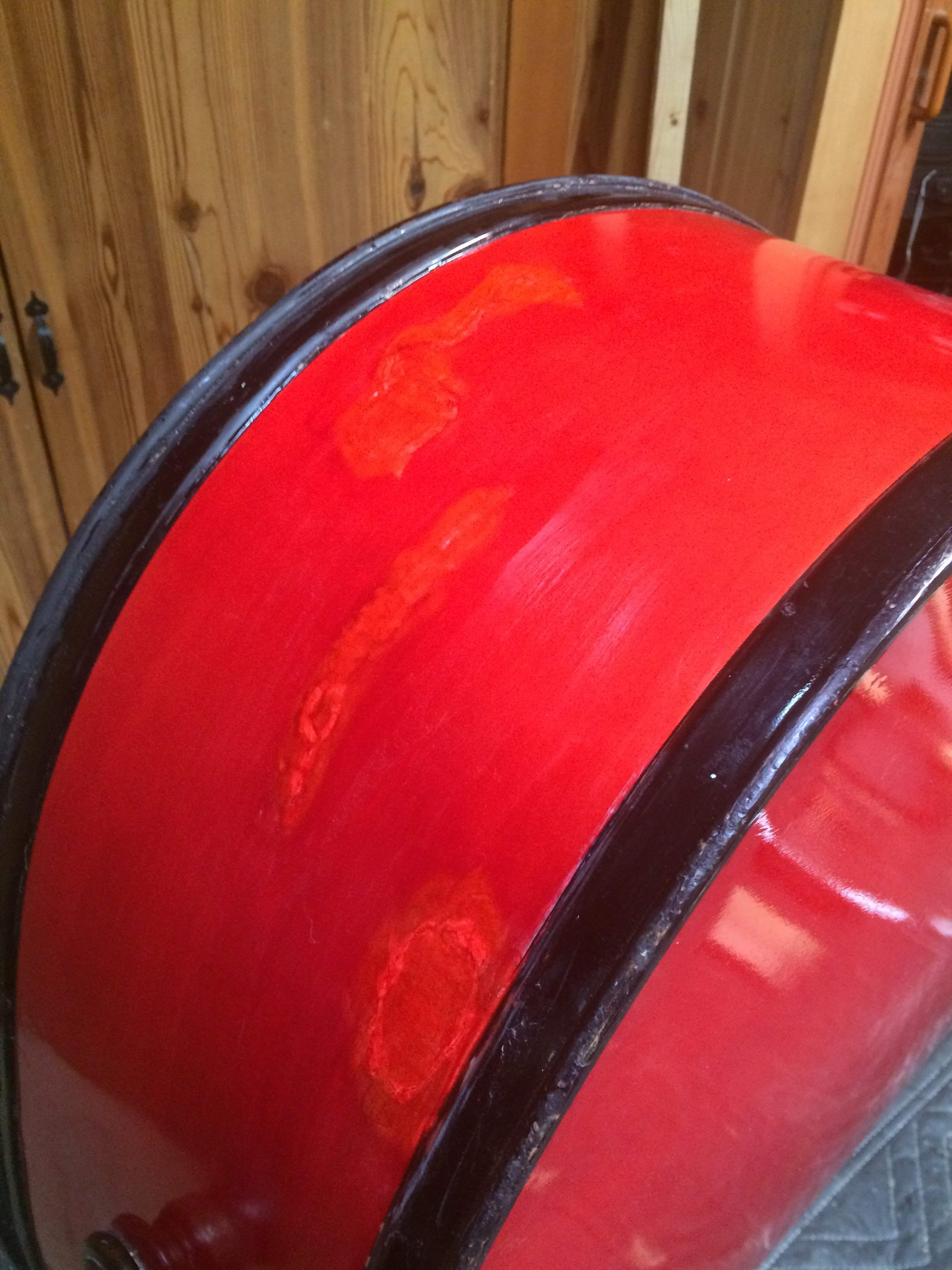
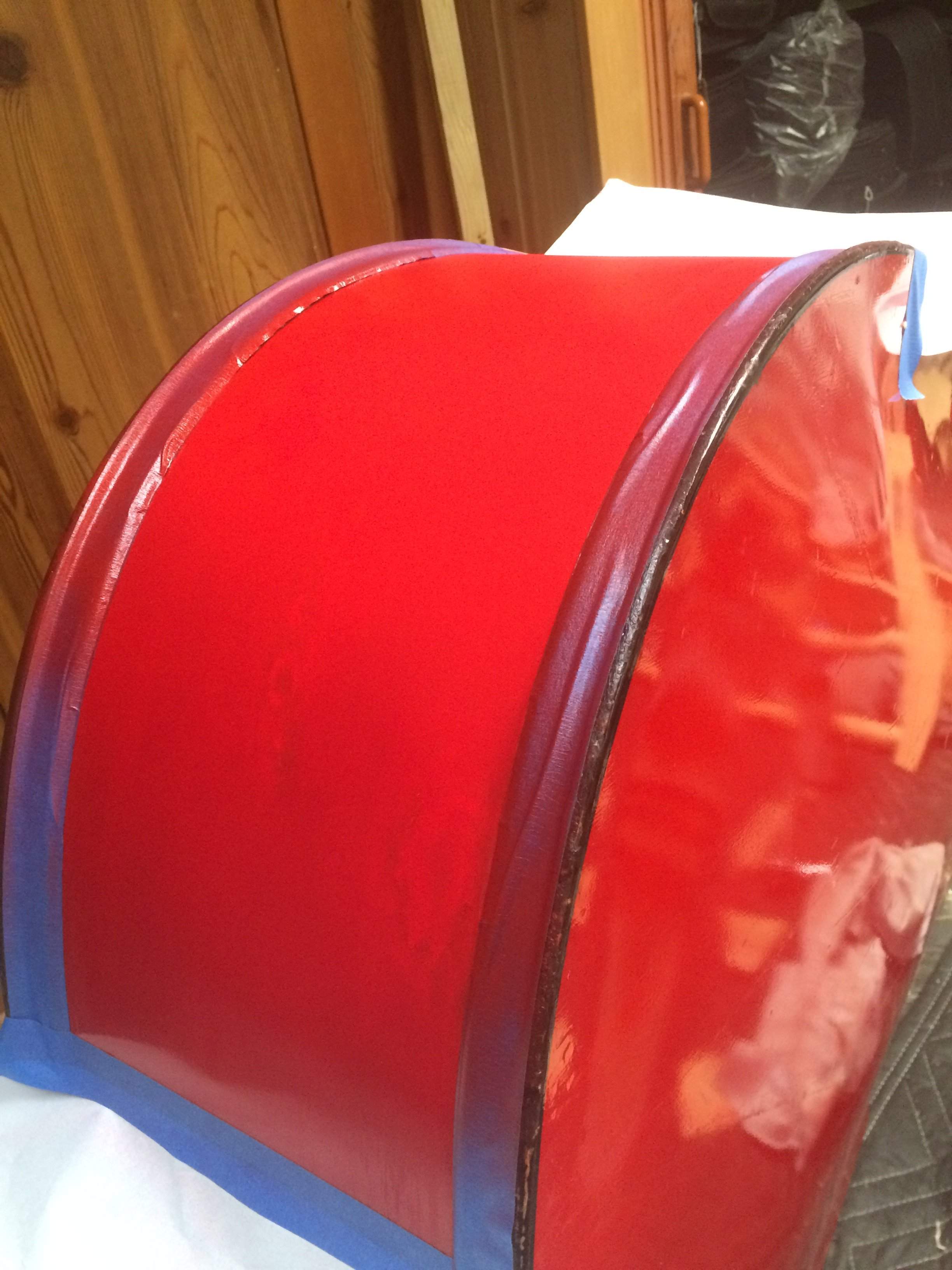
And, finally, I could set it up and deliver the bass to the happy customer.
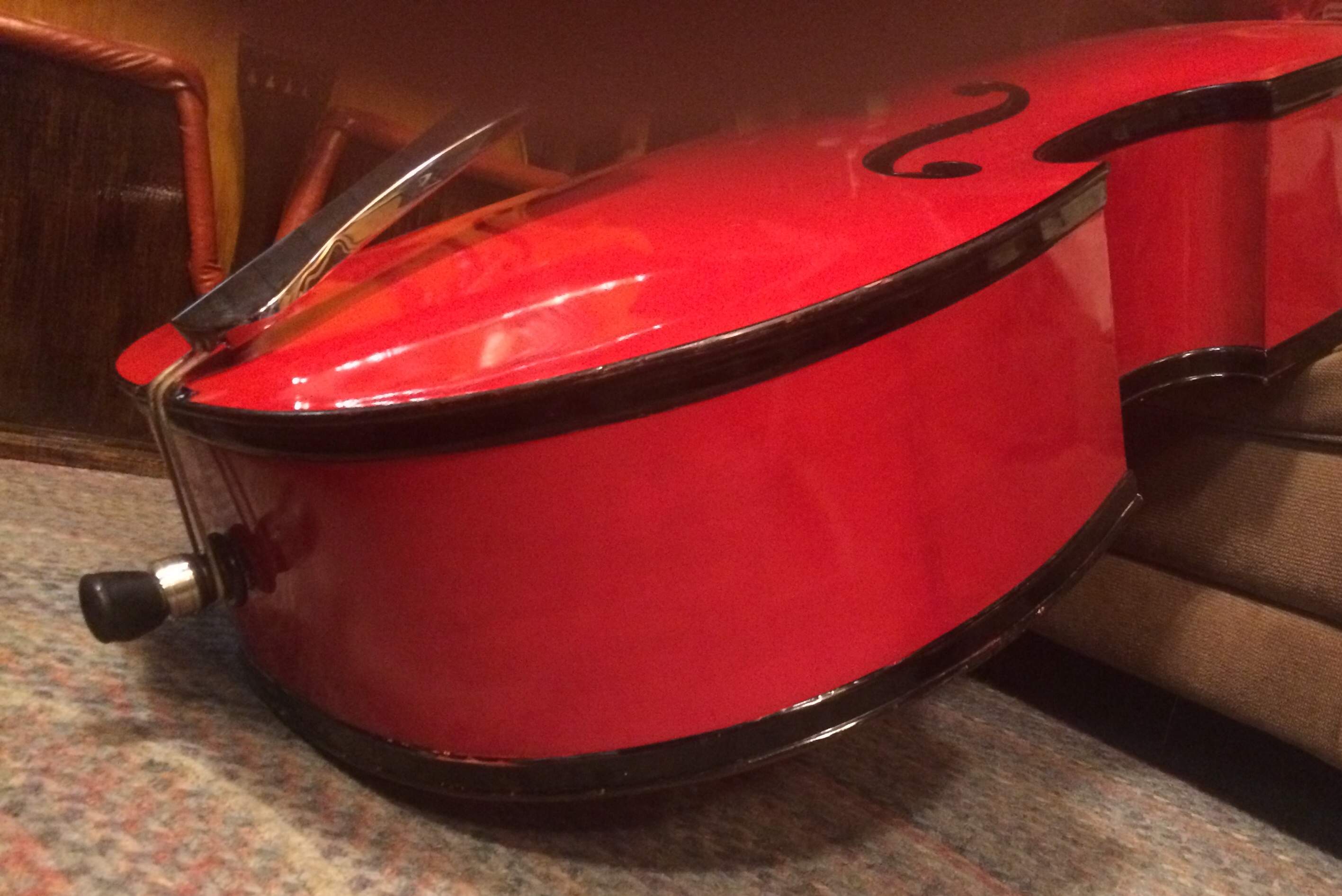
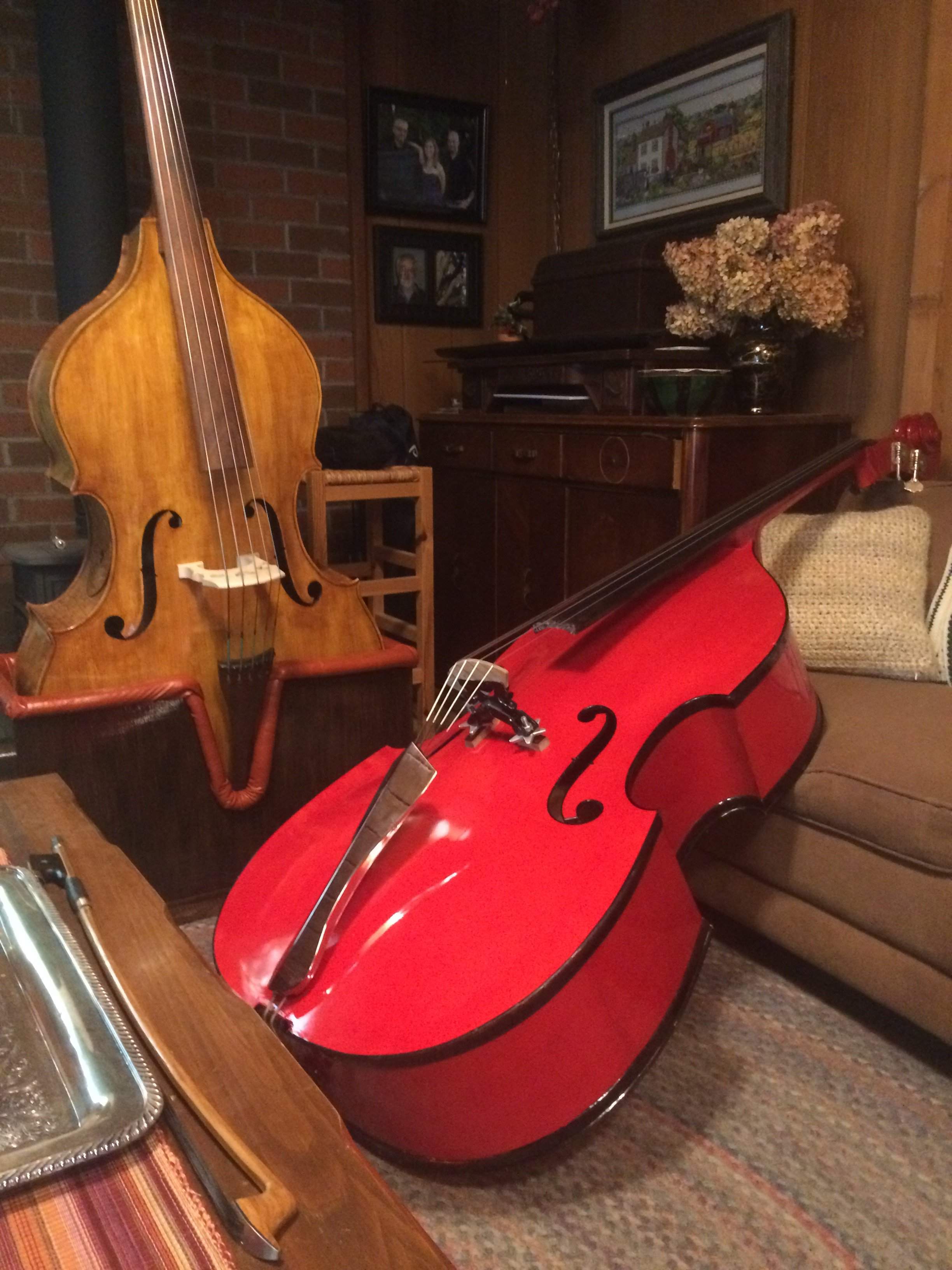
The damage is not completely invisible, if you know where to look, but from three feet away, even if you know where to look, all you can see is a tiny difference in color.
The owner is thrilled with it, so it’s a win.
I neglected to get a good photo from the outside of the “before”. Here’s one of the inside, after I removed the top.
I’m not sure what he fell on, to get three holes, evenly spaced along a diagonal line, but the plywood in the center of each hole was pretty well pulverized.
I saturated the “wounds” with glue, shoving them to the outside so that the remaining plywood was fairly close to flush with the outside curve, then added a diagonal patch of 1/16” plywood from the inside, gluing, clamping and bracing, to get a very tight fit.
I ended up having to add a small linen patch on one side, as the inner ply had a crack extending further along the bout.
Then I began excising the pulverized splinters from the strike-zones, and replacing the wood with ovals cut from solid maple rib-stock.
Then I closed the top, and continued working on the scars:
Eventually all was close enough to smooth and flush that I began the retouch process:
And, finally, I could set it up and deliver the bass to the happy customer.
The damage is not completely invisible, if you know where to look, but from three feet away, even if you know where to look, all you can see is a tiny difference in color.
The owner is thrilled with it, so it’s a win.
Last edited: