• TalkBass has been independent since 1998. Add your voice.
    Create a free account to reply to discussions, view embedded media, and browse with fewer display ads.
    Join freeLog in
    Want zero display ads or expanded classifieds tools? Compare plans.

Double Bass Small, fractional,and travel doublebass thread

The bass is being amplified by a Schertler Dyn-B, which is a contact “mic”, not a traditional piezo. Although I believe it has piezo crystals in it. Not any sort of ribbon. It also has an AMT sb-25 mic on it.
Generally don’t have problems with feedback at the volume levels I’ve used with the bass..
The double soundpost is structural, as the top was collapsing somewhat under the pressure of the strings, perhaps this is a design flaw in the instrument. It came with a set of really cheap, thin Chinese upright strings, now it has Spiro 1/4 size, which only come in one gauge... medium. also, it was designed , supposedly with the option to use E-bass or upright strings. It had two tailpieces, of different lengths. Chennell Obviously, never put quality upright strings on the bass, or he would have noticed the table collapsing.
I understand archtop guitars often have two soundposts, however, as a device to minimize feedback. Perhaps they function similarly in this bass.
The bass is 34”,Same as an E- bass. Actually it is closer to 33 1/3 inches. Slightly shorter.
Position on the body greatly effects the timbre of the signal of the Schertler dyn. B. Obviously, it wouldn’t work on a slab body

Why do you need two microphones, and which of the two microphones on the instrument do you think is most important? For example, could the Schertler Dyn B be enough to carry the acoustic tone without the AMT sb-25?
 
I admit that I have another reason to want a smaller bass... I hate to stand and practice. Especially Arco. Being able to sit with the bass in a comfortable position on an average chair allows me to put more hours in , and grab the bass whenever the mood strikes. This has done wonders for my bowing practice, as I didn’t devote much time to bowing in my previous practice routines, as it is not part of my performance repertoire. Eventually, I would like to introduce bowed arco solos into my performance repertoire, in a Jazz or other non-classical idiom. But I must say that an increased focus on classical literature has opened my eyes to the original role of the bass, that of a bowed, low-pitched instrument, as opposed to its role as a pizzicato instrument in most other forms of music.
 
Last edited:
haha, I don't doubt it. it seems to be more comparable to a fretless E-bass neck on a stick, according to reviews I just read. I suppose it can't be bowed because of the FB radius? I have no personal interest in an EuB which lacks a resonating chamber

I thought of creating a smaller resonance chamber for the body as well. I actually had plans drawn up that I sent to a luthier that does this kind of thing as a hobby. But I wasn't sure how much resonance I would get out of a small chamber the side of a portable slab. Chris Minh Doky plays one that looks like it has a resonance chamber...bu tit's bigger than a slab....but still transportable.

 
  • Like
Reactions: aesopslyre
Why do you need two microphones, and which of the two microphones on the instrument do you think is most important? For example, could the Schertler Dyn B be enough to carry the acoustic tone without the AMT sb-25?
I don’t “ need” two mics, but I prefer this setup. The AMT gives me “air” in the tone, and an increased low-end projection, whereas the Schertler provides string detail and mids that the AMT doesn’t. I also have used a Gage soundclip on the Arco, which I rather like, as it gives more low- end projection than the Schertler, provided it is positioned correctly. I have even blended all 3 of these pickups on the bass using a D-tar solstice, which is glorious. However, the instrument then starts to veer into a timbral zone which is less “traditional “ sounding, which might not be a bad thing
 
  • Like
Reactions: PauFerro
I thought of creating a smaller resonance chamber for the body as well. I actually had plans drawn up that I sent to a luthier that does this kind of thing as a hobby. But I wasn't sure how much resonance I would get out of a small chamber the side of a portable slab. Chris Minh Doky plays one that looks like it has a resonance chamber...bu tit's bigger than a slab....but still transportable.


You might want to check out the EUB forum. I’m sure you could get a lot more info and inspiration there about your impending “slab” project. Since I play electric bass primarily, I have always sought an acoustic instrument that has a resonating chamber, as I feel that is the only way to capture the tone I am seeking as a contrast to the several e- basses I already own. a diametric “opposite”, if possible. A resonating chamber seems to impart a complexity to the timbre of an instrument that slabs don’t reproduce readily, if at all. I don’t have my 3/4 size Juzek any longer, but in retrospect, when I listen to recordings of It, I realize that it had the sound I am chasing. Also, aesthetically, I prefer the look of an instrument which has a contoured resonating cavity, so it “reads” as an acoustic bass, as opposed to a EUB
 
Last edited:
Why do you need two microphones, and which of the two microphones on the instrument do you think is most important? For example, could the Schertler Dyn B be enough to carry the acoustic tone without the AMT sb-25?
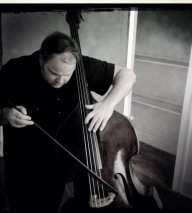
I have used the dyn- b alone, but it sounds a bit thinner and mid-focused than I would prefer, at least on the Chennell. But my ears have also been conditioned by many years of playing primarily e-bass, ( funk and R&B) mostly fivers in the past few decades, so I am seeking a really solid, meaty amplified fundamental projection , likely moreso than someone who has primarily played the upright bass in classical and jazz settings throughout their career
 
I will add, furthermore, that the Takamine B10 I own, as well as the Chennell,
rarely get played anymore these days, while they both have their place in my heart, neither really supplied me with the timbre I was chasing . The Bango 5 gets all my practice time, as it fulfills all of my qualifications timbrally. I also owned a Sherl and Roth 1/4 size, a Ply. It had remarkable low-end projection, amplified. But it didn’t take a bow well, and was difficult to play, for some reason.I can’t say I miss it. I had been searching for a fully carved 1/4 size for a few years, but decided to take a plunge and have a 1/2 size built. For aesthetic and psychological reasons, primarily, so it would still read as a Bass and not a “toy”of some sort. Fortunately, the bass I ordered satisfied all of my present desires in an acoustic , bowable bass instrument . I really wanted a Chennell five string, but they are out of my price range. And I would still have to deal with the perception that it is not a “real” bass. The other options I really would have desired are the Spada contrabasseto, and the Kolstein Busetto, but both are a few grand more than I wished to spend. Also, all of the sound clips I saw of the Spada in an ensemble setting had it sounding “tubby” and “choked” to my ears. The K Busetto , on the other hands, sounds focused and complex in all the the vids I have seen of it. I also like the tone of the Czech-ease, but loathe its aesthetics.
 
Last edited:
  • Like
Reactions: VictorW126
I find there is a long haul focus you can get sitting for practice as well. I keep a stool in the practice (living room) and I do the first part of my practice standing, and the later part sitting. All my scales, warm ups, solos, etudes ect. are standing. I do my metronome work and a lot of bow exercises sitting. I stand for shows.

I admit that I have another reason to want a smaller bass... I hate to stand and practice. Especially Arco. Being able to sit with the bass in a comfortable position on an average chair allows me to put more hours in , and grab the bass whenever the mood strikes. This has done wonders for my bowing practice, as I didn’t devote much time to bowing in my previous practice routines, as it is not part of my performance repertoire. Eventually, I would like to introduce bowed arco solos into my performance repertoire, in a Jazz or other non-classical idiom. But I must say that an increased focus on classical literature has opened my eyes to the original role of the bass, that of a bowed, low-pitched instrument, as opposed to its role as a pizzicato instrument in most other forms of music.
 
haha, I don't doubt it. it seems to be more comparable to a fretless E-bass neck on a stick, according to reviews I just read. I suppose it can't be bowed because of the FB radius? I have no personal interest in an EuB which lacks a resonating chamber

One thing I have learned amidst my own escapades with a 1/4 size instrument is that clients are just as enamored with the traditional look of the upright as they are with the tone. I have a singer who took a picture of it, and loved the look of it. Clients admire it.

The URB is such an icon in Jazz, just having an upright scroll and body matters from a visual perspective. I was thinking, in building my own EUB, of having a detachable facade to the front of it, where I attach the face of an URB to the body. This would make it portable yet also preserve the iconic look.

Also, it could be bowed because I was going to simply purchase the whitewood parts of an upright bass and then use them to create an EUB. So, the radius would be intact, the curved bridge would be intact, and I believe there would be even more clearance for the bow than you see in a fully acoustic upright bass.
 
729BB8FA-479C-4571-906F-05FEA0F264EC.jpeg
I played one at ISB and am pretty much convinced this will end up being my international travel bass of choice. Really well done instrument.
While we’re on the subject. What’s the deal with Miroslav Vitous and his K Busetto? It seems to be smaller than other ones I have seen proportional to his body, unless he is particularly tall.
 
No idea about either player's height. I'm a little over 6'1" and the Kolstein busetto was a very natural fit both standing and seated. I think the one I was playing had a 40" scale, but Barry told me they can also be ordered in 39" and 41" scales. If I end up buying one, it will either be 40" or 41" scale because I like the string tension of my current 41.5" scale bass and wouldn't want to mess with the feel too much.
