Last edited:

Enjoy the benefits of a premium membership!
Upgrade Account
-
TalkBass has been independent since 1998. Add your voice.
Create a free account to reply to discussions, view embedded media, and browse with fewer display ads.
Join free Log in
Want zero display ads or expanded classifieds tools? Compare plans.
You are using an out of date browser. It may not display this or other websites correctly.
You should upgrade or use an alternative browser.
You should upgrade or use an alternative browser.
Double Bass Small, fractional,and travel doublebass thread
- Thread starter aesopslyre
- Start date
-
- Tags
- acoustic doublebass small travel
More options
Who Replied?
i would totally buy a chenell arco if it had a 41 inch string length and a soundpost, but that same sized body. basically stick a regular bass neck (you can buy them prefab) on that body. also, a regular DB bridge so i can us a realist under foot. basically like my czech ease, but even the czech ease only has a 40 inch string length and the body is not quite as small as that middle one in your pic
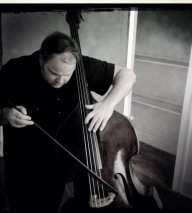
There is some interest in the Chennell Arco, and very little info or sound clips on the instrument. So I will post this vid of myself performing on one here. I am using a Schertler Dyn-B, coupled with a AMT 25B Mic, blended through a D-tar solstice, Into a Schertler Pub 280. The sound is the “room” sound, I don’t recall what sort of mic was used to capture the audio.
Last edited:
My bass has two soundposts, actually. (Made and inserted by NYC luthier, Paul Biase). It also has two bass bars, as it was designed rather like a Berda, I suppose. Chennell makes a model with soundpost, however.i would totally buy a chenell arco if it had a 41 inch string length and a soundpost, but that same sized body. basically stick a regular bass neck (you can buy them prefab) on that body. also, a regular DB bridge so i can us a realist under foot. basically like my czech ease, but even the czech ease only has a 40 inch string length and the body is not quite as small as that middle one in your pic
The table was collapsing under the pressure of the spirocore 1/4 size strings it wears. The bridge is not the original one that came with the bass. I believe it is a 3/4 size bridge. The bridge it came with warped under the pressure of the strings, as it featured a proprietary Chennell bridge with some type of maple insert in a groove. Toby Chennell sent me the new bridge as a replacement. It would accommodate a realist. As far as mensur, I have no issues with it, as it is the same as the E-bass, which I am thoroughly familiar with. The bass was a prototype, which I bought on EBay several years ago from Toby Chennell. He was very helpful with refunding monies toward repairs, as the neck was back-bowed, and the fingerboard had to be planed . The fingerboard is glued on with white glue, hence it cannot be easily removed.
There are some issues with the instrument... it is made with white glue, so the table can not be removed, making repairs difficult. It also developed some severe cracks in the ribs, which were professionally repaired. The flat back also shrank in the winter, and separated from the ribs in the lower bout. So I have had it repaired on several occasions, in the eight years or so that I have owned it. I also replaced the tailpiece with a 1/4 size one, as the afterlength was too great with the original tailpiece.
Last edited:
Why do you seek another small bass, since you already own a Czech-ease?i would totally buy a chenell arco if it had a 41 inch string length and a soundpost, but that same sized body. basically stick a regular bass neck (you can buy them prefab) on that body. also, a regular DB bridge so i can us a realist under foot. basically like my czech ease, but even the czech ease only has a 40 inch string length and the body is not quite as small as that middle one in your pic
Ouch. I would think one of these should be made by a real upright bass maker because they would be able to foresee the collapsing top and the glue issues and stuff.My bass has two soundposts, actually. (Made and inserted by NYC luthier, Paul Biase). It also has two bass bars, as it was designed rather like a Berda, I suppose. Chennell makes a model with soundpost, however.
The table was collapsing under the pressure of the spirocore 1/4 size strings it wears. The bridge is not the original one that came with the bass. I believe it is a 3/4 size bridge. The bridge it came with warped under the pressure of the strings, as it featured a proprietary Chennell bridge with some type of maple insert in a groove. Toby Chennell sent me the new bridge as a replacement. It would accommodate a realist. As far as mensur, I have no issues with it, as it is the same as the E-bass, which I am thoroughly familiar with. The bass was a prototype, which I bought on EBay several years ago from Toby Chennell. He was very helpful with refunding monies toward repairs, as the neck was bowed, and the fingerboard had to be planed . There are some issues with the instrument... it is made with white glue, so the table can not be removed, making repairs difficult. It also developed some severe cracks in the ribs, which were professionally repaired. The flat back also shrank in the winter, and separated from the ribs in the lower bout. So I have had it repaired on several occasions, in the eight years or so that I have owned it. I also replaced the tailpiece with a 1/4 size one, as the afterlength was too great with the original tailpiece.
Because I would like to have the 41 inch string length like my real Bass, but I really do love the small body, I would just like to have another flavor. Maybe one with a different set of strings. My current is all gut which is great but would be nice to have one that I could bow a little bit easierWhy do you seek another small bass, since you already own a Czech-ease?
Well, Toby makes basses, “real” ones, as well. But I agree he should have foreseen the possible issues with constructing the bass along the lines of guitar luthiery. However, he was informed of all the issues, and did reimburse me for some of the repairs, and I purchased the bass for about $2000. Perhaps he has altered his construction techniques as a result of the feedback I gave himOuch. I would think one of these should be made by a real upright bass maker because they would be able to foresee the collapsing top and the glue issues and stuff.
I suggest you contact Bango Istvan on FB. His motto is “Basses made to order”, and he really does just that... he will make you an instrument to your dimensions, and he is very open-minded. His prices are incredible, as well, for a bespoke European-made instrument, and he uses good wood selections. he made the 1/2 size fiver, ,E-C, for me, to my requests. He is easy to talk to. I really love the bass he made for me, an incredible value that would have been inaccessible to me otherwise, financially. I am no longer looking for a small bass, my search is over.Because I would like to have the 41 inch string length like my real Bass, but I really do love the small body, I would just like to have another flavor. Maybe one with a different set of strings. My current is all gut which is great but would be nice to have one that I could bow a little bit easier
Do you have a link?I suggest you contact Bango Istvan on FB. His motto is “Basses made to order”, and he really does just that... he will make you an instrument to your dimensions, and he is very open-minded. His prices are incredible, as well, for a bespoke European-made instrument, and he uses good wood selections. he made the 1/2 size fiver, ,E-C, for me, to my requests. He is easy to talk to. I really love the bass he made for me, an incredible value that would have been inaccessible to me otherwise, financially. I am no longer looking for a small bass, my search is over.

If this is truly a safe haven, then I will share my next idea.
I am considering ordering the neck, neck joint, bridge, tailpiece and endpin/cable for a 1/4 size upright and putting it together as an Electric Upright Bass on a slab. I keep experiencing increasing equipment requirements in my gigging work for various reasons. And the alternative is to get a bigger vehicle when my old beater I use for gigs is doing just fine. The prospect of dropping a minimum $5000 for a bigger vehicle seems far less attractive than the $350 in existing parts I can put together into a EUB with a removable neck (the removeable neck would be for flight reasons as I'm considering going to a jazz camp that requires flying).
Lately I have just left my 1/4 size at home for two gigs because I didn't have the room in my car. This was due to the fact that other musicians in my groups for specific gigs did not own PA speakers to bring to the gig.
You can't find an EUB at a low price category that I'm aware of in the 1/4 size anywhere, so I see this as yet another piece of evolution in my passion for the smaller instrument.
Questions:
1. What kind of Piezo are you using to amplify in the video?
2. How do you stop it from feeding back?
3. Do you attribute any gain in tone or acoustic properties due to the double soundpost and bass bar? Or is it for structure primarily?
4. What is the scale length of the bass you are playing in the video?
5. Why do you put the Piezo on the body rather than the bridge?
I am considering ordering the neck, neck joint, bridge, tailpiece and endpin/cable for a 1/4 size upright and putting it together as an Electric Upright Bass on a slab. I keep experiencing increasing equipment requirements in my gigging work for various reasons. And the alternative is to get a bigger vehicle when my old beater I use for gigs is doing just fine. The prospect of dropping a minimum $5000 for a bigger vehicle seems far less attractive than the $350 in existing parts I can put together into a EUB with a removable neck (the removeable neck would be for flight reasons as I'm considering going to a jazz camp that requires flying).
Lately I have just left my 1/4 size at home for two gigs because I didn't have the room in my car. This was due to the fact that other musicians in my groups for specific gigs did not own PA speakers to bring to the gig.
You can't find an EUB at a low price category that I'm aware of in the 1/4 size anywhere, so I see this as yet another piece of evolution in my passion for the smaller instrument.
Questions:
1. What kind of Piezo are you using to amplify in the video?
2. How do you stop it from feeding back?
3. Do you attribute any gain in tone or acoustic properties due to the double soundpost and bass bar? Or is it for structure primarily?
4. What is the scale length of the bass you are playing in the video?
5. Why do you put the Piezo on the body rather than the bridge?
Last edited:
If this is truly a safe haven, then I will share my next idea.
I am considering ordering the neck, neck joint, bridge, tailpiece and endpin/cable for a 1/4 size upright and putting it together as an Electric Upright Bass on a slab. I keep experiencing increasing equipment requirements in my gigging work for various reasons. And the alternative is to get a bigger vehicle when my old beater I use for gigs is doing just fine. The prospect of dropping a minimum $5000 for a bigger vehicle seems far less attractive than the $350 in existing parts I can put together into a EUB with a removable neck (the removeable neck would be for flight reasons as I'm considering going to a jazz camp that requires flying).
Lately I have just left my 1/4 size at home for two gigs because I didn't have the room in my car. This was due to the fact that other musicians in my groups for specific gigs did not own PA speakers to bring to the gig.
You can't find an EUB at a low price category that I'm aware of in the 1/4 size anywhere, so I see this as yet another piece of evolution in my passion for the smaller instrument.
Questions:
1. What kind of Piezo are you using to amplify in the video?
2. How do you stop it from feeding back?
3. Do you attribute any gain in tone or acoustic properties due to the double soundpost and bass bar? Or is it for structure primarily?
4. What is the scale length of the bass you are playing in the video?
5. Why do you put the Piezo on the body rather than the bridge?
The bass is being amplified by a Schertler Dyn-B, which is a contact “mic”, not a traditional piezo. Although I believe it has piezo crystals in it. Not any sort of ribbon. It also has an AMT sb-25 mic on it.
Generally don’t have problems with feedback at the volume levels I’ve used with the bass..
The double soundpost is structural, as the top was collapsing somewhat under the pressure of the strings, perhaps this is a design flaw in the instrument. It came with a set of really cheap, thin Chinese upright strings, now it has Spiro 1/4 size, which only come in one gauge... medium. also, it was designed , supposedly with the option to use E-bass or upright strings. It had two tailpieces, of different lengths. Chennell Obviously, never put quality upright strings on the bass, or he would have noticed the table collapsing.
I understand archtop guitars often have two soundposts, however, as a device to minimize feedback. Perhaps they function similarly in this bass.
The bass is 34”,Same as an E- bass. Actually it is closer to 33 1/3 inches. Slightly shorter.
Position on the body greatly effects the timbre of the signal of the Schertler dyn. B. Obviously, it wouldn’t work on a slab body
Last edited:
Actually, the dean pace features a mensur of 35”, and can be purchased new for less than $550.If this is truly a safe haven, then I will share my next idea.
I am considering ordering the neck, neck joint, bridge, tailpiece and endpin/cable for a 1/4 size upright and putting it together as an Electric Upright Bass on a slab. I keep experiencing increasing equipment requirements in my gigging work for various reasons. And the alternative is to get a bigger vehicle when my old beater I use for gigs is doing just fine. The prospect of dropping a minimum $5000 for a bigger vehicle seems far less attractive than the $350 in existing parts I can put together into a EUB with a removable neck (the removeable neck would be for flight reasons as I'm considering going to a jazz camp that requires flying).
Lately I have just left my 1/4 size at home for two gigs because I didn't have the room in my car. This was due to the fact that other musicians in my groups for specific gigs did not own PA speakers to bring to the gig.
You can't find an EUB at a low price category that I'm aware of in the 1/4 size anywhere, so I see this as yet another piece of evolution in my passion for the smaller instrument.
Questions:
1. What kind of Piezo are you using to amplify in the video?
2. How do you stop it from feeding back?
3. Do you attribute any gain in tone or acoustic properties due to the double soundpost and bass bar? Or is it for structure primarily?
4. What is the scale length of the bass you are playing in the video?
5. Why do you put the Piezo on the body rather than the bridge?
Those are garbage.Actually, the dean pace features a mensur of 35”, and can be purchased new for less than $550.
haha, I don't doubt it. it seems to be more comparable to a fretless E-bass neck on a stick, according to reviews I just read. I suppose it can't be bowed because of the FB radius? I have no personal interest in an EuB which lacks a resonating chamberThose are garbage.

Great discussion I play a Kolstein busetto couldn’t be happier.
The Kolstein Busetto was definitely on my research list.. a great sounding instrument. However, it was a bit out of my price range. So I did some research for several years until I found a luthier who could build me exactly what I wanted, at a price I could afford... namely, a 5- string half-size, strung E-C, fully carved, with a traditional appearance. I was happy with the Chennell, but it’s small body size makes Bandleaders look askance . Also, it doesn’t have percussive “thunk” that a bass built in a more traditional manner has. The Bango 5 string bass has all the aspects that I desired, timbrally, as well as features that I could only achieve by partnering/ dictating the design. . And it cost less than a good used 3/4 Ply. It is large enough that it “reads” as a bass, not a glorified cello, especially as I generally sit to play it. I’ve had nothing but positive comments.Great discussion I play a Kolstein busetto couldn’t be happier.
Last edited:


