• TalkBass has been independent since 1998. Add your voice.
    Create a free account to reply to discussions, view embedded media, and browse with fewer display ads.
    Join freeLog in
    Want zero display ads or expanded classifieds tools? Compare plans.

So I bought a thing today...

I got my awaited package today, and I feel like Howard Carter might have when he broke through into King Tut’s tomb.
IMG_4497.jpeg


IMG_4498.jpeg


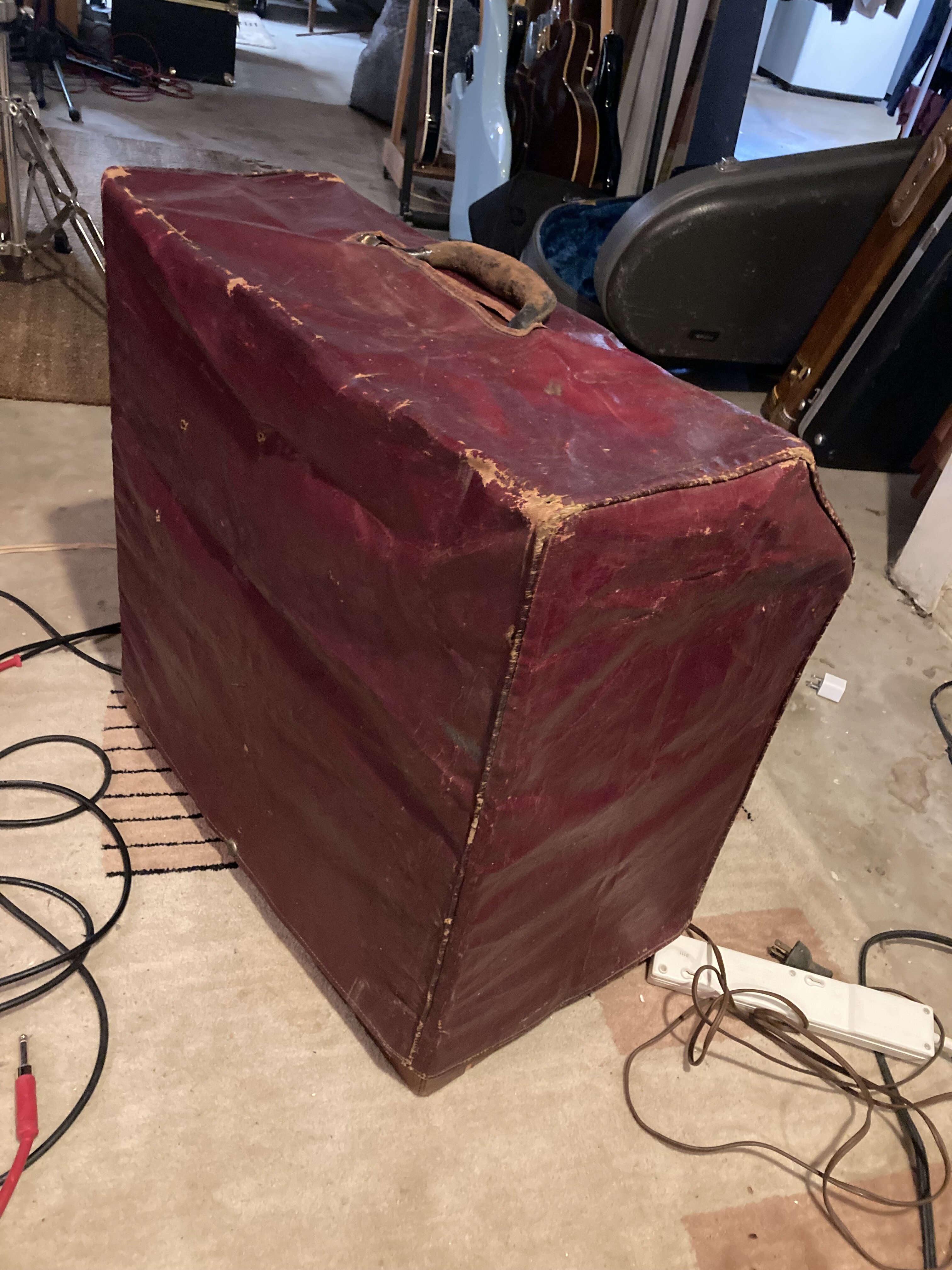
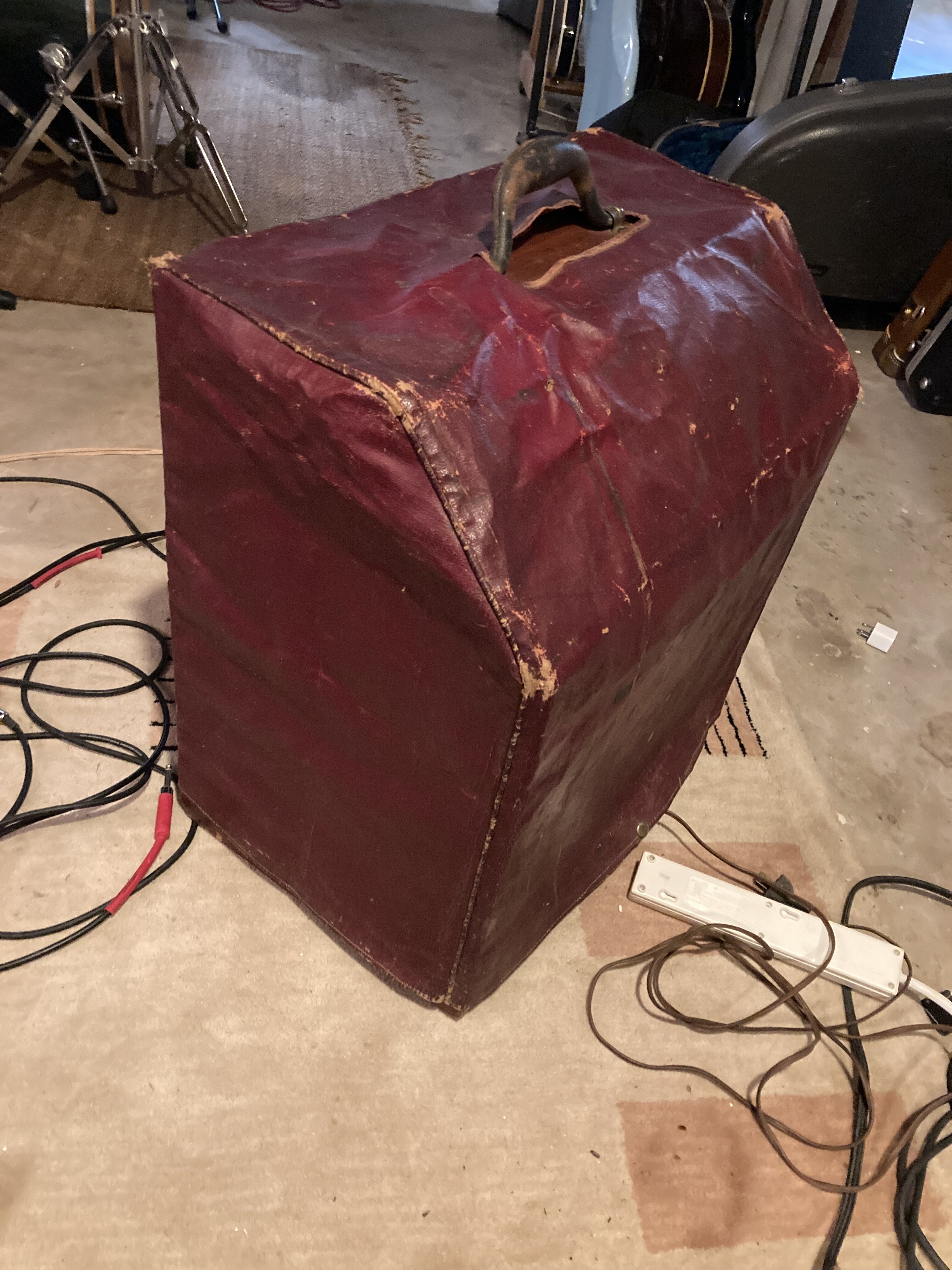
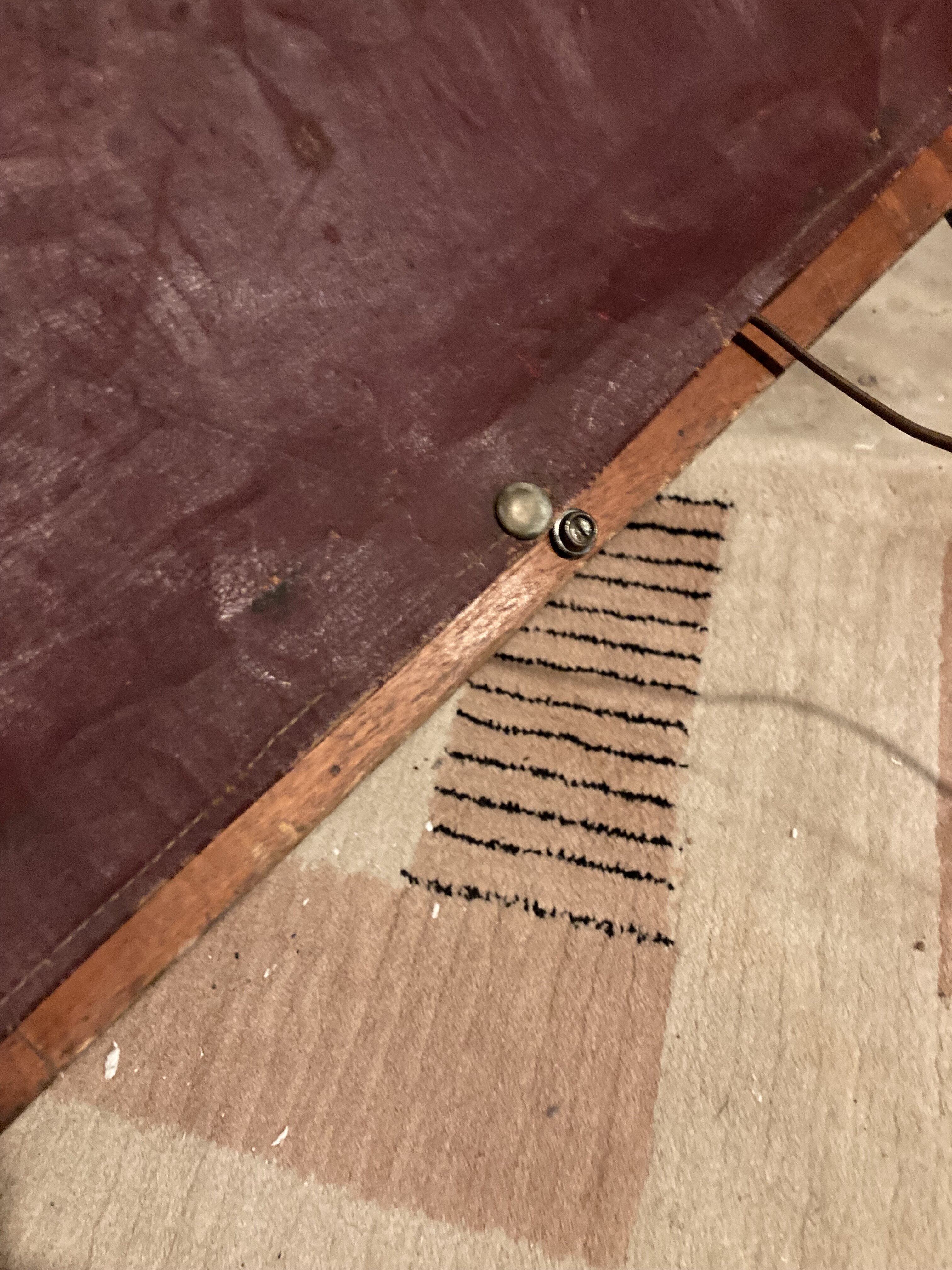
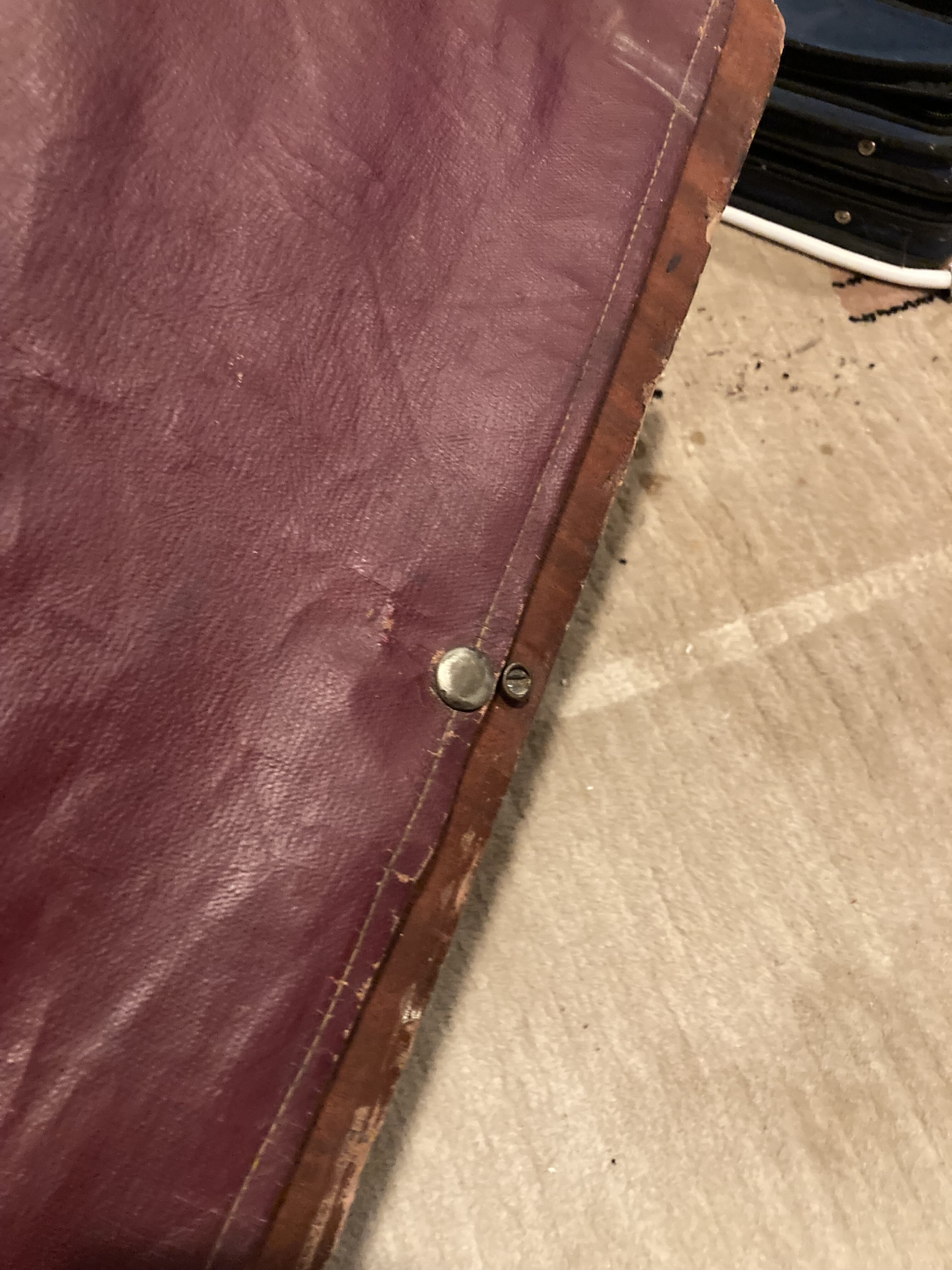
The cover is definitely an OEM part, and like the amp itself, remarkably well preserved for its age. Material wise, it’s about what you’d expect: vinyl over a cloth backing or whatever they were using immediately after the war. And I think it’s shrunk some, based on the unexpected secret it revealed. There was this screw at the bottom of the back of the amp. I figured maybe it was part of what would have held the missing back board in place and didn’t give it any more thought. Well, check this out!
IMG_4499.jpeg


IMG_4500.jpeg


Snaps! The cover snapped into place! And before I got the cover I hadn’t even noticed the snap on the front of the amp! Some archaeologist I am! :laugh:

So now I have one of the few surviving Michael-Hull Bassamps…and what I’m pretty comfortable calling the ONLY surviving original cover. Amazing!
 
I got my awaited package today, and I feel like Howard Carter might have when he broke through into King Tut’s tomb.

View attachment 5424428

View attachment 5424429

The cover is definitely an OEM part, and like the amp itself, remarkably well preserved for its age. Material wise, it’s about what you’d expect: vinyl over a cloth backing or whatever they were using immediately after the war. And I think it’s shrunk some, based on the unexpected secret it revealed. There was this screw at the bottom of the back of the amp. I figured maybe it was part of what would have held the missing back board in place and didn’t give it any more thought. Well, check this out!

View attachment 5424433

View attachment 5424434

Snaps! The cover snapped into place! And before I got the cover I hadn’t even noticed the snap on the front of the amp! Some archaeologist I am! :laugh:

So now I have one of the few surviving Michael-Hull Bassamps…and what I’m pretty comfortable calling the ONLY surviving original cover. Amazing!
Just wow! You lucky guy :)
 
One more thing for now: those KEN-RAD 6L6 tubes were intriguing. A little googling led me here...

KEN-RAD CORPORATION

...wherein it is written

"In 1945 Burlew sold the remainder of the company- the tube division, by now employing 5328 staff - to General Electric and they became GE's primary tube making facility. GE let the Ken-Rad name run until the late 1940s..."

So those power tubes are very likely the originals that came with the amp, or at the very least quite contemporary to it. Along those lines, ponder with me for a moment the fact that 6L6 tubes as a thing had only existed for around a dozen years when this amp was built with them.

Really just boggling at how this thing manged to remain so intact for so long...
 
So I got my Michael-Hull Bassamp back from the vintage radio restorer today. Here’s the contents of the bag of replaced components:

upload_2024-5-29_16-36-4.jpeg


One KEN-RAD 6L6 tube

Two Cornell-Dubilier “Beaver” 30MFD 450V capacitors

Three Mallory 25MFD 50V capacitors

One Bonded 8MFD 450V capacitor

One Solar 8MFD 450V capacitor

One Sprague .05MFD 400V capacitor

One LECTROHM 3000 Ohm resistor


All presumably original parts, all around 80 years old, all made in the U.S.A., at least some at what are now Superfund sites.
 
  • Like
Reactions: GregC and Patrice B
Last edited:
Fantastic amp! I'm not any sort of collector, but that's awesome.

To address @Lowbrow's question: The phono channel would have had a lot of gain, like a mic or instrument input, but would have had some sort of 'de-emphasis' (equalization) curve implemented to compensate for the 'pre-emphasis' used on disc recordings. Whether that is the now standard RIAA equalization curve isn't necessarily a given with a piece of this vintage.

From wikipedia:

The RIAA equalization curve was intended to operate as a de facto global industry standard for records since 1954, but when the change actually took place is difficult to determine.[1


RIAA equalization - Wikipedia.
 
I have a later one, 1959 Ampeg Bassamp 835, I like the tone better than B-15's. What size is that speaker? Mine has a fifteen.

Here's a great big slab o' irony for you: back at the end of January I decided, seeing as how an actual Michael-Hull Bassamp would never come my way...to take the plunge on a 1951 Super 800 model Bassamp. Like this beauty it's still got what I can only imagine is its OEM 12" GE speaker (because how the hell else would it come to have a GE speaker, right?)

So now I have a '47 Michael-Hull Bassamp (which I still can hardly believe), and a '51 Ampeg Super 800 Bassamp. And my trusty old '61 B15-N.
 
Fantastic amp! I'm not any sort of collector, but that's awesome.

To address @Lowbrow's question: The phono channel would have had a lot of gain, like a mic or instrument input, but would have had some sort of 'de-emphasis' (equalization) curve implemented to compensate for the 'pre-emphasis' used on disc recordings. Whether that is the now standard RIAA equalization curve isn't necessarily a given with a piece of this vintage.
It likely doesn't have that much gain because it was probably designed for a piezo crystal phono cartridge that provide a reasonably strong signal compared to modern? magnetic cartridges, probably in the neigborhood of 500mv to 5 volts!!. I doubt it had any kind of accurate RIAA equalization, being a cheaper product. It most likely just has some bass boost applied.
 
  • Like
Reactions: bobyoung53
Most of the manufacturers began producing RIAA compliant phono preamps around 1960 or so.
The other thing that would make me reject the idea that such a phono input would have any sort of accurate equalization is becuase it is a crystal cartridge. These cartridges were never considered to be anything close to acceptable in hifi circles, but more a cheap and dirty way to extract some recognizable audio from a record disc.
 
I have a later one, 1959 Ampeg Bassamp 835, I like the tone better than B-15's. What size is that speaker? Mine has a fifteen.

I never figured out a model number for mine, the PI arrangement was different than any old bassamp schematic, the preamp was loaded with 6SN7s and the power amp 6L6 with the 0C3 regulator, so it seemed like a combination of various models, and it was single channel (IIRC the only single channel in the catalogs was the 820), but it sounded great. At low volumes very similar to the B15 but smoother when you dialed up the volume and actually had a great overdrive.
 
  • Like
Reactions: bobyoung53
Here's some pictures of mine including a schematic that Bill Hughes sent me from his NY shop about twenty years ago, I wish I had kept the envelope and his letter but have no idea what I did with them.


View attachment 5464534 View attachment 5464550 View attachment 5464551 View attachment 5464552 View attachment 5464553 View attachment 5464555

Man that’s nice! Navy random flair, so a late ‘50s model, I should think.

EL87 power tubes! And…is that two rectifier tubes?
 
  • Like
Reactions: bobyoung53

Latest posts