

Enjoy the benefits of a premium membership!
Upgrade Account
-
TalkBass has been independent since 1998. Add your voice.
Create a free account to reply to discussions, view embedded media, and browse with fewer display ads.
Join free Log in
Want zero display ads or expanded classifieds tools? Compare plans.
You are using an out of date browser. It may not display this or other websites correctly.
You should upgrade or use an alternative browser.
You should upgrade or use an alternative browser.
So, like, what is 'vintage tone' REALLY?
- Thread starter NeonVomit
- Start date
More options
Who Replied?

JeezyMcNuggles
Inactive
- Feb 23, 2018
- 14,723
- 20,970
- Disclosures
- I suck, but nobody really notices
Low mids onlyEveryone talks about how great 'vintage tone' is, but what is it?
To me it makes me think of what you get with dead strings and highs rolled off. Thumpy round tone, which I can achieve with basically any bass and any amp.
What do you think makes 'vintage tone'?
View attachment 4222880

Farty, crappy, gutless, inaudible.
Old amps just really don't sound that good. Not until you got the SVT and the Acoustic 360 did you start getting actual bass.
Old amps just really don't sound that good. Not until you got the SVT and the Acoustic 360 did you start getting actual bass.
it's not a thing at all , most classic recordings used and plethora of gear and instruments , just as they do today . You can't just say P bass when there were Dano's , hollow bodies , shorties etc etc... you name it .

Freekmagnet
Commercial User
“Vintage tone” is whatever the marketing department says it is and whatever the consumer believes it to be.

Depends on any number of narrow definitions. Underpowered amp?Everyone talks about how great 'vintage tone' is, but what is it?
To me it makes me think of what you get with dead strings and highs rolled off. Thumpy round tone, which I can achieve with basically any bass and any amp.
What do you think makes 'vintage tone'?
View attachment 4222880
Yes you can.it's not a thing at all , most classic recordings used and plethora of gear and instruments , just as they do today . You can't just say P bass when there were Dano's , hollow bodies , shorties etc etc... you name it .
I can also say that cats are the true rulers of Earth, and we are their slaves.
That is way more accurate than tossing around the words "vintage tone"Yes you can.
I can also say that cats are the true rulers of Earth, and we are their slaves.
It’s an uncomfortable truth.That is way more accurate than tossing around the words "vintage tone"

Jazzdogg
Less barking, more wagging!
When I think of "vintage" bass playing, I harken back to the sixties, when I played passive basses, through tube amplifiers, into sealed cabinets with limited bandwidth and SPL.
But, that's just part of the equation; we used that gear to create music, and just about everything about the experience was different from today.
But, that's just part of the equation; we used that gear to create music, and just about everything about the experience was different from today.
Well, it's true you can certainly roll off the highs and use dead old strings on any bass. How desirable a tone you get is dependent on other factors as well. There's more than one kinda thump. Sometimes it's just dead, a lifeless blur. Other times, if done properly it's the holy grail. As always, depends on what the music calls for....To me it makes me think of what you get with dead strings and highs rolled off. Thumpy round tone, which I can achieve with basically any bass and any amp....
View attachment 4222880
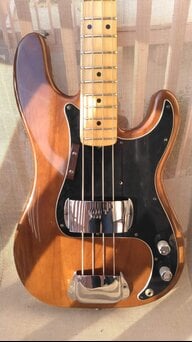
I believe its bass tone 60's-70's. Passive bass, tube amp, 115 speaker....that's my personal recipe for it.
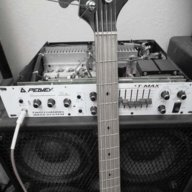
‘Vintage’ tone, to me, is something generally more mid-range forward with attenuated highs over 4 kHz or so, and also with less low bass. It’s a tone profile (or range of profiles, really) that organically resulted from the sound reproduction limitations of popular speaker cab designs of the 60s and 70s like the B-15, SVT Fridge, etc. Many of these cabs have a characteristic ‘bump’ somewhere in the lower midrange that can help the bass sit well in certain mixes. Tube amps are often used for this application, sometimes pushed into overdrive.
To contrast, ‘modern’ tone resulted from advancements in frequency reproduction capabilities in newer cab designs that use ports and tweeters to extend the lows and highs. Many of the these cabs have a pronounced ‘scoop’ in the upper midrange/low treble and a glassy sounding top end, giving them a different kind of sonic signature. Solid state amps are often used for this application, and are run clean, sometimes with compression.
Great post. To the definition of "vintage" I would add "with some compression and overdrive due to running an underpowered tube amplifier flat out."

Only us Boomers can recognize vintage tone.
Now get off of my lawn!
Now get off of my lawn!



This:
And this:
So, mudbuckers though a tube amp?
That’s a nice recipe...

When I turn on the vintage switch on most gear I seem to get this.
- more low mids
- tone rolled off
- more "grain"
So I guess this is what gear makers at least understand by vintage.
For me it is a bit like the sepia effect in photography, it can be wonderful when it is natural but it looks tacky when it is emulated.
- more low mids
- tone rolled off
- more "grain"
So I guess this is what gear makers at least understand by vintage.
For me it is a bit like the sepia effect in photography, it can be wonderful when it is natural but it looks tacky when it is emulated.


Motown, Beatles, 70's tones, the time when electric bass came into its own but it still wasn't real bright. Some highs but they were subdued...things like that. Flatwounds are often used for that type of tone, though not always.


