That big fat smooth tone Paul McCartney produced with the Beatles. It remains the benchmark for me.
Last edited:

TalkBass has been independent since 1998. Add your voice.
Create a free account to reply to discussions, view embedded media, and browse with fewer display ads.
Join free Log in
Want zero display ads or expanded classifieds tools? Compare plans.
Everyone talks about how great 'vintage tone' is, but what is it?
To me it makes me think of what you get with dead strings and highs rolled off. Thumpy round tone, which I can achieve with basically any bass and any amp.
What do you think makes 'vintage tone'?
View attachment 4222880
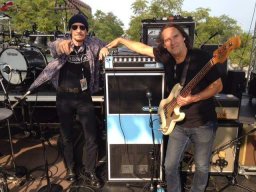
It's a passive bass plugged straight into an amp. Thats what people did they didn't have bass effects. That being said how a guy got his sound was by using different amps and multiple amps. The sixties saw a whole evolution of amplification from low wattage to 100 watt tube amps then 200 watt tube amps to the Acoustic 360 and the Ampeg SVT. Then in the early seventies Solid State further developed with Sunn and Acoustic. Think of John Entwhistle using multiple amps and different cabinets in an almost Bi amp setup.Everyone talks about how great 'vintage tone' is, but what is it?
To me it makes me think of what you get with dead strings and highs rolled off. Thumpy round tone, which I can achieve with basically any bass and any amp.
What do you think makes 'vintage tone'?
View attachment 4222880
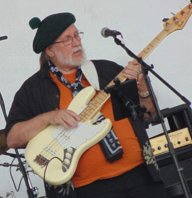
Primarily Fender bass (Jazz or P-bass), flatwound strings because that's what they had in the 60's, and a tube amp. The sound is always warm and when it gets loud it sounds like the notes are going to break. It's that overdrive thing versus dirty distortion. Speakers were typically 2x12 or 2x15. Around 1970 you started to see a number of Solid State amps show up and they sounded different that the all-tube amps but the speakers were still either 12's, 15's, or folded horn 18's. Think big and woolly and no where near as crisp sounding as we get now.Everyone talks about how great 'vintage tone' is, but what is it?
To me it makes me think of what you get with dead strings and highs rolled off. Thumpy round tone, which I can achieve with basically any bass and any amp.
What do you think makes 'vintage tone'?
View attachment 4222880
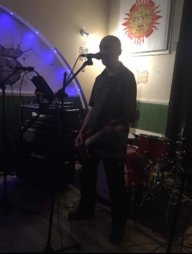

I was fortunate enough to follow that same vein of profession. We were a professional touring band all over the US and Canada. Worked a lot of 'front 3's' and 'back 3's.' Only us old timers know what that meant. It meant a lot of hassle if they were back to back. We stayed in nice hotels, had tabs and free dinners. I'd say they were the golden years of my youth. Those of us who lived it were blessed to have experienced it. This was also during the 70's and 80's, until I met Mrs. Right the end of the 80's and retired my beat up black traveling trunk.Gigging was a bit different back then. We played 4-hours a night, 5-nights a week, 50-weeks a year, and I did that for 3-years. We typically played for 2-weeks at each venue before traveling to the next gig. Was a great time to be a touring musician!

Everyone talks about how great 'vintage tone' is, but what is it?
To me it makes me think of what you get with dead strings and highs rolled off. Thumpy round tone, which I can achieve with basically any bass and any amp.
What do you think makes 'vintage tone'?
View attachment 4222880


What you said, no rocket science. Any rig can do it (except for those of us with golden ears maybe)Everyone talks about how great 'vintage tone' is, but what is it?
To me it makes me think of what you get with dead strings and highs rolled off. Thumpy round tone, which I can achieve with basically any bass and any amp.
What do you think makes 'vintage tone'?
View attachment 4222880
Vintage is more bandwidth limited than modern which has more extension up top and down low.