
What soldering iron power is best for general cable repair, passive pickup/harness tinkering, etc. What other items should I have at the ready? Finally, wrong thread, but, which P pickup to replace stock MIM P for good old, thick P tone.. I'm guessing the Fender Custom Shop '62 model.

Enjoy the benefits of a premium membership!
Upgrade Account
-
TalkBass has been independent since 1998. Add your voice.
Create a free account to reply to discussions, view embedded media, and browse with fewer display ads.
Join free Log in
Want zero display ads or expanded classifieds tools? Compare plans.
You are using an out of date browser. It may not display this or other websites correctly.
You should upgrade or use an alternative browser.
You should upgrade or use an alternative browser.
Soldering Kit Essentials?
- Thread starter telecopy
- Start date
More options
Who Replied?
I like about 40-45 watts minimum.
Have flux, a wet sponge, a few alligator clips as heat sinks, a pair of stainless steel soldering tweezers, and a desoldering pump.
Have flux, a wet sponge, a few alligator clips as heat sinks, a pair of stainless steel soldering tweezers, and a desoldering pump.
Hi.
I'm partial to my Weller WECP20, but basically anything from ~25W will do nicely if You use ground lugs.
If You want to solder the grounds onto the backs of the potentiometers, you'll need something a lot sturdier IME.
De-sodering wick and good quality rosin core solder are very handy even though the good old wet rag and an old toothbrush will work in removing the molten solder as well .
.
As for the solder, the leaded varieties are quickly vanishing and some of the lead-free ones are PITA to use. Especially with the lower wattage irons.
Even though the price tag is scary to say the least, the Mumdorf M-solder Supreme I use is actually easier to use than some old leaded ones.
You'll also need something to wipe the tip onto/with, KEEP IT CLEAN is the first rule in soldering.
Wire cutters and wire strippers come in handy when You grow tired in using your teeth and pocket knife to do those tasks.
Regards
Sam
What soldering iron power is best for general cable repair, passive pickup/harness tinkering, etc. What other items should I have at the ready?
I'm partial to my Weller WECP20, but basically anything from ~25W will do nicely if You use ground lugs.
If You want to solder the grounds onto the backs of the potentiometers, you'll need something a lot sturdier IME.
De-sodering wick and good quality rosin core solder are very handy even though the good old wet rag and an old toothbrush will work in removing the molten solder as well
.As for the solder, the leaded varieties are quickly vanishing and some of the lead-free ones are PITA to use. Especially with the lower wattage irons.
Even though the price tag is scary to say the least, the Mumdorf M-solder Supreme I use is actually easier to use than some old leaded ones.
You'll also need something to wipe the tip onto/with, KEEP IT CLEAN is the first rule in soldering.
Wire cutters and wire strippers come in handy when You grow tired in using your teeth and pocket knife to do those tasks.
Regards
Sam
40 to 50 watts should handle it. Good solder with a highly active flux is highly recommended. I like Kester '44'.
You also want an iron holder with a sponge for tip cleaning.You will generally get these with a soldering station.
Note that there is a difference between temperature controlled irons and adjustable heat irons.
A temperature controlled iron like the Weller WTCP series maintain a constant temperature at the tip.
When you touch the tip to the work, the heat increases to maintain the tip at soldering temperature.
The heat decreases when the iron is idle in the holder, and prevents tip burning.
An adjustable heat iron simply has a power control which effectively lets you dial in the amount of heat
of the iron. The heat level is fixed at what you set it to. It does not adapt to the work. These work well
enough for single jobs. But if the iron has to sit there for extended periods, you will have to constantly
turn it up (and wait) before soldering, and then turn it back down for idling in the holder to prevent the
tip from burning.
If you are going to desolder components, desoldering braid can be usesful. Use a good brand like Soder-wick.
If you plan on a lot of desoldering, a Soldapullt desoldering vacuum works well also.
-
You also want an iron holder with a sponge for tip cleaning.You will generally get these with a soldering station.
Note that there is a difference between temperature controlled irons and adjustable heat irons.
A temperature controlled iron like the Weller WTCP series maintain a constant temperature at the tip.
When you touch the tip to the work, the heat increases to maintain the tip at soldering temperature.
The heat decreases when the iron is idle in the holder, and prevents tip burning.
An adjustable heat iron simply has a power control which effectively lets you dial in the amount of heat
of the iron. The heat level is fixed at what you set it to. It does not adapt to the work. These work well
enough for single jobs. But if the iron has to sit there for extended periods, you will have to constantly
turn it up (and wait) before soldering, and then turn it back down for idling in the holder to prevent the
tip from burning.
If you are going to desolder components, desoldering braid can be usesful. Use a good brand like Soder-wick.
If you plan on a lot of desoldering, a Soldapullt desoldering vacuum works well also.
-
Thanks!Hi.
I'm partial to my Weller WECP20, but basically anything from ~25W will do nicely if You use ground lugs.
If You want to solder the grounds onto the backs of the potentiometers, you'll need something a lot sturdier IME.
De-sodering wick and good quality rosin core solder are very handy even though the good old wet rag and an old toothbrush will work in removing the molten solder as well
As for the solder, the leaded varieties are quickly vanishing and some of the lead-free ones are PITA to use. Especially with the lower wattage irons.
Even though the price tag is scary to say the least, the Mumdorf M-solder Supreme I use is actually easier to use than some old leaded ones.
You'll also need something to wipe the tip onto/with, KEEP IT CLEAN is the first rule in soldering.
Wire cutters and wire strippers come in handy when You grow tired in using your teeth and pocket knife to do those tasks.
Regards
Sam
Spank you!40 to 50 watts should handle it. Good solder with a highly active flux is highly recommended. I like Kester '44'.
You also want an iron holder with a sponge for tip cleaning.You will generally get these with a soldering station.
Note that there is a difference between temperature controlled irons and adjustable heat irons.
A temperature controlled iron like the Weller WTCP series maintain a constant temperature at the tip.
When you touch the tip to the work, the heat increases to maintain the tip at soldering temperature.
The heat decreases when the iron is idle in the holder, and prevents tip burning.
An adjustable heat iron simply has a power control which effectively lets you dial in the amount of heat
of the iron. The heat level is fixed at what you set it to. It does not adapt to the work. These work well
enough for single jobs. But if the iron has to sit there for extended periods, you will have to constantly
turn it up (and wait) before soldering, and then turn it back down for idling in the holder to prevent the
tip from burning.
If you are going to desolder components, desoldering braid can be usesful. Use a good brand like Soder-wick.
If you plan on a lot of desoldering, a Soldapullt desoldering vacuum works well also.
-

Hopkins
Commercial User
This is what I have on my work bench. A Weller soldering station, with different sized tips, thin rosin core solder, a solder sucker, and a brass wool tip cleaner. I have never used flux, to be honest I don't really understand what it is supposed to do. I get good shiny solder connections without it.
http://www.amazon.com/Weller-WLC100...ie=UTF8&qid=1406649224&sr=8-3&keywords=weller
Invalid Link Removed
http://www.amazon.com/Parts-Express...&qid=1406649343&sr=8-1&keywords=solder+sucker
http://www.amazon.com/Aoyue-Solderi...1406649366&sr=8-2&keywords=solder+tip+cleaner
http://www.amazon.com/Weller-WLC100...ie=UTF8&qid=1406649224&sr=8-3&keywords=weller
Invalid Link Removed
http://www.amazon.com/Parts-Express...&qid=1406649343&sr=8-1&keywords=solder+sucker
http://www.amazon.com/Aoyue-Solderi...1406649366&sr=8-2&keywords=solder+tip+cleaner
As an Amazon Associate, TalkBass may receive commissions from qualifying purchases made via links on this site.
Yep, Weller soldering station, good rosin core solder, pump, sponge and I also use a multi clip armature to hold wires in tricky or tight spaces. Definitely keep the tip(s) clean. If rust/corrosion/burn develops on the tip, you can simply sand it off with 180 or 240 grit.


Hi.
Only uncoated copper tips benefit from that, the plated varities are destroyed by doing something like that.
Regards
Sam
If rust/corrosion/burn develops on the tip, you can simply sand it off with 180 or 240 grit.
Only uncoated copper tips benefit from that, the plated varities are destroyed by doing something like that.
Regards
Sam

This is what I have on my work bench. A Weller soldering station, with different sized tips, thin rosin core solder, a solder sucker, and a brass wool tip cleaner. I have never used flux, to be honest I don't really understand what it is supposed to do. I get good shiny solder connections without it.
AFAIK the rosin in rosin core solder is the flux. And the purpose of flux is to prepare the surfaces for the solder to adhere. Somebody please straighten me out, if I've got that wrong!
Hopkins
Commercial User
AFAIK the rosin in rosin core solder is the flux. And the purpose of flux is to prepare the surfaces for the solder to adhere. Somebody please straighten me out, if I've got that wrong!
Well, I know that flux is supposed to help the solder flow making a better connection. But I have never had any issues soldering. I heat the lug and wire until they are hot enough to melt the solder. Place the solder at the bass of the lug and the solder will flow towards the heat source, leaving a perfectly soldered connection. I understand using flux if you are a plumber soldering copper pipe connections, I just don't understand why it is needed, or how people use it for the connections I make.
Well, I know that flux is supposed to help the solder flow making a better connection. But I have never had any issues soldering. I heat the lug and wire until they are hot enough to melt the solder. Place the solder at the bass of the lug and the solder will flow towards the heat source, leaving a perfectly soldered connection. I understand using flux if you are a plumber soldering copper pipe connections, I just don't understand why it is needed, or how people use it for the connections I make.
Whelp, best I know the rosin core solder made for electronics applications has the flux built in. So you've been using flux and just didn't know it.

Hopkins
Commercial User
Whelp, best I know the rosin core solder made for electronics applications has the flux built in. So you've been using flux and just didn't know it.
Rosin core solder isn't technically flux, but it serves the same purpose. This according to the internet.
Flux is simply the general name for the compound that cleans the surface of oxides
and also helps the solder flow smoothly.
Solder for plumbing work uses an acid flux, Solder for electrical work uses a rosin flux.
The rosin in rosin core solder is the flux. You rarely need an additional flux applied separately
with good quality rosin core.
-
and also helps the solder flow smoothly.
Solder for plumbing work uses an acid flux, Solder for electrical work uses a rosin flux.
The rosin in rosin core solder is the flux. You rarely need an additional flux applied separately
with good quality rosin core.
-
Only time I've needed separate flux has been to clean vintage components. Very hard to get solder to stick to a 40 year old tag strip.Flux is simply the general name for the compound that cleans the surface of oxides
and also helps the solder flow smoothly.
Solder for plumbing work uses an acid flux, Solder for electrical work uses a rosin flux.
The rosin in rosin core solder is the flux. You rarely need an additional flux applied separately
with good quality rosin core.
-

Rosin core solder, a solder sucker to remove excess solder, and a Hakko soldering station like this one (check Ebay)...then you can dial up the heat you need, high or low.
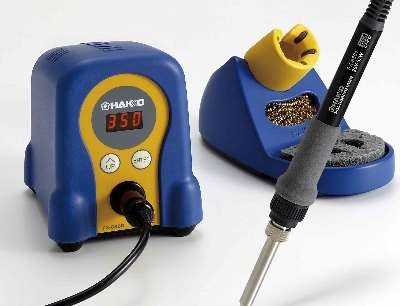
http://www.amazon.com/Hakko-FX888D-...ower-hand-tools&ie=UTF8&qid=1406688946&sr=1-6
http://www.amazon.com/Hakko-FX888D-...ower-hand-tools&ie=UTF8&qid=1406688946&sr=1-6
As an Amazon Associate, TalkBass may receive commissions from qualifying purchases made via links on this site.
Hi.
Not entirely wrong, since the rosin may have surface preparative properties as well, but the main purpose of it is to decrease the wetting angle.
Since about everything a regular DIYer wants to solder with rosin core solder -with the exception of (lazily made) DIY PCB's- are surface prepped (/tinned) already, having acids or other significant prepping agents in the solder is useless and will only cause corrosion problems later on if not neutralized and/or cleaned thoroughly.
The DIY PCB traces should always be tinned, right after the normalizing bath, drying and scrubbing, otherwise the oxidation will be a PITA afterwards.
The tinning is easiest IME to do with wave soldering paste, the cartiridges past their expiration date can be had for the scrap metal price.
Thanks to Ag and Au content in ROHS approved pastes, the price may still seem somewhat high, but a 1,4Kg cartiridge like the ones I use will coat rather many PCB's.
Regards
Sam
AFAIK the rosin in rosin core solder is the flux. And the purpose of flux is to prepare the surfaces for the solder to adhere. Somebody please straighten me out, if I've got that wrong!
Not entirely wrong, since the rosin may have surface preparative properties as well, but the main purpose of it is to decrease the wetting angle.
Since about everything a regular DIYer wants to solder with rosin core solder -with the exception of (lazily made) DIY PCB's- are surface prepped (/tinned) already, having acids or other significant prepping agents in the solder is useless and will only cause corrosion problems later on if not neutralized and/or cleaned thoroughly.
The DIY PCB traces should always be tinned, right after the normalizing bath, drying and scrubbing, otherwise the oxidation will be a PITA afterwards.
The tinning is easiest IME to do with wave soldering paste, the cartiridges past their expiration date can be had for the scrap metal price.
Thanks to Ag and Au content in ROHS approved pastes, the price may still seem somewhat high, but a 1,4Kg cartiridge like the ones I use will coat rather many PCB's
.Regards
Sam
Since about everything a regular DIYer wants to solder with rosin core solder -with the exception of (lazily made) DIY PCB's- are surface prepped (/tinned) already, having acids or other significant prepping agents in the solder is useless and will only cause corrosion problems later on if not neutralized and/or cleaned thoroughly.
The rosin in electrical solder is the prepping agent. It is only active when hot and molten. Once cool, it is inactive.
Even tinned and tin plated terminals and leads can become oxidixed. You still need the chemical action of the flux
to remove the oxide. It is very difficult to solder with solid wire (no flux core) solder, and no additional flux.
Flux does help the solder flow smoothly, but solder cannot wet an oxidized surface. That is it's other purpose - to remove
the oxide layer.
An additional separate flux is nothing more than rosin dissolved in alcohol. Same stuff as in the solder core.
Just in solution form.
-
Last edited:

I have an older model Hakko 936 and it is so much better than cheapo soldering irons. I second this recommendation.Rosin core solder, a solder sucker to remove excess solder, and a Hakko soldering station like this one (check Ebay)...then you can dial up the heat you need, high or low.
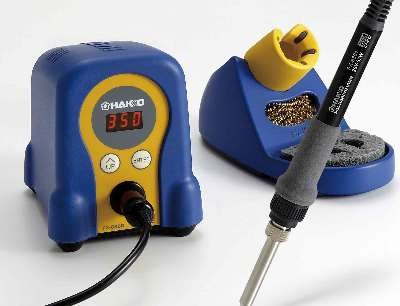
http://www.amazon.com/Hakko-FX888D-...ower-hand-tools&ie=UTF8&qid=1406688946&sr=1-6
As an Amazon Associate, TalkBass may receive commissions from qualifying purchases made via links on this site.


