

Enjoy the benefits of a premium membership!
Upgrade Account
-
TalkBass has been independent since 1998. Add your voice.
Create a free account to reply to discussions, view embedded media, and browse with fewer display ads.
Join free Log in
Want zero display ads or expanded classifieds tools? Compare plans.
You are using an out of date browser. It may not display this or other websites correctly.
You should upgrade or use an alternative browser.
You should upgrade or use an alternative browser.
Songs that made great samples
- Thread starter Gopherbassist
- Start date
More options
Who Replied?


Oh, and of course Shabba Ranks' "Dem Bow" which was sampled in so many songs it practically became a generic term for the reggaeton drum rhythm.

A tune that I’m surprised Viagra or Blue Chew hasn’t used for an ad campaign.
I actually quoted a song where James went beyond getting the party started, and expressed himself very well…
Almost none of this is true.famously De La Soul were so heavily sued by absolutely everybody sampled on "3 Feet High, and Rising" that the record - which was a colossal global hit - lost a fortune, and bankrupted them.
Whilst I'm sure that personal growth, and wanting to change things up, were contributing factors, you only have to listen to a second of De La Soul's follow up album, the appropriately titled "De Is Soul Is Dead" , or any of their subsequent albums to hear the effects of that legislation in radically altering the identity of the group - and that affect is apparent from that point forward in Hip-Hop, and Dance Music.
De La Soul was sued by The Turtles and settled out of court for a little less than $2M. They weren't bankrupted because "3 Feet" was doing very well.
The clearance contracts for their first four albums only applied to recordings on physical media (you could buy a CD of "3 Feet High & Rising" without difficulty well into the 21st century), so they couldn't put their music online without re-negotiating the sample clearance contracts. Around the time this was happening they got into a dispute with their record label over royalties and ownership which stalled the clearance process. Eventually they were able to get something like 98-99% of the samples cleared for online sales and streaming. And also gained control of their back catalog. Double-victory.
"3 Feet High & Rising" was a massive breakout success, their later albums weren't as successful but still better than most musicians could wish for -- each of their '90s albums charted in the top-10 on the Billboards hip-hop charts and went gold. They did pretty well.
What really changed how sampling and sampling clearance works is the lawsuit against Biz Markie. That was decided in 1991. It led to the rise of "interpolation" -- instead of sampling a track, you sample performers you hired to record a version of that track, so that you only have to pay publishing rights rather than publishing and performing rights. So when a producer is coming up with a new beat they might use samples but once it's dialed in they hire people to perform the sampled tracks, and the samples of those replace the scratch tracks in the finished version.

Totally agree.
Someone here on TB likened it to collage art, where artists take parts of images and/or textures and put them together to make unique pieces of art. Some of it's treasure, and some of it's garbage, just like pretty much anything else.
Peter Blake's collage for Sgt. Pepper's Lonely Hearts Club Band is one of the most celebrated, and iconic album covers of all time.
It's considered a work of art in its own right, but of course is constructed from copyrighted works by other artists, as well as with the creative input of Jann Haworth, Paul McCartney, Robert Fraser, and Michael Cooper.
Seems obvious (in hindsight) that the music on the platters would eventually utilise the same creative techniques as the sleeves that contained them - even if that hadn't been a direct consequence of the U.S. Government de-funding music education, and free instruments for schools in the late 70's, and early 80's (innovative kids figuring out how to use two turntables, a stack of funk records, and a microphone to create new forms of expression) - the technology quickly made it possible, and the chronically limited RAM capacity made it necessary.
It would be easy to dismiss both art forms as lesser, but I think the pictorial montage makes the process easier to relate to, and opens the door to considering the artistic process, the layers, and levels of thought that go into each carefully chosen reference, and the nebulous notion of truly original ideas / art - and in turn, hopefully gives people more to consider when tempted to simply dismiss collage in music.
Sugarhill records was doing that in the 80s, if not the 70s. Grand Master Flash was frustrated with them that they wouldn't let him DJ live in studio until The Adventures of Grandmaster Flash on the Wheels of Steel came out. Before that, all the samples on the Furious Five's records were rerecorded.It led to the rise of "interpolation" -- instead of sampling a track, you sample performers you hired to record a version of that track
Almost none of this is true.
De La Soul was sued by The Turtles and settled out of court for a little less than $2M. They weren't bankrupted because "3 Feet" was doing very well.
The clearance contracts for their first four albums only applied to recordings on physical media (you could buy a CD of "3 Feet High & Rising" without difficulty well into the 21st century), so they couldn't put their music online without re-negotiating the sample clearance contracts. Around the time this was happening they got into a dispute with their record label over royalties and ownership which stalled the clearance process. Eventually they were able to get something like 98-99% of the samples cleared for online sales and streaming. And also gained control of their back catalog. Double-victory.
"3 Feet High & Rising" was a massive breakout success, their later albums weren't as successful but still better than most musicians could wish for -- each of their '90s albums charted in the top-10 on the Billboards hip-hop charts and went gold. They did pretty well.
What really changed how sampling and sampling clearance works is the lawsuit against Biz Markie. That was decided in 1991. It led to the rise of "interpolation" -- instead of sampling a track, you sample performers you hired to record a version of that track, so that you only have to pay publishing rights rather than publishing and performing rights. So when a producer is coming up with a new beat they might use samples but once it's dialed in they hire people to perform the sampled tracks, and the samples of those replace the scratch tracks in the finished version.
I'm going by the information that we had available at the time (pre-World-Wide-Web, and therefore pre-streaming services), where the sums of money were undisclosed amounts, and it wasn't just The Turtles that sued over uncleared samples (it's my understanding that many of the featured samples, particularly in the singles from the album, had been cleared before release), but I'm sure more detailed information, and information pertaining to new technologies has come to light in the intervening 35 years.
To be clear, I wasn't saying that their subsequent records were creatively, or commercially disappointing; I was stating (whilst conceding that like any recording act, they would want to adapt their sound in line with their current interests, artistic development, and simply growing older) that the consequences of the various lawsuits, and sea change in the industry's enforcement of sample clearance had a profound effect on their sonic identity - as it did for most artists across several genres.
With regards to "interpolation" : did the Gilbert O'Sullivan vs Biz Markie case explicitly use the term?
I've only come across it in this context in the last five years, or so, and it simply does not mean what everyone using it assumes it means.
I get the impression that somewhere along the line, somebody meant "interpretation" whilst trying to blind someone else with legalese.
The only times I've ever come across the term "musical interpolation" , it's been when someone had improvised a new phrase / section into a pre-existing piece - adding to it (not the same as soloing / rapping / sound montage over the top of the pre-existing piece).
The other place that I've encountered the term "interpolation" in a music context, and specifically in relation to sampling, was in the user manuals for EMU (and possibly Akai) samplers, in the early 90's (again, pre-World-Wide-Web). However this is specifically a technical function, with regard to the maths, and rounding errors (best guess based on predicted values) of the digital processor manipulating a sample ; it has absolutely nothing to do with the use / misuse of the word in the modern context - but I wonder if it is part of the reason the word seems to be conflated / interchangeable with "interpretation" ???
Previously, we always used the terms "re-version", or "re-recording", and sometime "re-creation" .
Sugarhill records was doing that in the 80s, if not the 70s. Grand Master Flash was frustrated with them that they wouldn't let him DJ live in studio until The Adventures of Grandmaster Flash on the Wheels of Steel came out. Before that, all the samples on the Furious Five's records were rerecorded.
Good Times / Rappers Delight
StingRay / P-bass and a stiffer groove
Don't know if Chic got any remuneration, but they turned it into an anecdote that helped secure their continued appeal, and legacy.
My daughter flew in for a visit, and while I was preparing dinner, she put Combat Rock by The Clash on the turntable. I haven't listened to this album in probably thirty years. At any rate, as the opening bars of Straight To Hell played...
I immediately started singing...
She's quite the musical magpie.
I love that she sampled "Ghost Rider" by Suicide, but kind of disappointed that the album version didn't even come close to the awesomeness of this live performance :

Oh, and of course Shabba Ranks' "Dem Bow" which was sampled in so many songs it practically became a generic term for the reggaeton drum rhythm.
Steely and Clevie filed a lawsuit against a whole boatload of reggaeton artists claiming that these artists stole the drum pattern from them. Good luck with that. The drum pattern in question is nothing more than a slowed down soca kick and snare.
Rodgers and Edwards did, but only after threatening Sugar Hill Records with legal action. I wonder how many of the other acts that Sugar Hill used as grist for their mill came after them.Good Times / Rappers Delight
StingRay / P-bass and a stiffer groove
Don't know if Chic got any remuneration, but they turned it into an anecdote that helped secure their continued appeal, and legacy.
Last edited:
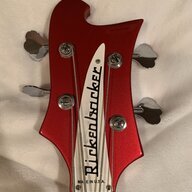
Let Nile Rodgers explain:Good Times / Rappers Delight
StingRay / P-bass and a stiffer groove
Don't know if Chic got any remuneration, but they turned it into an anecdote that helped secure their continued appeal, and legacy.
From Merriam-Webster:With regards to "interpolation" : did the Gilbert O'Sullivan vs Biz Markie case explicitly use the term?
I've only come across it in this context in the last five years, or so, and it simply does not mean what everyone using it assumes it means.
I get the impression that somewhere along the line, somebody meant "interpretation" whilst trying to blind someone else with legalese.
b : something that is introduced or inserted : an insertion or addition
It looks like a variant of this usage. Rather than use a direct sample of the original recording, a new recording is inserted. If they were trying to play it note for note like the original, there would be no interpreting.
I've heard "interpolation" used that way at least a dozen years ago, in the context of P-Square's "Danger" interpolating Eminem. It was used in hip-hop circles for sure but I don't know how far back it goes.
Another unusual case is, if I remember the titles correctly and am not confusing them with other songs, Pitbull's first hit "Culo", which samples Mr. Vegas "Pull Up". The producers used the sample in an unfinished version, let some DJs play it in Miami clubs to see how it did while finalizing the track, and it started blowing up. Knowing that there was money in the song and clearing the sample would not be cheap, they tried to replace it with an interpolation but couldn't quite get it right and ended up ponying up good money for the sample in the end. Getting the sample would have been much cheaper if they asked before it was obvious there was money in the song (and in Pitbull in general).
And one more: one version of Trae's "I'm Fresh" samples Electric Wizard. Some fans asked EW if Trae paid for the sample, they said no. But EW didn't want to sue him because their albums are full of uncleared movie samples and they didn't want to open up that can of worms.
Another unusual case is, if I remember the titles correctly and am not confusing them with other songs, Pitbull's first hit "Culo", which samples Mr. Vegas "Pull Up". The producers used the sample in an unfinished version, let some DJs play it in Miami clubs to see how it did while finalizing the track, and it started blowing up. Knowing that there was money in the song and clearing the sample would not be cheap, they tried to replace it with an interpolation but couldn't quite get it right and ended up ponying up good money for the sample in the end. Getting the sample would have been much cheaper if they asked before it was obvious there was money in the song (and in Pitbull in general).
And one more: one version of Trae's "I'm Fresh" samples Electric Wizard. Some fans asked EW if Trae paid for the sample, they said no. But EW didn't want to sue him because their albums are full of uncleared movie samples and they didn't want to open up that can of worms.
My guess is this is why a lot of pre-Biz Markie lawsuit recordings were able to continue selling through the 90s -- every record company with hip-hop artists realizing that they had popular records with uncleared samples and an all-out war over it would leave nobody standing except the lawyers, so it was better to pretend anything before that date didn't happen, as long as clearances were gotten retroactively for the music that continued selling and anything that couldn't get licensed was edited out of reissues.EW didn't want to sue him because their albums are full of uncleared movie samples and they didn't want to open up that can of worms.
Why would it? That's not what the lawsuit was about.With regards to "interpolation" : did the Gilbert O'Sullivan vs Biz Markie case explicitly use the term?
"Interpolate" is a more genteel term than "copy" or "mimic", I don't think there's anything more to it than that. Maybe it's a little less legally triggering, but in the end they mean the same thing.
It's not just for sampling any more. A lot of the oldies music played over the speakers in big-box stores and chain restaurants these days are interpolated performances. For background music it's cheaper to hire people to exactly mimic a hit single than to pay the fees for the original recording. Which says as much about how little musicians are paid these days as it does about how much record companies are demanding.
Heck, even Taylor Swift realized there was more money to be made in interpolations of the albums she wasn't making money on than to try to buy the rights back. Although in this case the owner of the original recordings eventually realized the diluted value of what they were holding and got talked down to a much lower price, so Swift now controls her back catalog including her covers of herself.
If there's anything to learn from this, it's that the songwriting credit is a whole lot more important than the performance credit.
As an aside, this has also lead to things like Coldcut bootlegging themselves. They can't afford to reissue most of their '80s material on their above-board record company (Ninja Tune) -- the ones that aren't locked up by the record companies they had been signed to at the time are wall-to-wall full of samples from hundreds of sources. But you can buy a white-label disk compiling singles and outtakes, most of them with a casually modified version of their original logo. So there's a kinda-amusing situation because Discogs will not permit sales of it because of their policies against bootlegs, even though it's self-released by the artist....so it was better to pretend anything before that date didn't happen, as long as clearances were gotten retroactively for the music that continued selling and anything that couldn't get licensed was edited out of reissues.
Yep. In the U.S. performers don't receive any royalties from FM/AM radio play - only the writers and publishers do. The musician's union in the U.S. has been fighting this for decades.Why would it? That's not what the lawsuit was about.
"Interpolate" is a more genteel term than "copy" or "mimic", I don't think there's anything more to it than that. Maybe it's a little less legally triggering, but in the end they mean the same thing.
It's not just for sampling any more. A lot of the oldies music played over the speakers in big-box stores and chain restaurants these days are interpolated performances. For background music it's cheaper to hire people to exactly mimic a hit single than to pay the fees for the original recording. Which says as much about how little musicians are paid these days as it does about how much record companies are demanding.
Heck, even Taylor Swift realized there was more money to be made in interpolations of the albums she wasn't making money on than to try to buy the rights back. Although in this case the owner of the original recordings eventually realized the diluted value of what they were holding and got talked down to a much lower price, so Swift now controls her back catalog including her covers of herself.
If there's anything to learn from this, it's that the songwriting credit is a whole lot more important than the performance credit.


