• TalkBass has been independent since 1998. Add your voice.
    Create a free account to reply to discussions, view embedded media, and browse with fewer display ads.
    Join freeLog in
    Want zero display ads or expanded classifieds tools? Compare plans.

Stabilizer, or no?

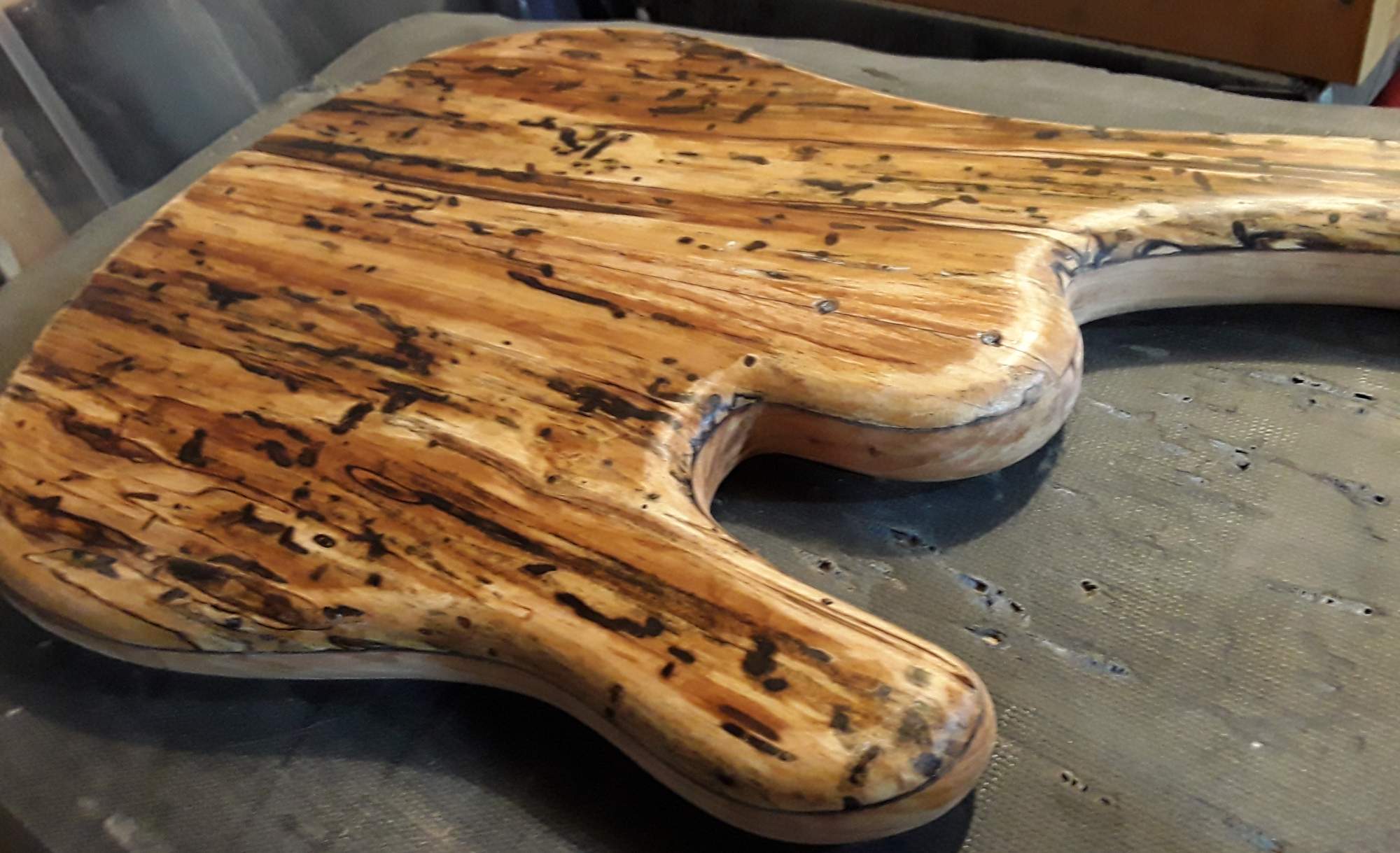
I'm working on my first build. It's a burled maple over an ambrosia maple body. I bought Minwax Wood Stabilizer to harden the punky burl. Essentially all of the contouring and shaping of the top is done. I haven't applied any stabilizer yet. My plan was to apply it after the basic shaping was done to maximize absorption.

It doesn't really seem to need it. Should I even bother? Will it interfere with the final tung oil finish? I still need to epoxy the voids. Plan was to stabilize, then epoxy, then finish. I'm questioning if the stabilizer will help or hurt the final product. Thoughts??
 
  • Like
Reactions: Beej
I like to use the stabilizer with really punky stuff like this top, but I prefer clear penetrating epoxy sealer.
full

The minwax stuff is perfectly fine though, it's basically a one-part thinned resin that penetrates pretty well. I've then put epoxy overtop and finished with waterbased polyurethane. I've also finished with tru-oil, minwax wipe-on poly and regular solvent-based spray polyurethanes, all have worked. I think in your case its about figuring out if it needs more internal stabilizing than the epoxy sealcoat will provide, but I don't think it will do any harm. :thumbsup:
 
I like to use the stabilizer with really punky stuff like this top, but I prefer clear penetrating epoxy sealer.
full

The minwax stuff is perfectly fine though, it's basically a one-part thinned resin that penetrates pretty well. I've then put epoxy overtop and finished with waterbased polyurethane. I've also finished with tru-oil, minwax wipe-on poly and regular solvent-based spray polyurethanes, all have worked. I think in your case its about figuring out if it needs more internal stabilizing than the epoxy sealcoat will provide, but I don't think it will do any harm. :thumbsup:
Thanks! I just applied the stabilizer. As i kind of expected, it really didn't absorb much. Oh well. Peace of mind, I guess! 😊

Now I'm dying to get the epoxy in those voids to see how it looks! Lol
 
I like to use the stabilizer with really punky stuff like this top, but I prefer clear penetrating epoxy sealer.
full

The minwax stuff is perfectly fine though, it's basically a one-part thinned resin that penetrates pretty well. I've then put epoxy overtop and finished with waterbased polyurethane. I've also finished with tru-oil, minwax wipe-on poly and regular solvent-based spray polyurethanes, all have worked. I think in your case its about figuring out if it needs more internal stabilizing than the epoxy sealcoat will provide, but I don't think it will do any harm. :thumbsup:
SICK!!!
 
  • Like
Reactions: Beej
I'm working on my first build. It's a burled maple over an ambrosia maple body. I bought Minwax Wood Stabilizer to harden the punky burl. Essentially all of the contouring and shaping of the top is done. I haven't applied any stabilizer yet. My plan was to apply it after the basic shaping was done to maximize absorption.

It doesn't really seem to need it. Should I even bother? Will it interfere with the final tung oil finish? I still need to epoxy the voids. Plan was to stabilize, then epoxy, then finish. I'm questioning if the stabilizer will help or hurt the final product. Thoughts??
I'd use a moisture meter to determine the moisture content; track it daily. When it no longer changes, it can be said to be at EMC.

After contouring, EMC will change as the moister inner core is exposed. Wood movement often accompanies this phase. Allow to reach EMC again before continuing.

Storing the piece "on stickers" will surround the project with air flow, which can contribute to more stable drying.

If you don't have a moisture meter, you can weigh the piece daily to infer when EMC has been reached.

Good luck with your project! :)
 
I'd use a moisture meter to determine the moisture content; track it daily. When it no longer changes, it can be said to be at EMC.

After contouring, EMC will change as the moister inner core is exposed. Wood movement often accompanies this phase. Allow to reach EMC again before continuing.

Storing the piece "on stickers" will surround the project with air flow, which can contribute to more stable drying.

If you don't have a moisture meter, you can weigh the piece daily to infer when EMC has been reached.

Good luck with your project! :)
Thanks!!
 
  • Like
Reactions: Jazzdogg
I like to use the stabilizer with really punky stuff like this top, but I prefer clear penetrating epoxy sealer.
full

The minwax stuff is perfectly fine though, it's basically a one-part thinned resin that penetrates pretty well. I've then put epoxy overtop and finished with waterbased polyurethane. I've also finished with tru-oil, minwax wipe-on poly and regular solvent-based spray polyurethanes, all have worked. I think in your case it’s about figuring out if it needs more internal stabilizing than the epoxy sealcoat will provide, but I don't think it will do any harm. :thumbsup:
Looks awesome. I want to believe it’s from an ancient church pew or old church door.

Also, I want one!!
 
  • Like
Reactions: Beej