Seems like we get a few threads where new or prospective players are asking what kind of bass to get or what a bass that they saw in a store or just bought is. A lot of times there's quite a bit of confusion over what's what. This will all be old hat to long-time TBers, but I thought it might be useful to have a thread with basic introductions to the main characteristics of some common bass types. This is my unofficial, inexpert go at it - others please feel free to correct or add.
Fundamental Fenders
The Precision Bass (P-bass), granddaddy of them all.
This was the first mass-produced electric bass guitar, first made by Leo Fender in the 1950s and still a reliable standard; probably the most common single design, often imitated by other makers. A typical P has a single split pickup, passive electronics, and a relatively wide rounded neck.

The Jazz Bass (J-bass).
Fender followed up the P with the J. Its name has nothing to do with what style of music to play on it: jazz was popular when Fender made it and he thought it would sell more with that name. Characteristics are the offset body, two single-coil pickups, and a slimmer neck than the P.
[Invalid or Expired Link Removed]
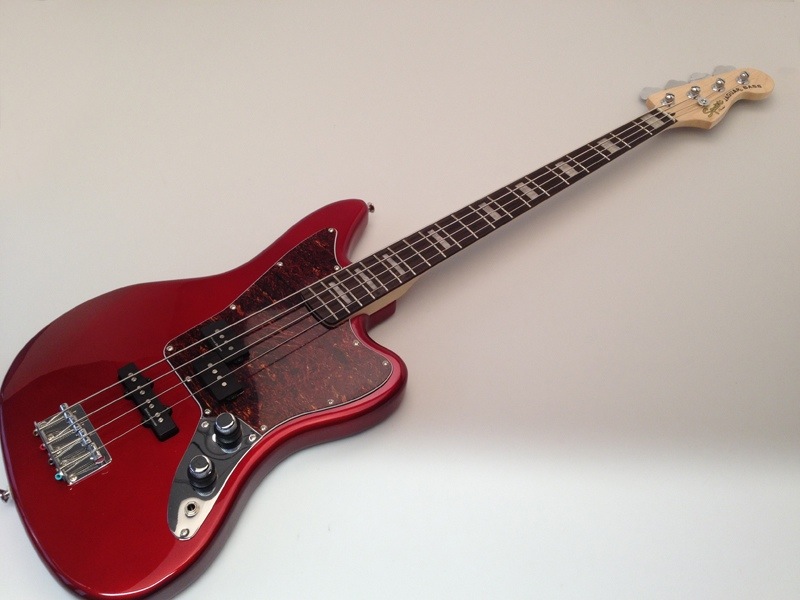
There are also many "P/J" basses that add a jazz-style single-coil pickup at the bridge to the P's split pickup; they might have either P or J-style bodies and necks, or some other design. For instance...
The Jaguar (this is Squier's version - Fender's actually uses a jazz pickup arrangement).
The Mustang
Fender started making this style in the 60s, and there have been lots of variations. It's notable for the shorter scale (30" of vibrating string vs. the standard 34").

So much for Fender. Other common types of basses:
The "Beatle" or "Violin" bass.
Made famous by Paul McCartney on the early Beatles recordings, the originals of this style were made by Hofner, but versions are now also made by other companies. Like the Mustang, it's a short-scale.

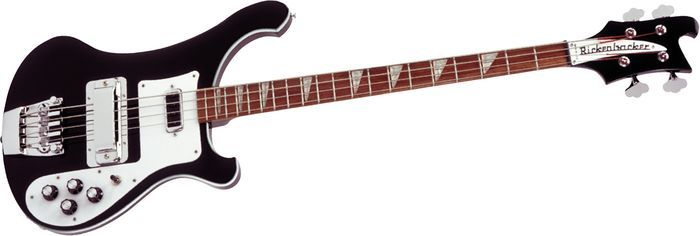
The Rickenbacker
Rickenbacker started making bass guitars close on Fender's heels, and their basses became popular with players like McCartney and Yes' Chris Squire by the late 60s. There have been a number of variations - the 4001, 4004, 4003, etc., but most Rics have a distinctive look to them.
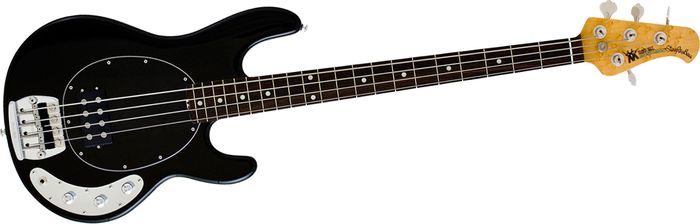
The Stingray
Leo Fender sold his company to CBS in 1965, under a contract that included a 10-year non-competition clause. He returned to making instruments in 1975 with the MusicMan company, whose best-known design is the Stingray, with a rounded body and (originally) single humbucking pickup (often abbreviated as the "MM" pickup even when appearing in other kinds of basses).
From Gibson:
Fender's biggest rival in the world of electric guitars is Gibson. Oddly, Gibson doesn't seem to have put the same energy into bass guitar designs as their six-string cousins. Rather, Gibson's best-known basses are four-string, bass-scale versions of their most popular guitars, to wit...
the Les Paul bass...
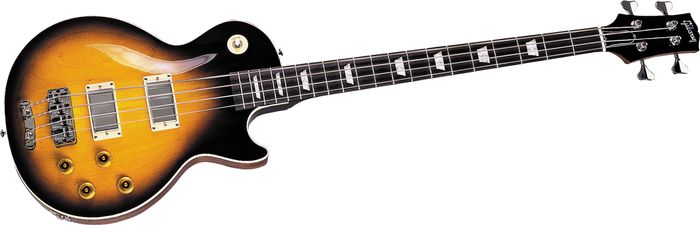
or the SG bass...

Though probably their best-known of all is the Thunderbird (here in an Epiphone version)
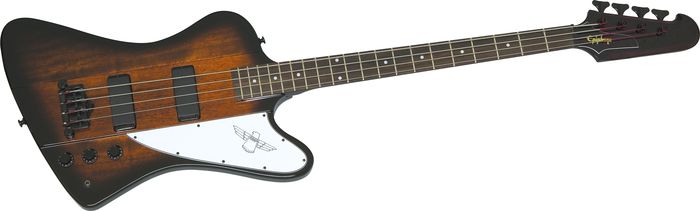
Other basses - a number of other companies have come up with bass designs that are not obvious variations on the classic Fender J or P styles.
Peavey, for instance, in its early days offered the massive built-like-a-tank T-40...
Invalid Link Removed
and more recently, among others, the very modern Cirrus...
Invalid Link Removed
Ibanez has a lot of models of basses at all price points; most feature very slim necks and active electronics...

And companies like Warwick and Spector offer different body styles with ergonomics in mind...
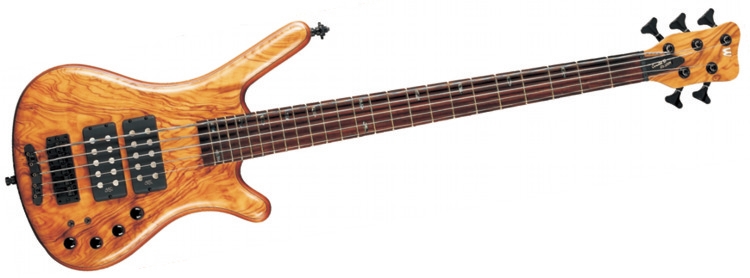
That's just a few samplings of the ranges out there. Each company, of course, offers lots of different models and variations, and then there's a whole world of custom builders that break all the molds entirely.
Fundamental Fenders
The Precision Bass (P-bass), granddaddy of them all.
This was the first mass-produced electric bass guitar, first made by Leo Fender in the 1950s and still a reliable standard; probably the most common single design, often imitated by other makers. A typical P has a single split pickup, passive electronics, and a relatively wide rounded neck.
The Jazz Bass (J-bass).
Fender followed up the P with the J. Its name has nothing to do with what style of music to play on it: jazz was popular when Fender made it and he thought it would sell more with that name. Characteristics are the offset body, two single-coil pickups, and a slimmer neck than the P.
[Invalid or Expired Link Removed]
There are also many "P/J" basses that add a jazz-style single-coil pickup at the bridge to the P's split pickup; they might have either P or J-style bodies and necks, or some other design. For instance...
The Jaguar (this is Squier's version - Fender's actually uses a jazz pickup arrangement).
The Mustang
Fender started making this style in the 60s, and there have been lots of variations. It's notable for the shorter scale (30" of vibrating string vs. the standard 34").
So much for Fender. Other common types of basses:
The "Beatle" or "Violin" bass.
Made famous by Paul McCartney on the early Beatles recordings, the originals of this style were made by Hofner, but versions are now also made by other companies. Like the Mustang, it's a short-scale.
The Rickenbacker
Rickenbacker started making bass guitars close on Fender's heels, and their basses became popular with players like McCartney and Yes' Chris Squire by the late 60s. There have been a number of variations - the 4001, 4004, 4003, etc., but most Rics have a distinctive look to them.
The Stingray
Leo Fender sold his company to CBS in 1965, under a contract that included a 10-year non-competition clause. He returned to making instruments in 1975 with the MusicMan company, whose best-known design is the Stingray, with a rounded body and (originally) single humbucking pickup (often abbreviated as the "MM" pickup even when appearing in other kinds of basses).
From Gibson:
Fender's biggest rival in the world of electric guitars is Gibson. Oddly, Gibson doesn't seem to have put the same energy into bass guitar designs as their six-string cousins. Rather, Gibson's best-known basses are four-string, bass-scale versions of their most popular guitars, to wit...
the Les Paul bass...
or the SG bass...
Though probably their best-known of all is the Thunderbird (here in an Epiphone version)
Other basses - a number of other companies have come up with bass designs that are not obvious variations on the classic Fender J or P styles.
Peavey, for instance, in its early days offered the massive built-like-a-tank T-40...
Invalid Link Removed
and more recently, among others, the very modern Cirrus...
Invalid Link Removed
Ibanez has a lot of models of basses at all price points; most feature very slim necks and active electronics...
And companies like Warwick and Spector offer different body styles with ergonomics in mind...
That's just a few samplings of the ranges out there. Each company, of course, offers lots of different models and variations, and then there's a whole world of custom builders that break all the molds entirely.
Last edited: