• TalkBass has been independent since 1998. Add your voice.
    Create a free account to reply to discussions, view embedded media, and browse with fewer display ads.
    Join freeLog in
    Want zero display ads or expanded classifieds tools? Compare plans.

Double Bass Starting method work

I've been playing double bass for almost five years now as I am about to start my sophomore year of high school. I've never seriously worked out of any method book(although I do own the Simandl first edition) and I've been wondering if I should begin to seriously work out of one, be it Simandl, Nanny, or any other serious method book. I know my way around the fingerboard very well for I have been including solos as a main part of my practice regimen(Bottesini's Elegy being my current one), along with scales, etudes, and various orchestral excerpts. My teacher rarely has me work directly out of the Simandl book and I'm wondering if I should start to.
I understand this may be a question to ask either my teacher or another personal instructor, but any responses are appreciated.
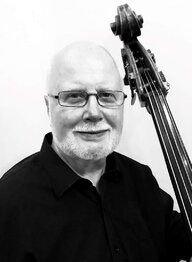
 
I am most familiar with Simandl and have a love-hate relationship. It gives an organised basis for logically learning the finger board, but in a very repetitive boring way, in its first 70 pages or so. Yet it does contain a lot of useful sections later that I must confess I did not dwell on for long as a student (neither did my teacher!). As a method Simandl leaves so much to the teacher and if the teacher is well organised and good there are much more inspiring paths to success. I could say the same for most of the other methods I have or have seen.

If I were to look for inspiration from someone's method I would work through Ludwig Streicher's "My Way of Playing the Double Bass" (Doblinger). One of my former colleagues, Max McBride of Canberra School of Music, was a student of his and remains one of Australia's best bass players and teachers. I am sure that Matthew MacDonald, current 1st Principal Bass in the Berlin Philharmonic orchestra, would agree with me (about Max).

DP
 
Simandl fixes a lot of problems. It's grueling, but it sounds like you care enough about the instrument to saw your way through it. Fwiw, it's not a book you just play through front to back. It's a lifetime of work.

Another amazing resource is Sevcik. It does things for your bow arm that are downright miraculous. Both these books are largely personal work, though obviously a teacher can and should give you guidance on both.
 
I know my way around the fingerboard very well for I have been including solos as a main part of my practice regimen(Bottesini's Elegy being my current one), along with scales, etudes, and various orchestral excerpts. My teacher rarely has me work directly out of the Simandl book and I'm wondering if I should start to.

If you can play the Elegy you are way ahead of the first Simandl book. Because it is more difficult than anything in the first book.
The Simandl book is mostly scales with a short etude piece added. You are already playing scales and etudes so you've got that covered. I think your teacher has a reason for not letting you work out a method.
But sometimes at some point in your career it is good the start with the basics again and work through a method and revise your technique. At least you know what is in that method when doing that. Simandl is a good starting point. For TP playing I would not recommend the whole 2nd book but playing some excerpts from other methods and the famous pieces.
 
Has anyone played through my books? The approach is very different than Simandl and eventually adds the open hand tech which, in certain passages, really makes it more musical. At the least, you then have more musical choices than just the 1,2,4.
Tom Gale
asodb.org
 
Can we please note that executing the entirety of Simandl with good pitch and sound is actually quite advanced? Also, note that the end of the book is devoted to tricky excerpts. If you can't play them by the time you finish the book, you *haven't finished the book.*

The idea that playing at the end of the fingerboard indicates that one has mastered 1/2 position is a horribly misguided concept. The big conservatories are full of "advanced" players who none of us would want to share a stand with in the professional world of bass playing. It takes many years and countless hours of work on the simple things to become a moderately competent section member.

Save the rare instance where we are soloists, our job is to provide the fundamental that the rest of the ensemble tunes to, and to provide warmth and beauty. Simandl has a proven track record for building this skill set. Rabbath 1 is excellent as well.