
Not country, per se, but I believe Gary Tallent from E Street used one for a while, too.The guys from the band Alabama were MusicMan/EB exclusive for a long time.

TalkBass has been independent since 1998. Add your voice.
Create a free account to reply to discussions, view embedded media, and browse with fewer display ads.
Join free Log in
Want zero display ads or expanded classifieds tools? Compare plans.
Not country, per se, but I believe Gary Tallent from E Street used one for a while, too.The guys from the band Alabama were MusicMan/EB exclusive for a long time.
The only bass I need after the ray is the j.
I haven't experienced anyone in real life say they hate the ray. I do know quite a few bass players who want the quality, durability, playability and look of the ray but just can't manage the sound.At my age, I don't get out and around other bassists all that much..........other then here on TalkBass. So, I've never experienced a "love/hate" with the Stingray.
If I can express my opinion. There are songs with the Stingray and those songs sound fantastic and the 'Ray was the perfect bass for that song.
But, IMHO, the Stingray is not a "do all" bass. It tends to have a strong mid range sound that can be dominate. And so, IMHO, it's great for certain kinds of songs but certainly not all songs.
Perhaps, Ps and Js are more versatile bass guitars than the 'Ray but it's not fair to say that they are better basses.
(When a J's neck pickup is rolled off a bit and the bridge p/u run full and a bassist plucks close to the bridge, the J can come pretty close in sounding like a 'Ray.....IMHO.)
View attachment 7071734
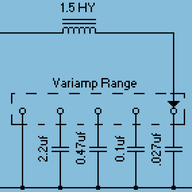
Explanation:The Stingray is distinctive enough that I feel I must have one whether it's my favorite or not.
I owned a 4H and a 5HH. I currently own the "Sterling Sterling 4H" and that will be my Stingray voice.


IMO A ray will tend to sit on top of the mix more, be more distinct and clear. While a P can blend in better?At my age, I don't get out and around other bassists all that much..........other then here on TalkBass. So, I've never experienced a "love/hate" with the Stingray.
If I can express my opinion. There are songs with the Stingray and those songs sound fantastic and the 'Ray was the perfect bass for that song.
But, IMHO, the Stingray is not a "do all" bass. It tends to have a strong mid range sound that can be dominate. And so, IMHO, it's great for certain kinds of songs but certainly not all songs.
Perhaps, Ps and Js are more versatile bass guitars than the 'Ray but it's not fair to say that they are better basses.
(When a J's neck pickup is rolled off a bit and the bridge p/u run full and a bassist plucks close to the bridge, the J can come pretty close in sounding like a 'Ray.....IMHO.)
View attachment 7071734
What's HPF?While the following isn't a secret as in "vast conspiracy", I think very few people know it:
In the beginning (I don't know how long this continued) they chose an op amp (the active amplifying device in the preamp) whose slew rate (how fast it can move the waveform up and down) was variable, and could be set with a single resistor. This resistor also strongly affected battery life, and I guess they set that for long battery life, and low slew rate.
I wonder at what point they noticed that the slew rate was so low (so slow), that with treble and volume high enough the op amp couldn't keep up, and gradually transformed the highs into triangle waves, which have a distinctive nasality. This is one factor in the "love-hate". It could be increased or decreased with a single resistor change (but you'd have to consult a real expert, not me).
For me it wasn't that; it was the inescapable spike at about 4KHz that I didn't like about the 3-band.
Oh, and the permanent non-adjustable HPF included at no extra charge.
Both of those could have been changed, but then I would no longer have what I spent so much money for, thus the passive.
I guess you don't really need an explanation.

My StingRay Specials are pretty much "do-all" basses. I'd agree with you concerning pre-Special Rays.At my age, I don't get out and around other bassists all that much..........other then here on TalkBass. So, I've never experienced a "love/hate" with the Stingray.
If I can express my opinion. There are songs with the Stingray and those songs sound fantastic and the 'Ray was the perfect bass for that song.
But, IMHO, the Stingray is not a "do all" bass. It tends to have a strong mid range sound that can be dominate. And so, IMHO, it's great for certain kinds of songs but certainly not all songs.
Perhaps, Ps and Js are more versatile bass guitars than the 'Ray but it's not fair to say that they are better basses.
(When a J's neck pickup is rolled off a bit and the bridge p/u run full and a bassist plucks close to the bridge, the J can come pretty close in sounding like a 'Ray.....IMHO.)
View attachment 7071734
High Pass Filter. It rolls off lows but lets highs through.What's HPF?
On the 3 band, what happens when you roll the treble and mids down but leave the bass maxed?High Pass Filter. It rolls off lows but lets highs through.
It would have a lot of lows but wouldn't go *deep*. I didn't like that so I always left bass centered, myself.On the 3 band, what happens when you roll the treble and mids down but leave the bass maxed?
I pretty much keep all three centered almost all the time. Even on the 2 band I try to approximate the center.It would have a lot of lows but wouldn't go *deep*. I didn't like that so I always left bass centered, myself.


Are you saying you run the bass on the amp at 1-2 "o'clock," treble at 4-5? Or the eq on the bass?Pretty much most any bass can work for most any music. The downstream processing has a lot to do with the final tonal result.
Stingrays do have a distinct tonality, but if one sculpts the onboard EQ and/or amp/preamp to achieve that goal, it can most likely happen. Bernard Edwards of Chic and Cliff Williams of AC/DC are examples of Rays not sounding like what most think a Ray sounds like (which is more along the lines of Flea). Their tones sit in and fill out the mix.
I play 2EQ circuits, which are inherently more colorful and not really able to get 'flat' like the 3EQ can. However, Running the bass control around 1-2 and the treble control around 4-5 is about as flat as it can get. That setting balances well with many of my other basses of different platforms, both active and passive. Plus, that setting still has room to get more low end and cut more highs if needed for the 'support' vs 'overtake the mix' choice.

I love Jerry Reed. I've heard Stingrays in country before, but I can't recall where right now. Jennings' bass player, too? This video proves that you can take a Ray into any environment, it's all about how you approach it. Maybe the ray naysayers just can't adapt to the ray. For me, I have to adapt to a passive instrument.
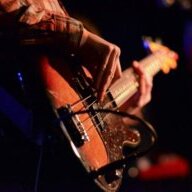
It's the 2EQ on the instrument. Bass control is around 1-2, like nearly turned all the way CCW. Treble control is just under halfway up.Are you saying you run the bass on the amp at 1-2 "o'clock," treble at 4-5? Or the eq on the bass?