• TalkBass has been independent since 1998. Add your voice.
    Create a free account to reply to discussions, view embedded media, and browse with fewer display ads.
    Join freeLog in
    Want zero display ads or expanded classifieds tools? Compare plans.

Stuff you wish you knew when first starting out

don't fret so hard..make sure your bass is set up that you don't have to squeeeeeeze your strings
also work on your pinkie strength....
..practice equally with a pick and fingers....you may only like one style but I have poor pick skills and there are lots of good uses for them (McCartney and Waters etc know a thing or two)
...spend 4 times the amount of time on practicing as on TB (or anything else for that matter)
 
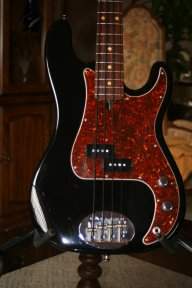
I wish I knew that putting a quater-pounder in a Precision bass is about the worst thing you can do with a P-bass. In other words, the best quality of a P-bass is that it has pronounced mids, and that's why is sits in the mix so well. A quarter pounder takes that away.

I also wish I knew that a single-pickup bass - like a P or a Stingray - isn't less desirable than basses that have multiple pickups (i.e. "flexibility"). A single, awesome tone is better than 10 or 20 mediocre tones.
 
Rather than things I wish I'd known, these are my turns on ridiculous myths I'm glad I've learned to ignore.

- guitar setups are easy. And you don't need to "turn the truss rod a quarter at a time and wait a day". Guitars are pretty solid things.

Eric of Eric's Guitars in Los Angeles would agree heartily. He told me that he believes the "turn and wait" truss rod strategy to be utter hogwash. He advises setting the board where you want it the first time. Considering Eric's reputation and his conviction, the point was not lost on me.
 
  • Like
Reactions: static0verdrive
My list includes stuff like:
  • Chord tones instead of scales (or at least more important early on than scales)
  • Scales over more than just one octave
  • EQ basics (too much bass or low mids is bad, high mids helps cut through, etc)
  • Basic setup (truss rod, bridge, intonation, etc)
What do you feel you learned later than you would have liked?

Pretty much what I would have said too. Exercising my pinky more, not mixing drivers, and how to solder would all have been great things to be taught early on. Practicing different time signatures besides 4/4 would have been great, kinda of struggling on that now. It's easy when the song is done, but trying to write something with just the drum beat to go off of can be difficult. My latest indie song I'm working on has really weird beat even though it's just 6/8, I play 3/4 no problems but this one is just really throwing me for more of a curve than it should have. I tolerated it just because it's such an awesome beat, the song will come out nicely when it's done :)
 
  • Like
Reactions: static0verdrive
My most memorable lesson which I learned playing guitar before bass but extends to all stringed instruments was SETUP..SETUP...SETUP!
My second most memorable lesson since playing bass was...TIMING...TIMING...TIMING!
My third most memorable lesson since playing in a band or group was...PRACTICE...PRACTICE...PRACTICE!
I'm always open to learning lessons...I'm sure I'll have another memorable lesson in my future.
 
You don't need to reinvent the wheel every time you touch the instrument or be Mr. Impressive, nobody really likes that stuff anyways. Playing music people actually like and "playing along" is a good way to build a career. Going on tour is not quite like you are imagining it either...unless by "groupies" you meant "sleeping on a moldy kitchen floor with your shoes on".
 
Be careful about investing in projects where your partners don't clearly understand a) it's a business and b) your work has value. (This goes for you, too.)

If you teach a person a thing, the first person he'll use it on is you.

Determine right away whether you're to be a sideman or a creative partner, and act accordingly.
(Hint: A sideman gets more money.)

Never even think of getting in bed with another musician you met in a band. The less pretty one always gets fired.

Bassists are not pretty. Unless you're Sting.

If someone comes to rehearsal drunk, he'll wind up falling over onstage at some point. Take steps or make tracks.

If the sound tech's credits are largely in metal, don't trust him with your tone.

Help your drummer load and unload. You're in this together.
 
When in 1990 someone offers you a '77 P-bass for 50 bucks... BUY IT!
Don't play it for a few minutes and say "Nah I don't like the baseball bat neck" I'll pass.

When in 1994 you call up someone selling a Ric 4003 fretless for $350 tell them I'LL BUY IT!
Don't ask what color it is and say... nah, well, I'll think about it and then not call back.
 
Always work to improve your ear training (no matter how good it is)
Always work to improve your sight reading (no matter how good it is)
Never say no to a gig. Take it and figure out how to deal with what's needed.
There is nothing about music that isn't worth knowing. Learn as much as you can about everything musical, it's all usable.
Know that when you aren't practicing, someone else is.