I have a Squier P bass fretless project I have been working on for a while. I planned to do a black colored epoxy on the neck. Now I came across some reallllyyy strong Super Glue. It is liquidy and clear, the brand is Surehold 5 Star. The only ingredient listed is Cyanoacrylate Esters. If I used a foam brush and laid it on in thin layers would that be effective as a fingerboard coating? I am using roundwound strings. Anybody else used Superglue as a coating?

Enjoy the benefits of a premium membership!
Upgrade Account
-
TalkBass has been independent since 1998. Add your voice.
Create a free account to reply to discussions, view embedded media, and browse with fewer display ads.
Join free Log in
Want zero display ads or expanded classifieds tools? Compare plans.
You are using an out of date browser. It may not display this or other websites correctly.
You should upgrade or use an alternative browser.
You should upgrade or use an alternative browser.
Super Glue Fingerboard Coating?
- Thread starter Wade10987
- Start date
More options
Who Replied?

fenderhutz said:Real superglue is brittle and will break over time. No idea what the stuff you have is though.
I also think it will turn a hazy white color as well. Go to a hobby shop and get some two part epoxy.

http://www.talkbass.com/forum/search.php?searchid=10097677
Edit: Hmm- was expecting more results- I seem to recall seeing much more on using CA(cyanoacrylate or super glue)on fretless fingerboards. Phantom memories, perhaps...
Edit: Hmm- was expecting more results- I seem to recall seeing much more on using CA(cyanoacrylate or super glue)on fretless fingerboards. Phantom memories, perhaps...
http://www.talkbass.com/forum/search.php?searchid=10097677
Edit: Hmm- was expecting more results- I seem to recall seeing much more on using CA(cyanoacrylate or super glue)on fretless fingerboards. Phantom memories, perhaps...
So there IS some precedence then? I think I will get 2 part Epoxy anyway, but there might be some potential for this glue. The thinness of it makes me think it would coat nicely.

Hopkins
Commercial User
CA glue works very well as a finish. From my experience it doesn't darken the wood like other finishes do, so your board will look like it does with no finish. It also polishes nicely. Just make sure you have plenty ventilation, and wear breathing protection. The vapors are pretty bad.
The fingerboard on the bass in this tread was done with CA glue
http://www.talkbass.com/forum/f57/f...ion-mad-scientist-edition-725912/index24.html
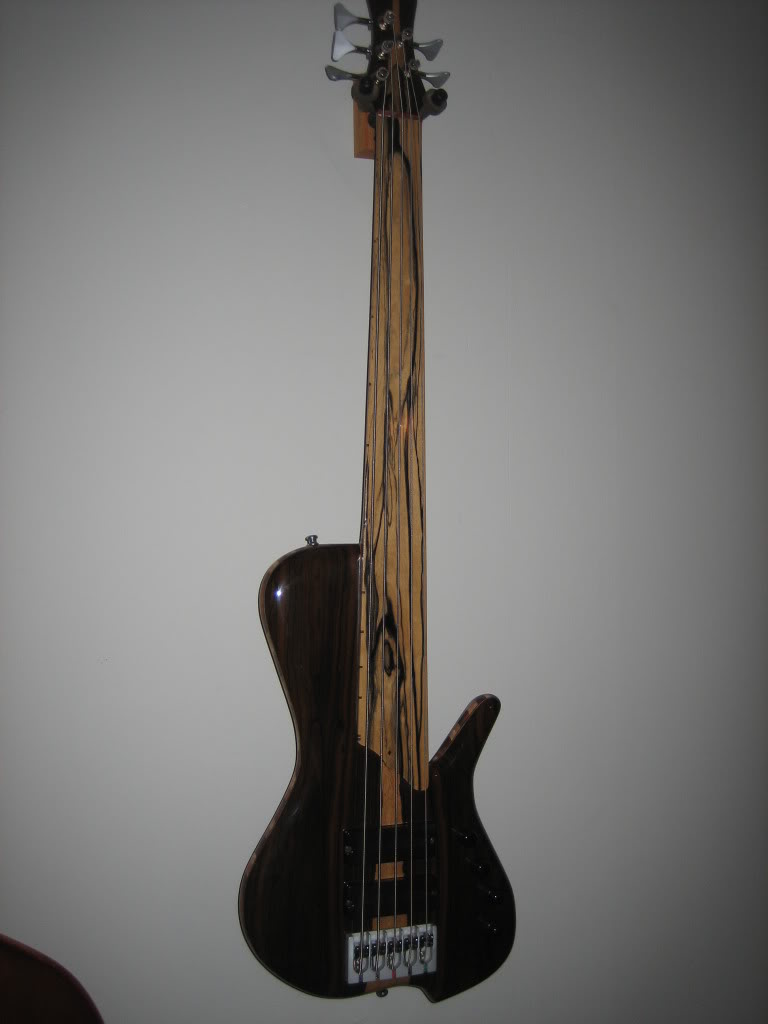
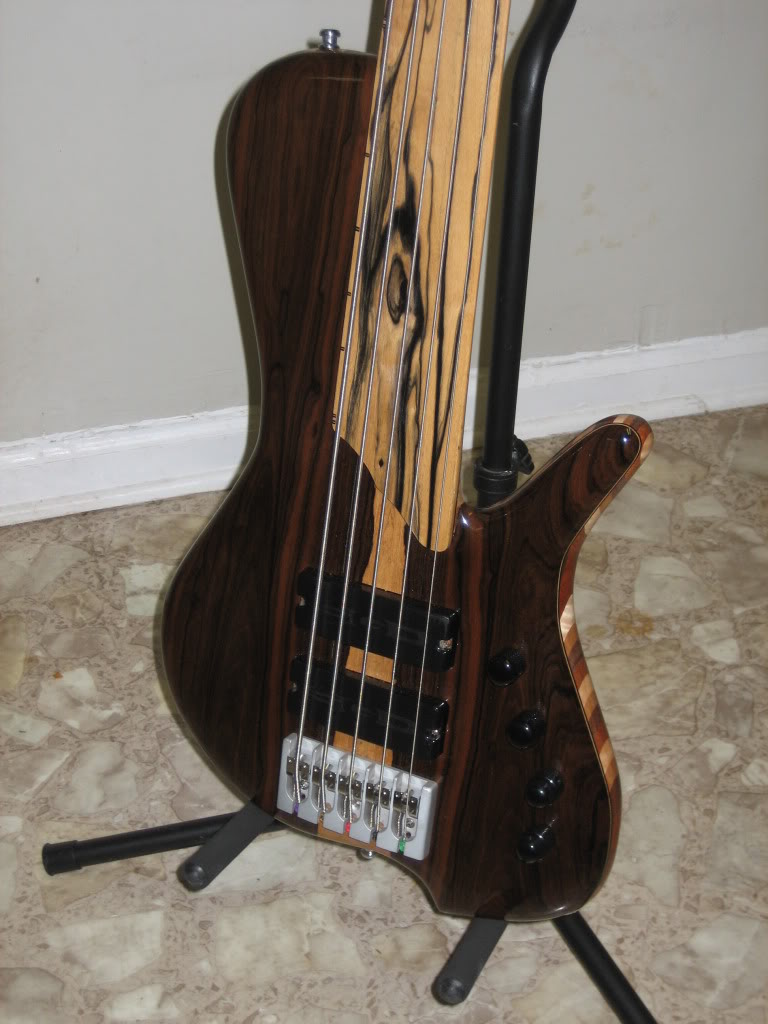
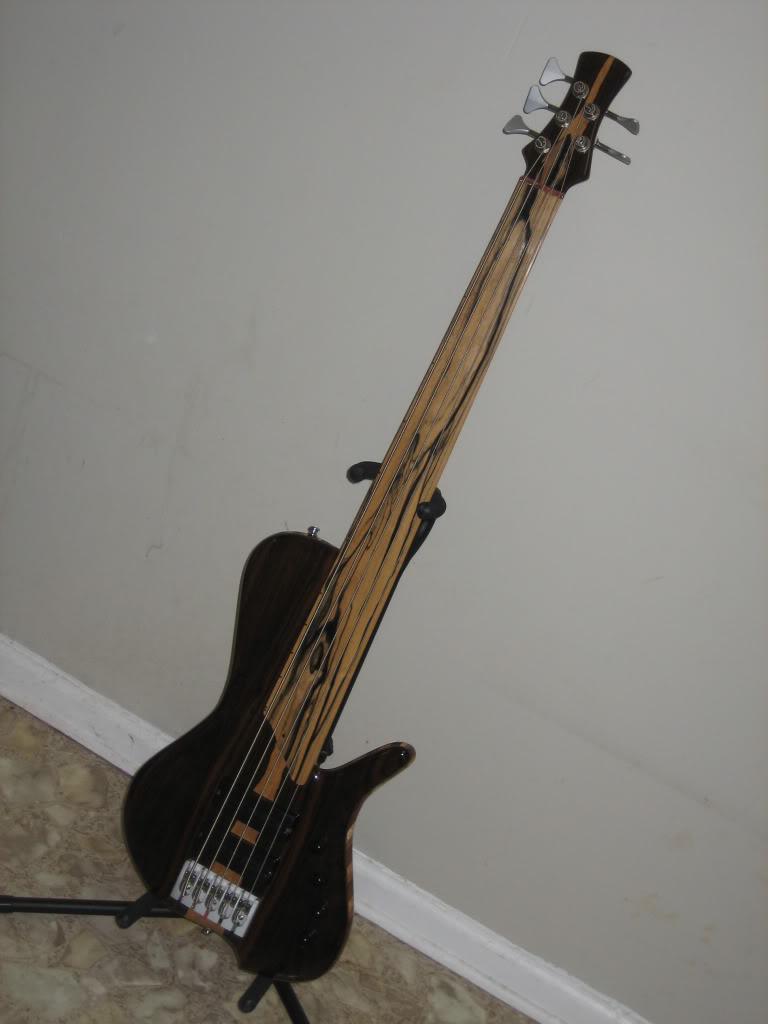
The fingerboard on the bass in this tread was done with CA glue
http://www.talkbass.com/forum/f57/f...ion-mad-scientist-edition-725912/index24.html
I have a Squier P bass fretless project I have been working on for a while. I planned to do a black colored epoxy on the neck. Now I came across some reallllyyy strong Super Glue. It is liquidy and clear, the brand is Surehold 5 Star. The only ingredient listed is Cyanoacrylate Esters. If I used a foam brush and laid it on in thin layers would that be effective as a fingerboard coating? I am using roundwound strings. Anybody else used Superglue as a coating?
You can't use a foam brush, the superglue will kick off almost instantly. You can "pad" it on, in very thin layers; I've done this with my hand inside a plastic bag.

gbarcus
Commercial User
- Jul 20, 2008
- 398
- 12
- Disclosures
- Owner of Barcus Basses barcusbasses.com
I use rubber gloves to spread the ca glue along with either a disposable scrapper or a razor blade. ca is very hard to get even. I've used thick ca glue and had pretty good results, but seem to always get some small bubbles if I go too thick of a coat.
Acetone dissolves super glue. If the finish isn't totally smooth, it can be sanded, then wiped with acetone to smooth it out.
Don't use this with foam- it will set up a chemical reaction that will break down the foam and contaminate the finish. That's what was meant by 'kick off'.
This stuff shouldn't be done indoors and it's best to use a respirator with activated charcoal filters and goggles, not glasses. The fumes burn really bad when they get in eyes.
Don't use this with foam- it will set up a chemical reaction that will break down the foam and contaminate the finish. That's what was meant by 'kick off'.
This stuff shouldn't be done indoors and it's best to use a respirator with activated charcoal filters and goggles, not glasses. The fumes burn really bad when they get in eyes.

Wade10987 said:JLS: It will "kick off"?
Kick means to begin curing. CA (cyanoacrylate) starts curing as soon as it hits moisture in the air. Foam will always have moisture trapped in it and.the CA will kick. The foam will shred as it begins sticking to the wood. Google CA guitar neck; I found a tutorial on it somewhere a year ago.
When CA wicks into wood and then is built up in thin layers, it is lighyears away from brittle. In fact it is an acrylic once the carrier offgasses: very hard and durable. When it becomes one with wood its nearly indestructible filling the dry pores and wood cells with acrylic. In fact it is then a composite material by definition. I have been using CA for years in rc modelling; it turns balsa into a nearly indestructible composite. Yet you can polish it to a glass like finish.

A friend who makes wood pens uses thin CA to put a final finish on his pen barrels. He says the trick is to spin them up in the lathe and wipe the CA on with a rag, then polish it the same way with an ultra fine buffing compound.
He gets it hot enough (through friction) when applying the CA that it will burn him without gloves, which he claims is the only way to get a good, hard gloss from the CA.
As a long time machinist, it bothers me to no end to see a gloved hand and loose rag so close to a turning headstock (or anything chucked up in one), but it's his hands and his business. I mentioned it one day and he poo pooed my concern and said he's never had any problem doing it. I knocked wood for him anyway.
Personal concerns aside, if you were not expecting a high gloss I don't see why wiping CA on wouldn't give you a hard finish. I could see it being tricky to get a level finish, but if you were willing to work it enough that should be doable as well.
Oh and do it in a well ventilated area or use a filter mask, there is cyanide in that stinking byproduct of CA curing. I've used it on balsa and it's annoying enough in small doses I would never try anything with a (relatively) large quantity of uncured CA out of the bottle without some intake protection.
He gets it hot enough (through friction) when applying the CA that it will burn him without gloves, which he claims is the only way to get a good, hard gloss from the CA.
As a long time machinist, it bothers me to no end to see a gloved hand and loose rag so close to a turning headstock (or anything chucked up in one), but it's his hands and his business. I mentioned it one day and he poo pooed my concern and said he's never had any problem doing it. I knocked wood for him anyway.
Personal concerns aside, if you were not expecting a high gloss I don't see why wiping CA on wouldn't give you a hard finish. I could see it being tricky to get a level finish, but if you were willing to work it enough that should be doable as well.
Oh and do it in a well ventilated area or use a filter mask, there is cyanide in that stinking byproduct of CA curing. I've used it on balsa and it's annoying enough in small doses I would never try anything with a (relatively) large quantity of uncured CA out of the bottle without some intake protection.
Hopkins
Commercial User
Before beginning a project like this one, I would invest in a radius sanding block the same as your neck. That way you could build up the finish slowly and sand it back down to the same radius as the neck. Sand it up to about 400 grit with the block, then 600 through 2000 grit with a foam sanding block. Then begin polishing.

A few of us over in the Wishbass threads have used SG very successfully to coat fretless boards. You could visit Dave'sBassPlace for a run down or just do a search on SG fingerboards. A fellow named Joey (if I remember correctly) did a tutorial on it as well. The boards shown apparently are VERY shiney, very hard and not that difficult to do. Personally, I have not done it yet, but will at some point. Flatwounds are still recommended though, I do believe for almost any fretless board, due to the possibility of scarring. The type of SG you use is critical though, as is proper ventilation - this stuff is deadly! Good luck ...
Deadly is a bit over the top. Irritant and avoid prolonged exposure is more appropriate; how many CA deaths have you heard of? I use it all the time and just ventilate my area.
OK, first of all I really appreciate ya'll's input. The reason I asked about this CA finish is because I happened to have it on hand. Epoxy is less than 5 dollars, so I gotta ask...what are the pros and cons of each? Which is one is easier, faster, more durable, etc.
I figure the harder the surface the easier to get it smooth. CA will be harder. Did you check that video above? It looks very easy and not very messy.

stucliff
Commercial User
- Sep 7, 2008
- 2
- 0
- Disclosures
- Owner & Luthier @ Diego Vila Custom Guitars & Basses
I may be wrong, but I've heard that CA Glue was discovered by a chemist that had a finish as his primary goal, so using it as a finish won't be such a crazy idea.
Nevertheless, Mr. Dan Erlewine show us how to do it in this link, with sweet results Invalid Link Removed
It's fast and reliable.
Hope it helps.
Nevertheless, Mr. Dan Erlewine show us how to do it in this link, with sweet results Invalid Link Removed
It's fast and reliable.
Hope it helps.


