

I've waited a few weeks to post this as to get over the honeymoon phase of these mod's and also do some tube rolling. I will try to keep it short but informative....
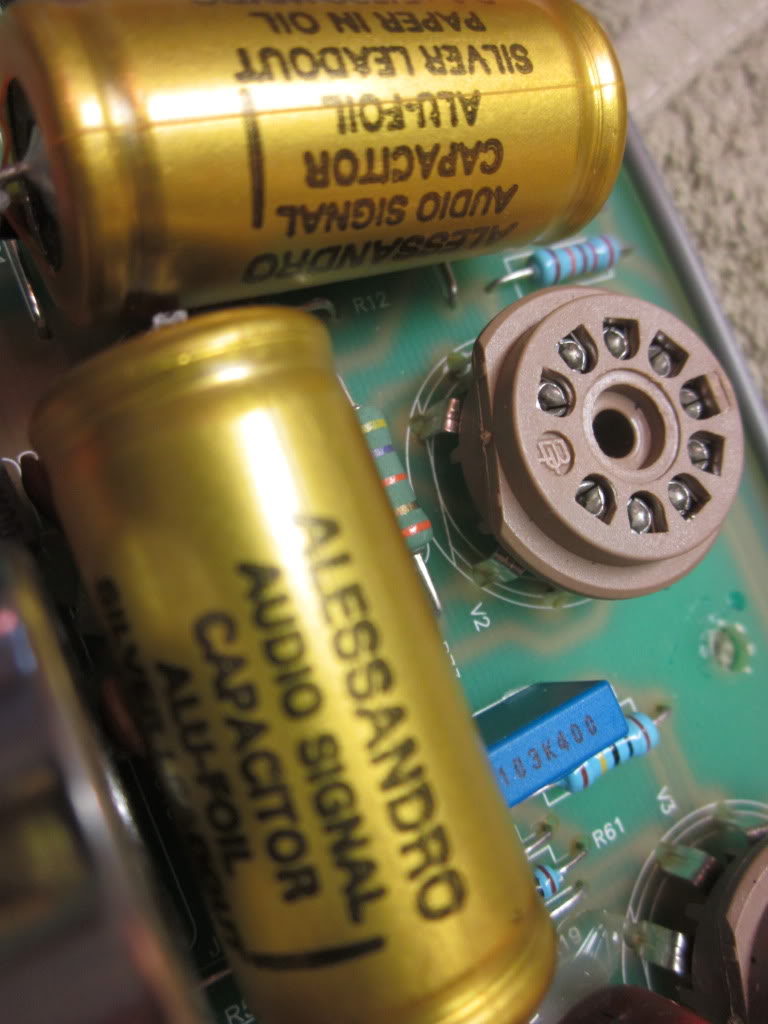
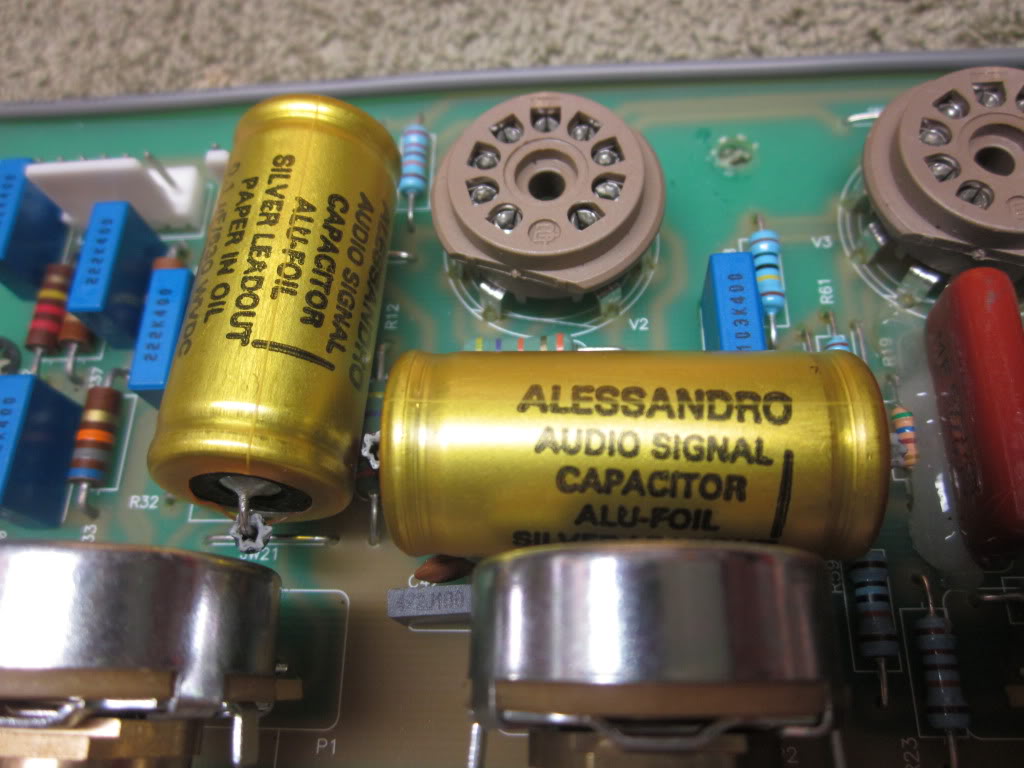
As many of you know I previously upgraded the OT in my VR with a Metroamp spec'ed Heyboer with fantastic results. The next phase of VR improvement seemed like a natural progression.. enhancing the input signal path. A few conversations with the fine folks at MetroAmps and my preamp board was on it's way to them. The exact mod consisted of 2 new paper and oil caps and a few NOS resistors in key locations. The work that was done was first class and I could easily tell I was dealing with true amplifier builders and not some weekender with a soldering iron. All my original components were also returned to me intact, if I choose to reverse out this mod (no way!)
Impressions: These components take about 40-50 hours to fully "burn in" according to George at Metro, but the initial "hit" I got when I first fired up the amp was apparent. Cleaner, thicker, more dimensional or tubiness was heard and felt (VR through 2 Berg HS210's with a 75 PBass.) I was running the VR tone controls flat and the Pbass tone pot/volume at the mid points. I did more of my testing using the volume and tone controls on the instrument to determine if the touted "sensitivity" was true. I was not disappointed! Just making small tone and volume adjustments took me on a journey.. Bos Scaggs Low Down(nailed the basstone) Some Chicago (Peter Catera was in the room!) Elvis Costello(well Bruce Thomas was there just limited by my poor skills) Hall and Oates (Maneater..cheezy song but great lines by the late/great TBone)
Using the tone controls on the VR was almost overwhelming. I love the VR for it's mid-range content and I now have more clarity/dimension in that area no matter the frequency or cut/boost position. Bass was more prevelant and I found myself running a bit of cut to take out some of the thunder. Treble content had a "sheen" to it that made me run for my 01 PBass with 62 re-issue PU's/round wounds (and a pick!) Upper register harmonics were just incredible! If I can place my finger (and ear) on any aspect that the stock VR pre was missing I would say this was it. Keep in mind these observations are based on about 20 hours on the components, so things have yet to really open up.
Tube rolling experiments were the most satisfying part of this modification. Ever had the experience inserting a tube in V1 and could not tell the differnce between a NOS and current mfg? With Metro's modifications, I could hear the difference between a Mullard and it thickness,a Telefunken's tightness, a GE's top end. I also discovered a few treasures in my tube collection that I had written off and was prepared to give away.
In all I believe this mod complement's the OT upgrade nicely. However, the preamp mod itself just made whatever was good about the VR front end better. The OT gave me more clean power and push, while the preamp mod gives more dimension/ sensitivity and helps it stay together/ tighter/ smoother even when overdriven. I could hear the"character" of each of my basses come through with more authority. I notedthat tube selection matters so much more than before and I've ordered a few more to continue this journey.
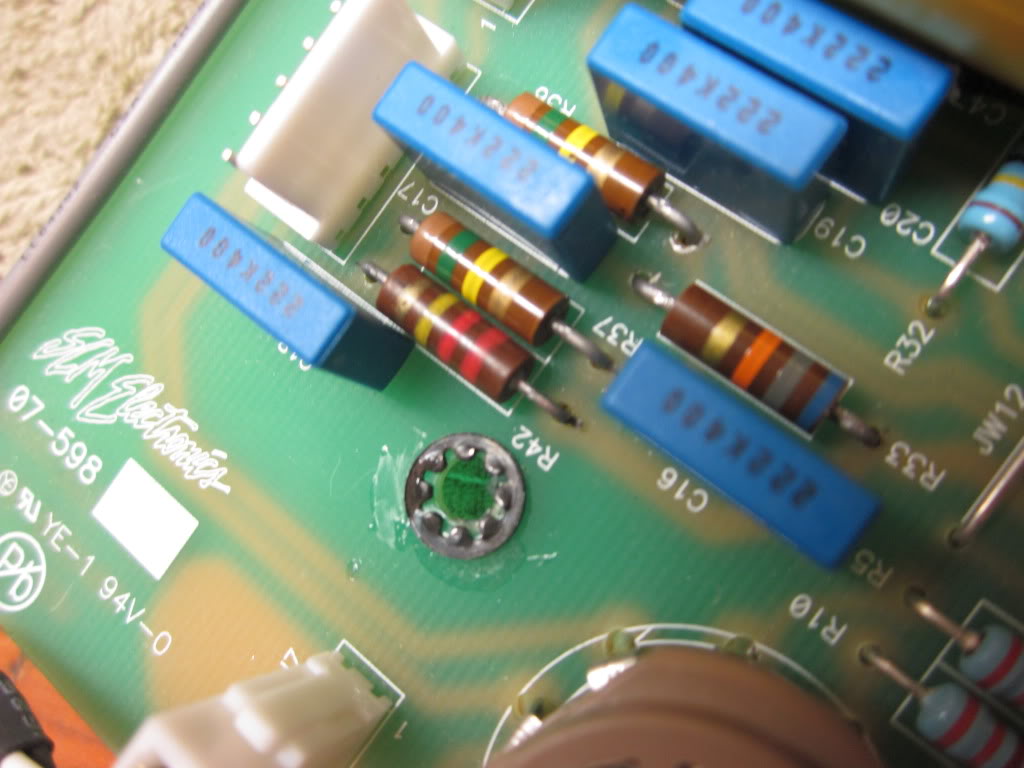
With the permission of MetroAmps I've included a few before/after photo's of the pre. George and Cris at MetroAmps are two of the most down to earth and intelligent people in the business. I would recommend a conversation with them if you have a Ampeg VR/CL and are looking for a more robust SVT experience.
Before Mod:
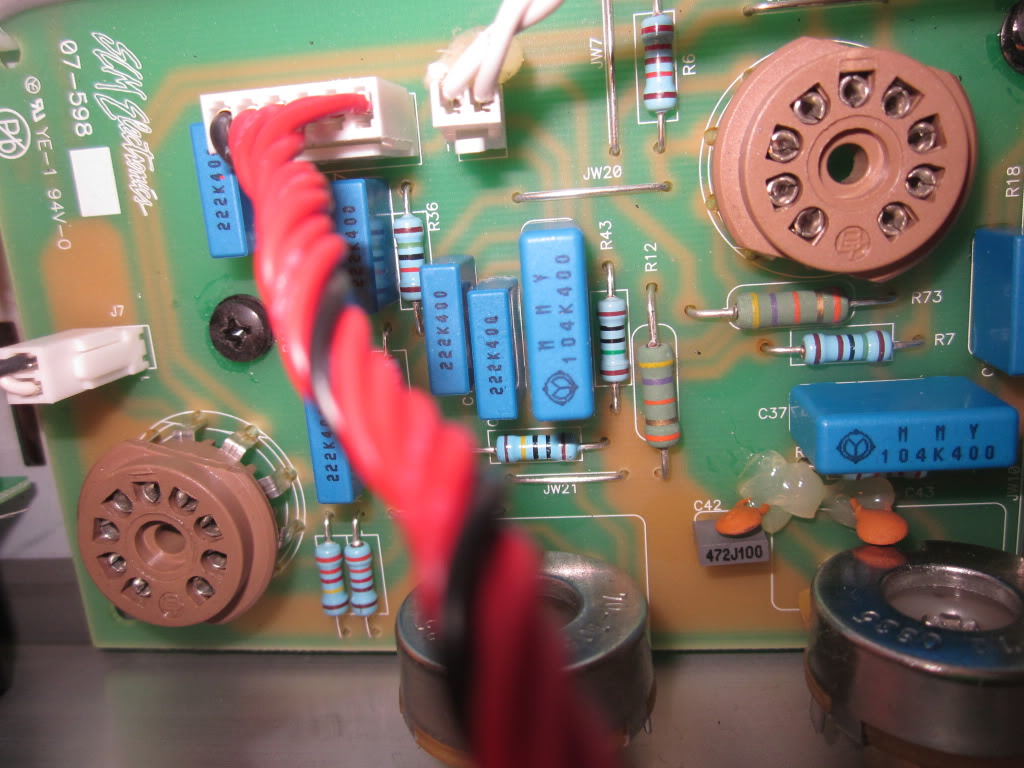
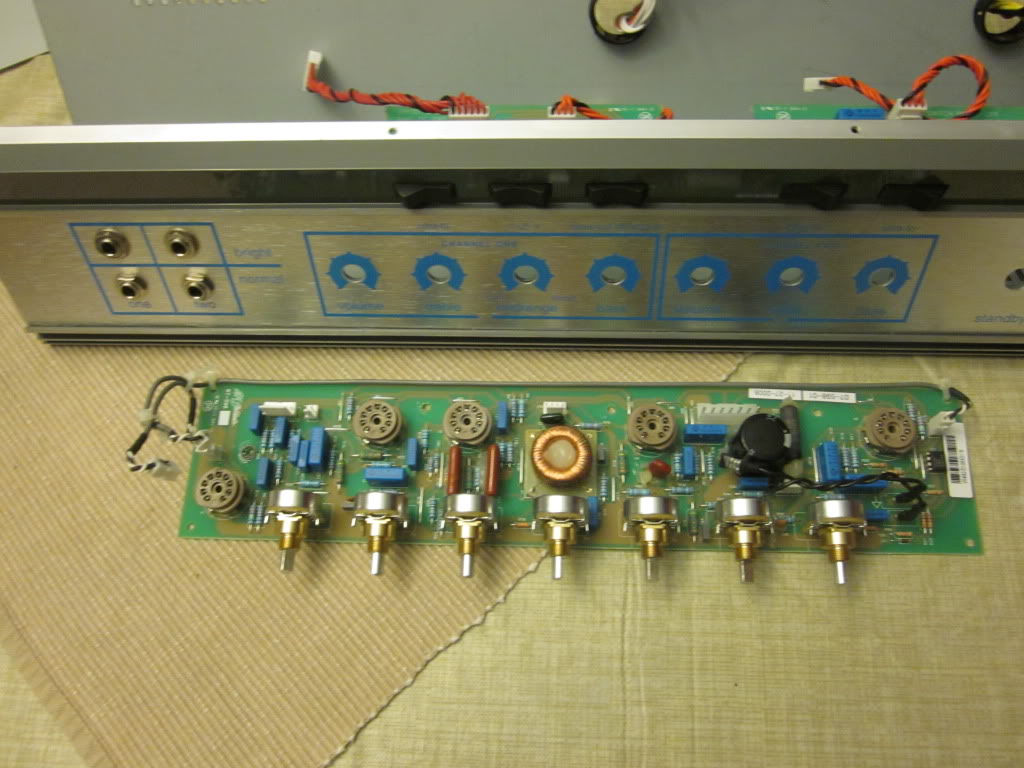
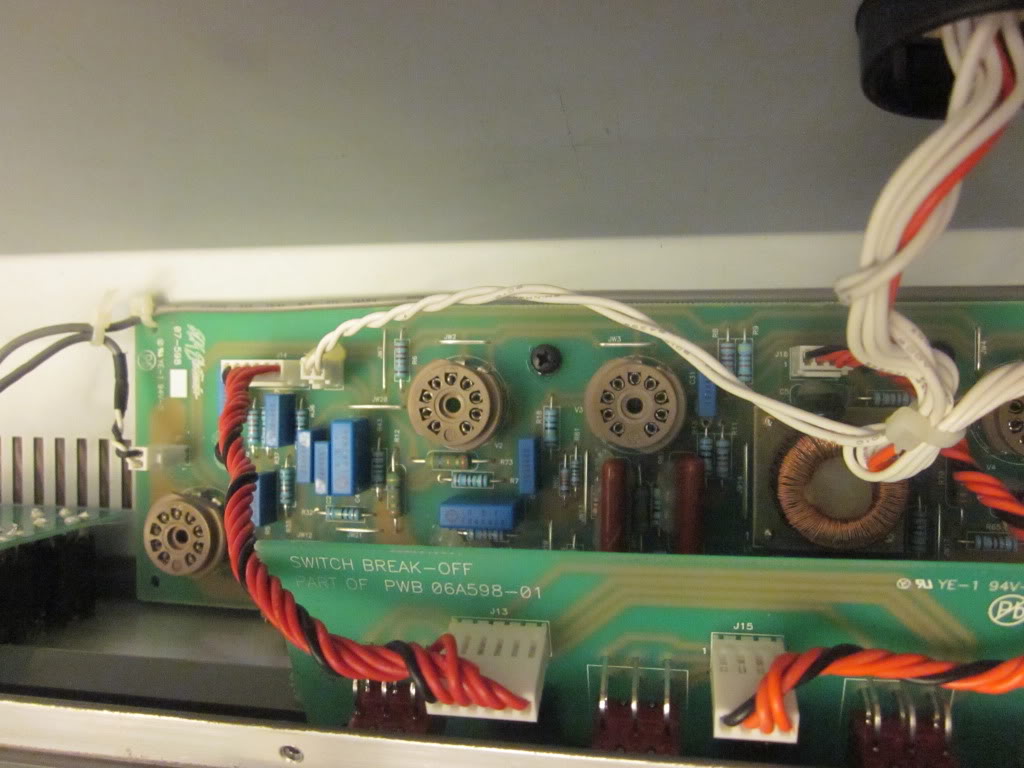
After:
As many of you know I previously upgraded the OT in my VR with a Metroamp spec'ed Heyboer with fantastic results. The next phase of VR improvement seemed like a natural progression.. enhancing the input signal path. A few conversations with the fine folks at MetroAmps and my preamp board was on it's way to them. The exact mod consisted of 2 new paper and oil caps and a few NOS resistors in key locations. The work that was done was first class and I could easily tell I was dealing with true amplifier builders and not some weekender with a soldering iron. All my original components were also returned to me intact, if I choose to reverse out this mod (no way!)
Impressions: These components take about 40-50 hours to fully "burn in" according to George at Metro, but the initial "hit" I got when I first fired up the amp was apparent. Cleaner, thicker, more dimensional or tubiness was heard and felt (VR through 2 Berg HS210's with a 75 PBass.) I was running the VR tone controls flat and the Pbass tone pot/volume at the mid points. I did more of my testing using the volume and tone controls on the instrument to determine if the touted "sensitivity" was true. I was not disappointed! Just making small tone and volume adjustments took me on a journey.. Bos Scaggs Low Down(nailed the basstone) Some Chicago (Peter Catera was in the room!) Elvis Costello(well Bruce Thomas was there just limited by my poor skills) Hall and Oates (Maneater..cheezy song but great lines by the late/great TBone)
Using the tone controls on the VR was almost overwhelming. I love the VR for it's mid-range content and I now have more clarity/dimension in that area no matter the frequency or cut/boost position. Bass was more prevelant and I found myself running a bit of cut to take out some of the thunder. Treble content had a "sheen" to it that made me run for my 01 PBass with 62 re-issue PU's/round wounds (and a pick!) Upper register harmonics were just incredible! If I can place my finger (and ear) on any aspect that the stock VR pre was missing I would say this was it. Keep in mind these observations are based on about 20 hours on the components, so things have yet to really open up.
Tube rolling experiments were the most satisfying part of this modification. Ever had the experience inserting a tube in V1 and could not tell the differnce between a NOS and current mfg? With Metro's modifications, I could hear the difference between a Mullard and it thickness,a Telefunken's tightness, a GE's top end. I also discovered a few treasures in my tube collection that I had written off and was prepared to give away.
In all I believe this mod complement's the OT upgrade nicely. However, the preamp mod itself just made whatever was good about the VR front end better. The OT gave me more clean power and push, while the preamp mod gives more dimension/ sensitivity and helps it stay together/ tighter/ smoother even when overdriven. I could hear the"character" of each of my basses come through with more authority. I notedthat tube selection matters so much more than before and I've ordered a few more to continue this journey.
With the permission of MetroAmps I've included a few before/after photo's of the pre. George and Cris at MetroAmps are two of the most down to earth and intelligent people in the business. I would recommend a conversation with them if you have a Ampeg VR/CL and are looking for a more robust SVT experience.
Before Mod:
After:






 But I would have likely considered letting you play on it if I had one, so the thought was there.


