Okay so I've been playing guitar for about a year now. I taught myself how to play and caught on pretty quick. I never actually learned the notes on the frets though...I read tabs. I play the bass parts to songs that I play along to on my guitar. I mostly play along with Queen songs, The Beatles, Pink Floyd, Arctic Monkeys, Black Sabbath etc. etc. I'm actually getting a Fender Starcaster Precision in a week or so. But anyways now I'm switching to bass guitar. I just wanted to hear someone's personal experience on the switch...also if it's challenging or whatever.

Enjoy the benefits of a premium membership!
Upgrade Account
-
TalkBass has been independent since 1998. Add your voice.
Create a free account to reply to discussions, view embedded media, and browse with fewer display ads.
Join free Log in
Want zero display ads or expanded classifieds tools? Compare plans.
You are using an out of date browser. It may not display this or other websites correctly.
You should upgrade or use an alternative browser.
You should upgrade or use an alternative browser.
Switching from guitar to bass!
- Thread starter mercurymustache
- Start date
More options
Who Replied?
Ric5
Inactive
- Jan 29, 2008
- 29,772
- 30,452
- Disclosures
- I like 5, 8, 10, and 12 string basses
Okay so I've been playing guitar for about a year now. I taught myself how to play and caught on pretty quick. I never actually learned the notes on the frets though...I read tabs. I play the bass parts to songs that I play along to on my guitar. I mostly play along with Queen songs, The Beatles, Pink Floyd, Arctic Monkeys, Black Sabbath etc. etc. I'm actually getting a Fender Starcaster Precision in a week or so. But anyways now I'm switching to bass guitar. I just wanted to hear someone's personal experience on the switch...also if it's challenging or whatever.
Welcome to the Dark Side dude!

Welcome to the world of bass. I'm sorry I can't really answer your main question but I can answer one of the others. An instrument is what you make of it my friend. Challenge yourself and it will be challenging.
I will offer you a challenge: learn the notes on the strings. You should at the very least know those. There is a world of really important knowledge beyond the notes too. Aside from that, a keyboard player will not offer you a tab.
Be Good,
Dan
I will offer you a challenge: learn the notes on the strings. You should at the very least know those. There is a world of really important knowledge beyond the notes too. Aside from that, a keyboard player will not offer you a tab.
Be Good,
Dan
If your proficient at one you'll usually be adequate at the other. To get really good at bass though it takes a decent amount of practice and dedication. I play both but bass is my main and if I go a while without playing my guitar I get really sloppy and need to sort of readjust myself. Like anything else it takes practice but if your going to continue with pick playing you should have minimal issue.

Welcome to the Dark Side dude!
What he said.
The only advice I can give is don't press too hard. I don't know if this is common at all (it might not be), but because of the thicker strings, I instinctively fretted much harder than necessary. This lead to forearm fatigue. Don't do that! Other than that, have a blast!
It all depends on how good a sense of rhythm you have. The best bass players are gifted with a great sense of rhythm, right up there with the best drummers.
All the solo/note technique in the world won't help you if you can't put that groove in the pocket and slide in tight with the drummer's kick drum etc.
I play both bass and guitar as well as Hammond organ, keys, drums, you name it... I can play it.
When I have been in bands on a different instrument than bass, I always look for the bass player that has the best groove in an audition, not the snappiest solo runs or lead bass or whatever. That stuff is fun, but it doesn't always fit the song.
A good solid POCKET ALWAYS fits a song, no matter what it is. If you can keep the band solid and in a good groove with the drummer, the extra stuff is always welcome when the time is right.
Let that be your focus if you want to be a solid bass player that people will want on their projects! Having a good ear for tasty bass lines is second on that list if you are doing originals. Not all songwriters are good at coming up with good bass lines, so if you can offer them some, or your own material for a foundation, then so much the better.
All the solo/note technique in the world won't help you if you can't put that groove in the pocket and slide in tight with the drummer's kick drum etc.
I play both bass and guitar as well as Hammond organ, keys, drums, you name it... I can play it.
When I have been in bands on a different instrument than bass, I always look for the bass player that has the best groove in an audition, not the snappiest solo runs or lead bass or whatever. That stuff is fun, but it doesn't always fit the song.
A good solid POCKET ALWAYS fits a song, no matter what it is. If you can keep the band solid and in a good groove with the drummer, the extra stuff is always welcome when the time is right.
Let that be your focus if you want to be a solid bass player that people will want on their projects! Having a good ear for tasty bass lines is second on that list if you are doing originals. Not all songwriters are good at coming up with good bass lines, so if you can offer them some, or your own material for a foundation, then so much the better.

I made the switch. I found it very easy. Here's my helpful advice...
1. Have fun.
2. There are a lot of bassists who can fly all over the neck but they can't play a simple tune like "Back In Black" without ruining the feel. I'm all for flying over the neck, but if you can't play "Back In Black" without rushing or slowing down, you still have plenty of work to do. The best bassists in the world can do both.
3. Don't put limits on what you can do on bass, and don't let anyone else put limits on it, either, unless they're paying you enough to make it worth it. People always like to ask what the role of the bass in a band is, and my answer is "Whatever I want it to be."
1. Have fun.
2. There are a lot of bassists who can fly all over the neck but they can't play a simple tune like "Back In Black" without ruining the feel. I'm all for flying over the neck, but if you can't play "Back In Black" without rushing or slowing down, you still have plenty of work to do. The best bassists in the world can do both.
3. Don't put limits on what you can do on bass, and don't let anyone else put limits on it, either, unless they're paying you enough to make it worth it. People always like to ask what the role of the bass in a band is, and my answer is "Whatever I want it to be."
I too started in the guitar and still play it but bass is now my first and foremost instrument.
I totally agree about learning your fretboard and recognize intervals just by listening. It really helps along with music theory but most of all, enjoy playing
I totally agree about learning your fretboard and recognize intervals just by listening. It really helps along with music theory but most of all, enjoy playing

First, never tell anyone what you did. lol. Learn proper hand and fingering position. Use all four fingers on your fret hand, its hard but time you will build strength. 

Good luck. Some kids (and maybe the odd adult) insinuate that bass is just a easier version of guitar. That's somewhat false.
Bass is easier to start off on than guitar but it's by far the harder instrument to master. There are heaps of awesome guitar players, but far fewer truly awesome bassists. That's why I think it's the more fun of the two instruments. To be true Bass Lord you have to have a lot more patience and a lot more tenacity than your average gitfiddler.
Learn those notes though, and learn to play scales. It might seem droll to you now but even if you only master like Grade One theory you're still going to be better off than 90% of your bass playing peers.
Bass is easier to start off on than guitar but it's by far the harder instrument to master. There are heaps of awesome guitar players, but far fewer truly awesome bassists. That's why I think it's the more fun of the two instruments. To be true Bass Lord you have to have a lot more patience and a lot more tenacity than your average gitfiddler.
Learn those notes though, and learn to play scales. It might seem droll to you now but even if you only master like Grade One theory you're still going to be better off than 90% of your bass playing peers.
Lock in with the drummer.
Always be there and solid on the 1.
Play lightly. Your tone will be more consistent and you'll be able to be more expressive.
Less is more.
Use a Compressor.
Always be there and solid on the 1.
Play lightly. Your tone will be more consistent and you'll be able to be more expressive.
Less is more.
Use a Compressor.
No offense, but I disagree with all of that. There are some styles where locking in and hitting the 1 is needed, but there are also many great songs where the bass player just plows through the drummer. Also, there are a lot of styles that you will never hit the 1, such as the reggae one-drop style (James Brown always said that the bass needs to hit the 1...in HIS music, but his music isn't all music). And while I'm a fan of playing lightly, I'm also a fan of playing heavily at times because it's a whole different vibe. I also believe there are times when less is just plain less. And not everyone needs or wants a compressor, and I hear a lot of bass players who couldn't play evenly if their life depended on it without one because they're too dependent on it.Lock in with the drummer.
Always be there and solid on the 1.
Play lightly. Your tone will be more consistent and you'll be able to be more expressive.
Less is more.
Use a Compressor.
Other than the comp advice, it's solid advice sometimes, but not all the time.

I just wanted to hear someone's personal experience on the switch...also if it's challenging or whatever.
This reminds me of some advice my mom passed onto me when I was in fifth grade. At the time, she was a drummer in an all-girl rock band and I told her I wanted to learn guitar. She tried to persuade me to try bass first, because
- Four strings instead of six.
- You don't have to deal with playing chords until you get to the advanced stuff.
- It's a great foundation if I should want to learn six-string later, what with the E-A-D-G tuning matching up.
- And most importantly, everyone tries to learn guitar. There will always be a demand for a good bassist.
Unfortunately, I was determined to learn six-string. It was probably because her guitarists made it look so easy. That and, y'know how it is when you're in fifth grade, you obviously know better than the adults.

It may have taken many years, and a nice long stint playing drums (following a bit in my mom's footsteps), but I eventually decided to learn bass. Even if it's more of a hobby than gunning for a profession, it's still a lot of fun and very educational.
Great thread.
I started on guitar when I was about 11 - lousy teacher and my own lack of comprehension led to discouragement. I soldiered on nonetheless. Then at about 15 I was offered the chance to play bass in a friend's band. I didn't even own a bess, but I immediately took to it - in hindsight I guess it suited me better physically and mentally. A few years in I got serious and took private lessons from a local jazz cat (even though I am mostly a rock/blues type player) and that pretty much changed my world. 30 years and many bands later I am still learning and loving it.
FWIW here's my two-cent advice:
1. Realize that bass requires a completely different mindset and approach than guitar. IMO, this is why almost no one really kicks ass at both. Learn your theory - Carol Kaye is a good place to start.
2. Find a good drummer to play with - someone who can KEEP TIME. Otherwise, practice with drum loops and/or a drum machine.
3. Get comfortable with the idea that you will often have to drive the tempo and timing.
4. Regarding the advice to play soft I am with Jimmy M. - Play every note like you mean it (this is on major difference between bass and guitar). The, learn to play soft or loud - dynamics are your friend. Learn finger style and pick playing.
5. Soloing is cool and all, but if you want to get work, being a good "pocket" player is infinitely more important (and fun IMO).
6. Listen to and learn songs by Led Zep, U2, Elvis Costello, Joe Jackson, The Clash, Talking Heads, James Brown, and lots of Motown and Blues. Run, like your hair is on fire, from anyone who advises you to "be like Jaco" unless of course you want to be a jazzer (not there's anything wrong with that)in which case you should probably ignore my entire post.
7. Have fun!
I started on guitar when I was about 11 - lousy teacher and my own lack of comprehension led to discouragement. I soldiered on nonetheless. Then at about 15 I was offered the chance to play bass in a friend's band. I didn't even own a bess, but I immediately took to it - in hindsight I guess it suited me better physically and mentally. A few years in I got serious and took private lessons from a local jazz cat (even though I am mostly a rock/blues type player) and that pretty much changed my world. 30 years and many bands later I am still learning and loving it.
FWIW here's my two-cent advice:
1. Realize that bass requires a completely different mindset and approach than guitar. IMO, this is why almost no one really kicks ass at both. Learn your theory - Carol Kaye is a good place to start.
2. Find a good drummer to play with - someone who can KEEP TIME. Otherwise, practice with drum loops and/or a drum machine.
3. Get comfortable with the idea that you will often have to drive the tempo and timing.
4. Regarding the advice to play soft I am with Jimmy M. - Play every note like you mean it (this is on major difference between bass and guitar). The, learn to play soft or loud - dynamics are your friend. Learn finger style and pick playing.
5. Soloing is cool and all, but if you want to get work, being a good "pocket" player is infinitely more important (and fun IMO).
6. Listen to and learn songs by Led Zep, U2, Elvis Costello, Joe Jackson, The Clash, Talking Heads, James Brown, and lots of Motown and Blues. Run, like your hair is on fire, from anyone who advises you to "be like Jaco" unless of course you want to be a jazzer (not there's anything wrong with that)in which case you should probably ignore my entire post.
7. Have fun!
I have played guitar for 35 years and just made the transition about 2 years ago. I had a bass for home recording projects for 20 years, but really was not a bass player. I would just thump some roots along with the chord progression, or maybe repeat a simple blues walking line. Then I would put the bass back on the case or another year or two at a time.Okay so I've been playing guitar for about a year now. I taught myself how to play and caught on pretty quick. I never actually learned the notes on the frets though...
So one day a co-worker asks me if I play bass as his band just lost their bass player. I have just left a group and was itchin' for something different, so I was all "yeah, sure, youbetcha!" I got their playlist and auditioned two weeks later. I only really had 4 or 5 tunes down, and just thumped along with the chord progressions on the bulk of them. Not really impressive but they musta been desperate enough to give me the spot. THEN with the band I started learning to be a bass player.
I think I squeeked by because I understood chord progressions and song structures from playing guitar, because I already had experience interacting with other musicians while playing (LISTENING, looking for cues, giving cues, rolling with errors instead of stumbling..) and above all focusing on TIMING and rhythm before fancy finger work.
I suggest you DO take the time to learn the "notes on the frets". You need to be able to know scales and intervals and be able to visualize them on the fretboard, to see the shapes and patterns. At least how a major scale is built out of two fret steps except for the interval between 3 and 4 and the interval between 7 and 8 being only one fret. If you KNOW the fretboard without thinking about it, and you can visualize the shapes and patterns of at least a major scale (and maybe the minor pentatonic), playing music becomes much easier. It becomes easier to accurately figure out a song, it becomes easier to play a song-you-don't-really-know on the fly. Even just knowing the key of a song, where the root notes of all the chords are, and knowing where the 3rd, 5th, and octave allowed me to sneak myself into a band and impersonate a bass player with a reasonable amount of success.
Most of what I had to deal with in the transition had to do with the simple mechanics and physics of fatter strings wider fret spacing and string spacing, and the volume and tone dynamics of different right hand attack. Knowing the fretboard was a BIG advantage.
Otherwise you end up kinda blindly poking at the fretboard and listening to see if you hit the right note, and then making corrections. This makes learning a song by ear very SLOW and tedious. It means playing a song gets stored entirely in "muscle memory" and not really intellectually digested. so changing key can be difficult. or changing the progression, or many other surprises (that do happen often) become difficult to roll with. It also makes playing unfamiliar songs very difficult.
Learn the fretboard. Learn intervals. Train your ear to recognize intervals. Teach your self how to "just know" where that next note is.
I just wanted to hear someone's personal experience on the switch...also if it's challenging or whatever.
Biggest challenge is not going to be so much technical as conceptual: You've got to learn to think like a bassist - musically, that is. Learn to do that, apply yourself, and the technical/executional aspects of playing will fall into place of their own accord.
I never actually learned the notes on the frets though...I read tabs.
Unsolicited suggestion: Learn the notes of the fretboard/fingerboard. Every single one of them - thoroughly.
Even if you never learn to read standard notation, you've gotta know your instrument a lot better than you do. Otherwise, you'll soon find yourself severely handicapped as a musician. Do it.

MM
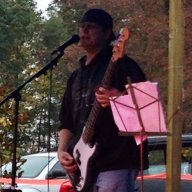
Im also a guitar player of 15 years or so making the switch to bass. Wish I would have made the move sooner. I just felt that playng guitar was something EVERYONE did and was tired of the competition around my way for getting gigs. I am really digging the bass. I find it wierd that someone would play a bass with a pick. I love the fact of using my fingers to play. Precision bass is the one for me. I have never thought of having a jazz as a main ax. Will be ordering a Am St Fender soon. Tired of my ******** cheap one Im transitioning on


