• TalkBass has been independent since 1998. Add your voice.
    Create a free account to reply to discussions, view embedded media, and browse with fewer display ads.
    Join freeLog in
    Want zero display ads or expanded classifieds tools? Compare plans.

*Takes deep breath* Need 1/4" bass cable advice...

...Also as others have said some folks have done things like putting a really long cable in a certain spot of their signal chain because they want those highs to roll off a bit.

I saw a Youtube video where Carlos Santana's guitar tech showed how they purposefully use 50ft cable to roll off highs if memory serves me.
 
In my opinion* the only real benefit that comes from using gold plating is cosmetic. There is little practical difference in the electrical resistance of gold versus copper or other metals. There may be some benefit in the mechanical connection with the jack since gold is softer, it may give you a more reliable electrical connection than silver or chrome, but it would quickly wear off. You shouldn't see oxidation on silver plated or chrome-plated fittings either, but sometimes they skimp on the chrome plating and you start to see corrosion. There is no issue with mixing metals, that would only be a corrosion concern for a detrimental galvanic couple and would only happen if you submerge the cable, so not likely a problem. Since all gold cables are really gold plating on other metals, there's no such thing as an entire path of gold.

*I am a corrosion engineer

That's interesting. While I like the look of gold plating on plugs, the main reason I like it is my hope in reducing contact problems over time. If it isn't much of an issue I may reconsider. Thanks for your insight.
 
  • Like
Reactions: DrewinHouston
You said that you will be using these live. I really doubt you are going to hear a difference in the "usual" live situations that many people play in ... a bar with drunk people talking, clinking glasses, bad sound system, bad mix, bad room acoustics, acoustic drums and amps leaking into vocal mics. ... I could go on :)
 
I've read several of the posts debating cheap vs. expensive cables etc. That seems to quickly become a war of words. For my own purposes, I bought an Asterope cable and a/b'd it against Livewire premium, Mogami Gold, and some old Monster cable, and I couldn't tell the difference. I really wanted to, but I couldn't. But I liked feeling special about having something that said "Mogami" on it, so I did keep that one...

But I need a new cable primarily because I need something of greater length than 10' (all I have at the moment) and I need at least one angled jack due to how my pedal board is set up. What are people's thoughts on:

1. Does an angled jack reduce sound quality over a straight connector? Asterope told me that it does, but I'm not sure I believe them about anything now...
2. Is there a noticeable loss of sound quality in the 15+ feet range? There seems to be some consensus that the answer is yes...
3. Is there ANY reason to buy a "bass"-specific cable?

I won't be recording with these cables; they'll be used live only.
Copper is copper. As long as the connectors aren't poo and they're soldered well, it should pass signal all the same.

I wonder if gold or silver cabling would sound better? Who is going to manufacture gold cabling?
 
I've heard that mixing metals is not good in a signal chain. Meaning, gold would only bring benefits if the entire path was gold.

Anyone care to elaborate?

I personally like the new Neutriks pop free tip. Seems far more important to never spike a soundman.

Neutrik NP2RX-AU-SILENT Right Angle Phone Plug with Gold Contacts and Red Shell | eBay

Low capacitance is the whole deal though.

I think that mixing metals warning may be coming from somebody thinking about bimetallic or galvanic contact corrosion - which is not something you're going to run into with instrument cables.

Bimetallic corrosion occurs when two different metals of differing potentials come in contact with each other through an electrolyte, and one gives up ions to the other, resulting in corrosion of one of the metal contacts.That's what happened with the Statue of Liberty when it's copper skin started making direct contact with its cast iron frame once the coating of shellac that served as insulation finally began to fail after a number of years. The underlying iron began corroding at an accelerated rate by being in direct contact with the copper skin and rain and humidity provided the needed electrolyte.
 
Last edited:
As an eBay Associate, TalkBass may earn a commission from qualifying purchases.
There are advantages to some cables...it's shielding and quality of construction/durability are the most important to me. Flexibility is nice if the other 2 criteria are met. As for a sonic difference? I will not say that cables have no influence on tone, but I do not think there's any meaningful difference in the low registers where we bassists live.
 
Cheap cables fail after a while. I have a collection of dead whirlwind cables, and other cheaper no-name cables and am not going back to that well.

I had a custom cable built by a DudePit member years ago with Canare and (Link Removed) neutrik connectors. That cable gives me the impression that it will live forever. However I lost touch with that guy.

When I'm buying cable I look at the gauge (minimum 24) of the wire and the connectors. I have a couple of the aforementioned Planet Waves American Stage cables and they are decent, but connectors that need to be screwed back together too frequently are annoying, and the straight-side Planet Waves connectors are both bulky and come unscrewed easily/frequently. Maybe I should loctite them...

For me these particular cables are the sweet spot for everyday use: GBND Premium Series Guitar & Instrument Cable with Neutrik® "X" series Right Angle & Straight 1/4" slim cord ends
Non-bulky Neutrik connectors, 22-gauge copper cable, and a 24-footer is 22 bucks. I'm happy.
 
I have been looking for a new cable. After rearing this entire thread I am probably gonna order a Sonic Nuance 20 ft. I like to move when I play so I like the length and hell...the guy posts hear so why not.

You wont be dissapointed, today I ordered a custom dual cable: instrument and headphone extension for my IEM. Ted made it and shipped the same day :)
IMG_8612.JPG
 
  • Like
Reactions: sonicnuance
Cables have a capacitance rating per foot. Do the math. The higher the capacitance, the more high end you lose, like a tone knob.

This. If you play passive basses with a clean tone, you can hear it easily. I have a few cables that are too high capacitance to use with passive instruments, including even a couple short patch cables. It isn't a myth, it's just physics.
 
  • Like
Reactions: mngnt
I've read several of the posts debating cheap vs. expensive cables etc. That seems to quickly become a war of words. For my own purposes, I bought an Asterope cable and a/b'd it against Livewire premium, Mogami Gold, and some old Monster cable, and I couldn't tell the difference. I really wanted to, but I couldn't. But I liked feeling special about having something that said "Mogami" on it, so I did keep that one...

But I need a new cable primarily because I need something of greater length than 10' (all I have at the moment) and I need at least one angled jack due to how my pedal board is set up. What are people's thoughts on:

1. Does an angled jack reduce sound quality over a straight connector? Asterope told me that it does, but I'm not sure I believe them about anything now...
2. Is there a noticeable loss of sound quality in the 15+ feet range? There seems to be some consensus that the answer is yes...
3. Is there ANY reason to buy a "bass"-specific cable?

I won't be recording with these cables; they'll be used live only.
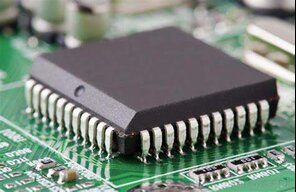
Here's what I like. YMMV

Invalid Link Removed
 
Back in the day, when we had CD players and stereos, rather than home entertainment centers, I spent some months exploring the value of cables. What I found was the first cable, from source to preamp had the biggest, if not only, impact. I could find no difference in cables from the pre to the amp, or speaker cables (so long as they were of the same gauge). So I find that there is something to the 'myth' that cables matter.
All that said, I never detected a significant difference in the low end. The difference was all in the shimmer of the very high end - cymbals, top reaches of a guitar, etc.
Between well made, well shielded, cables I have absolutely no preference. For recording, use as short of a cable as is reasonable.