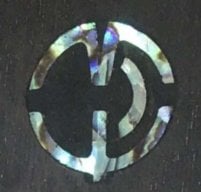
I'll see if there is something I can do to cover the inlays
(maybe CA?) for protection from my sweat but that'll be my problem, not Kevin's
If you put glue on my inlays, it will make them look like garbage. (I would rather have your bass that I built, stay looking beautiful. )
Unless you are prepared and have the experience to:
*evenly coat the entire board... gradually building it up thick enough. (without dripping down the back of the neck) And then sand FLAT each section in between the frets (without breaking through) & working through several grits from about 220 to 2000.
Then polish the whole thing to a crystal clear gloss.
(It would be an extremely difficult process to do nicely)
OR...you could do what I already suggested and simply wipe them with one of these products, about once a week! And they will look good as new!
Are you going to shoot clear over the tailpiece Kevin?
No,... clear coats over shiny metal...in my experience, seldom look nice, (they make it look "plastic)... and almost always, either eventually turn yellow, or peel, or both.
Same as the inlays:
See above readily available metal polish!
It works
very well and is super
easy & quick to use!!
And out of curiosity do you cover just the spalt black lines with CA? Or is it all over it to hold the top together?
It's all over.... both sides of all the spalted maple top & back panels were FLOODED with thin CA. (They were then glued on to the core with "System 3" epoxy.)
The CA is soaked into the spongy areas as much as possible. It helps significantly with the structural integrity, and creates a shell that is much harder than the raw spalt, but still not as hard as "real" hardwood.
After I apply the finish....(Which is going to be "Conversion Varnish" ,not lacquer)... the light scratch resistance will be the same as any other wood with CV applied. BUT it will still be somewhat susceptible to "blunt force trauma" at the areas that were spongy. So just be a little bit careful.