I've been meaning to write a thread about this for a few months. My friend and TB brother John Hay has a new endpin commercially available, the Beginpin.
In the world of aftermarket accessories, there are a lot of endpins to chose from. There are a couple of well proven tanks that I like and there are a ton of them that I like one specific part, but not the complete unit, e.g the collar or the shaft or the main "plug".
As a disclaimer, I have no commercial interest with John or his product and from a player's perspective, I rarely use an adjustable endpin. I make most of mine and those for my customers out of solid material, maple, rosewoods, ebony, titanium, & carbon fiber. I'm a very non delicate oversized gorilla who beats the crap out of all my gear, so a solid one simplified things and there are less parts for me to break. I understand not everyone shares my opinion....
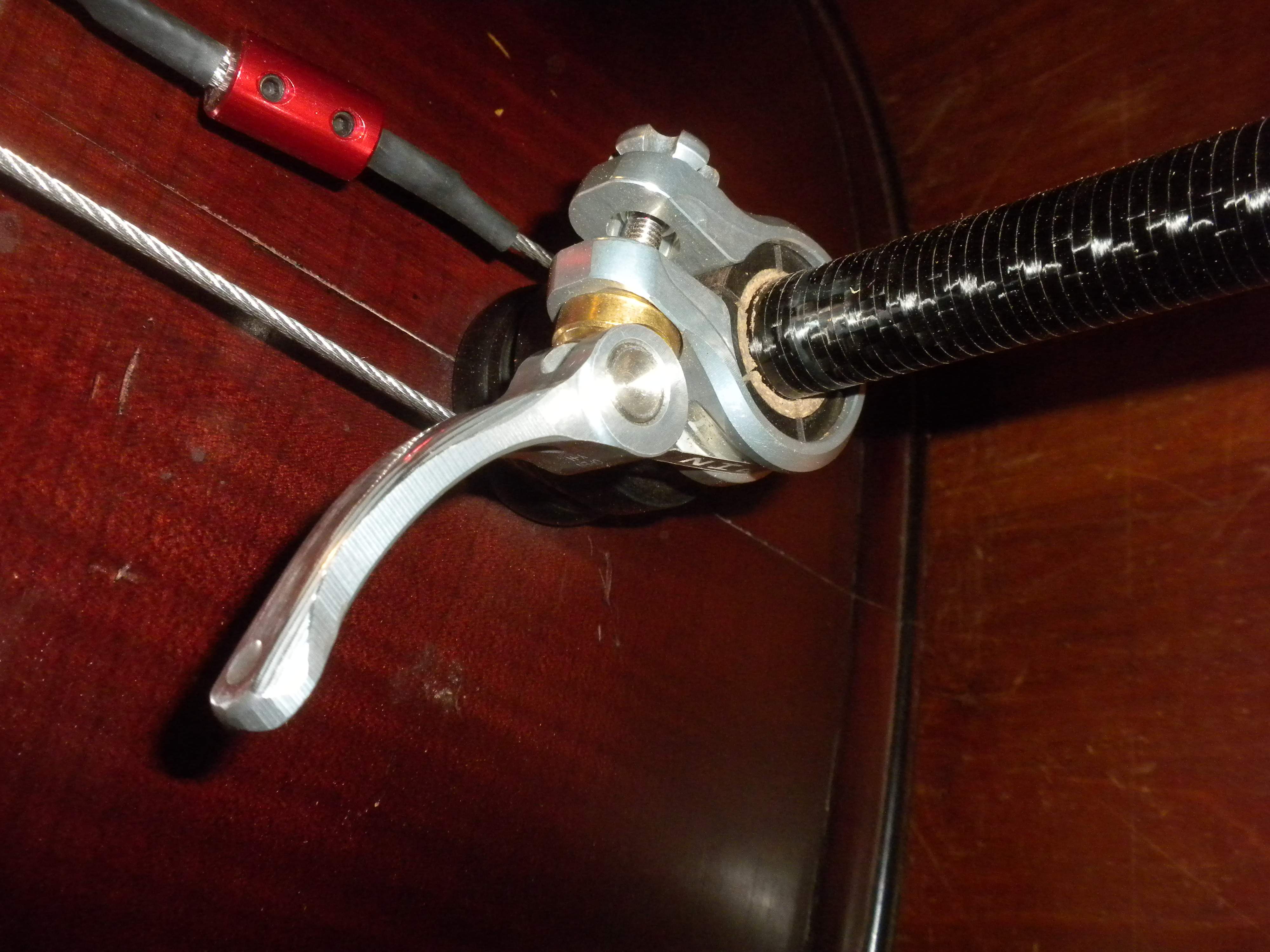
The Beginpin uses a very well machined adjustable locking cam design for infinite adjustability. No specific notches that may or may not be the right height for you.
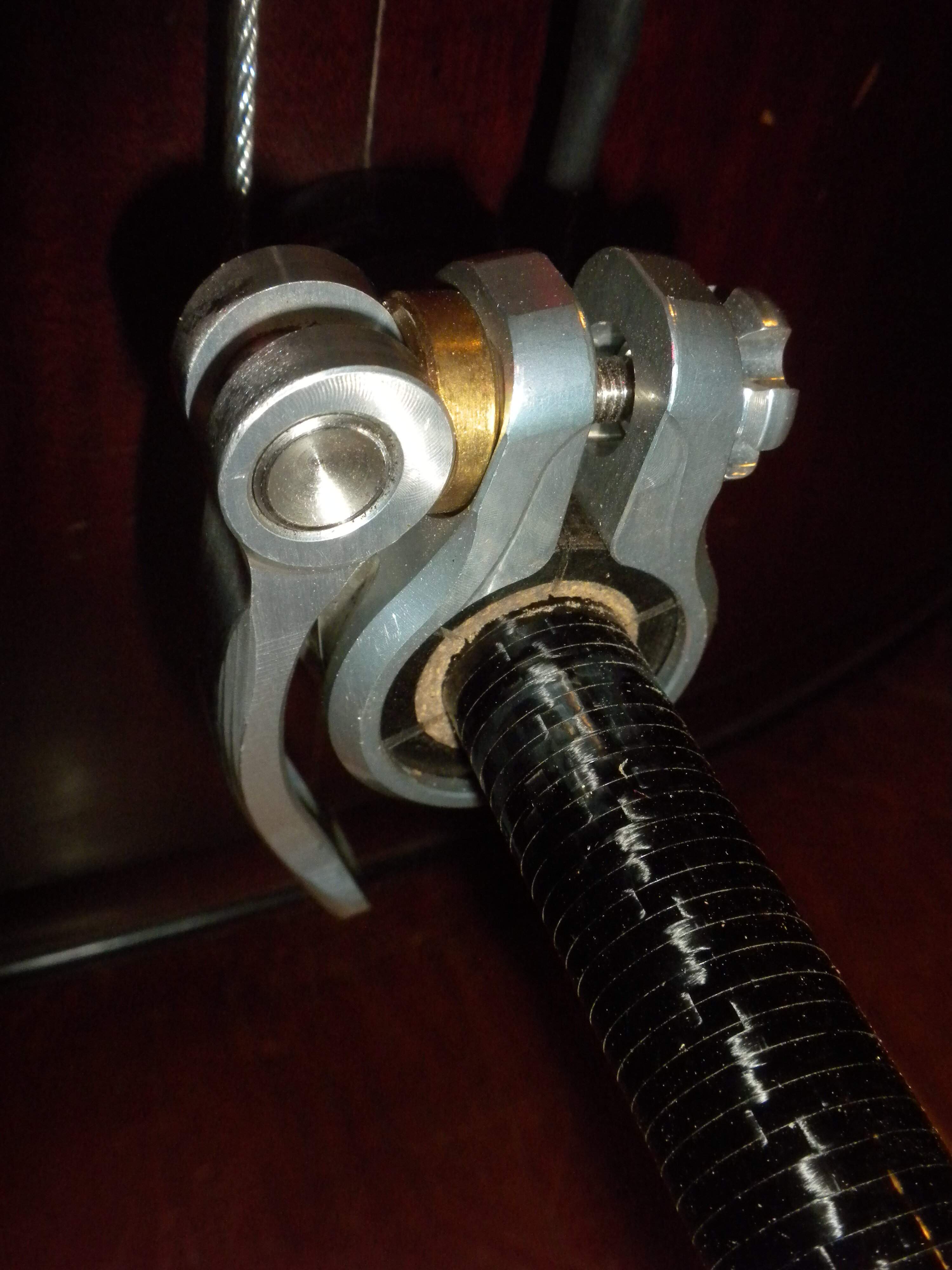
A quick pry and it opens up :
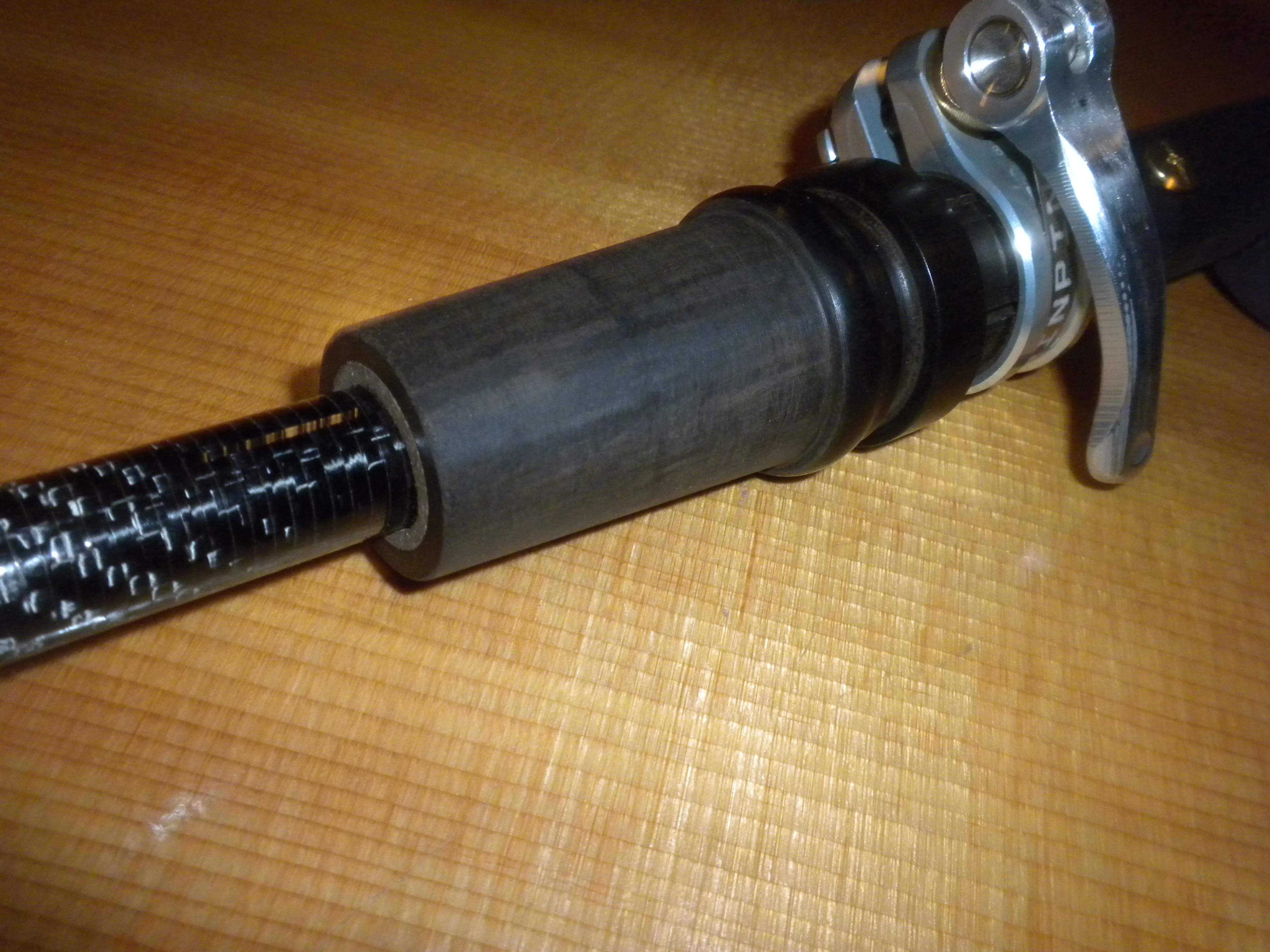
The main "plug " is a "collet" type design made from real ebony, not phenolic or plastic as found on several popular models that always deform and creep out of a well fit pocket. When retrofitting a new endpin it usually requires a visit to a luthier for proper fit. You'll need either a nice 17:1 endpin reamer to open the hole or nice lathe to turn down the plug to match the existing hole. I use both, 'just depends upon the patient.
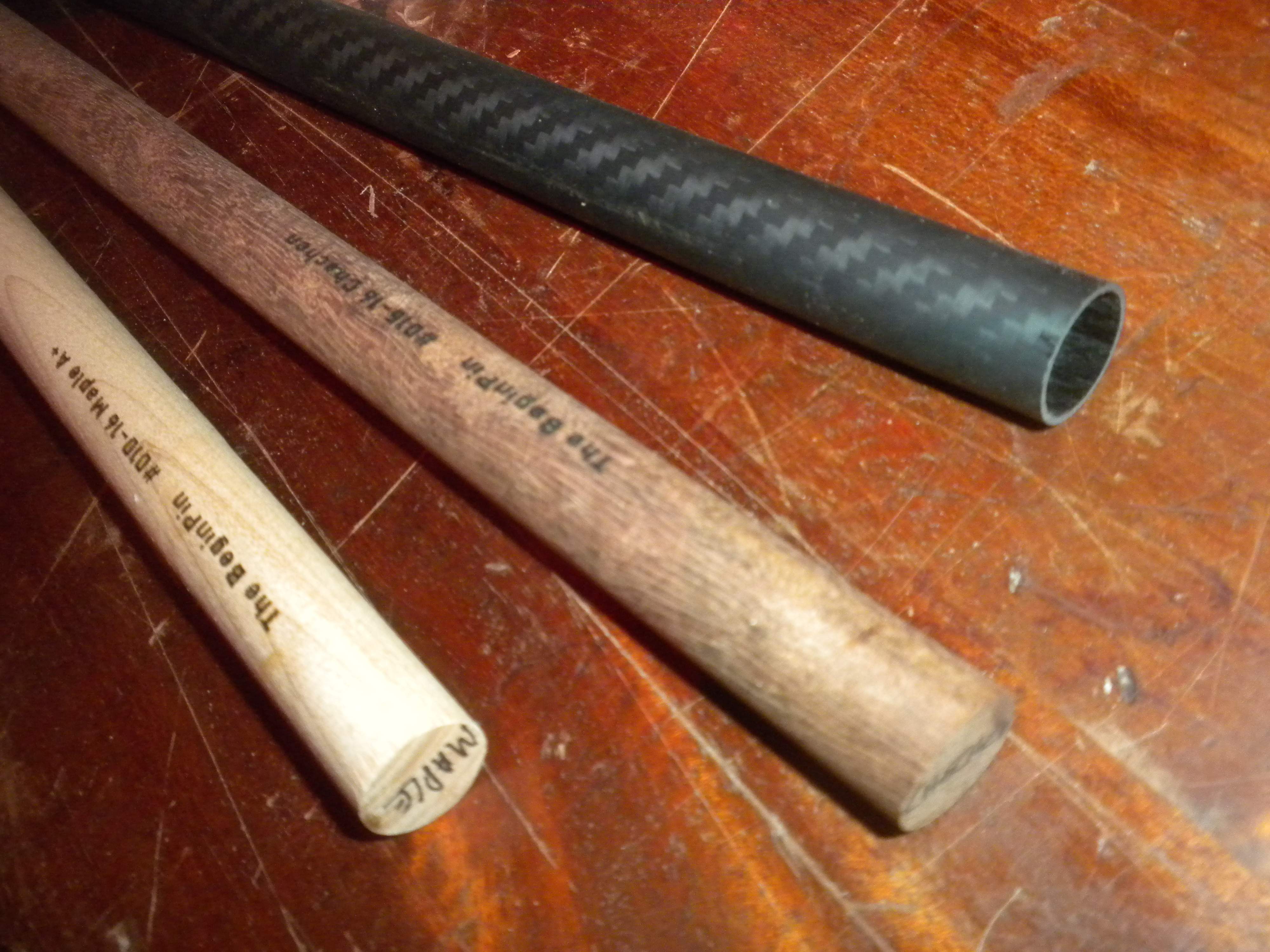
The Beginpin is available with around 20 different endpin materials- a huge combination of woods, plus both solid and hollow carbon fiber. This is a huge benefit for folks who are interested in seeing what voice changing the endpins will have on your overall bass sound. No need for endless tinkering & improvising; you can just order a few others that already fit well.
Additionally, John makes an articulated endpin shaft. Even if I didn't want to use this model on my bass, it is extremely valuable to have in a working bass shop because it has approximately a dozen different angle setting that can be adjusted in a couple of seconds- push the quick release button, change, and then it locks in position. My hyper nerd friends & customers who are always asking about different endpin angles can answer their own questions in a few minutes- all without needing and special tools or complicated designs. Push button, click into position, release button while under full string tension- quicker than I can fine tune a string that is a whole step flat.
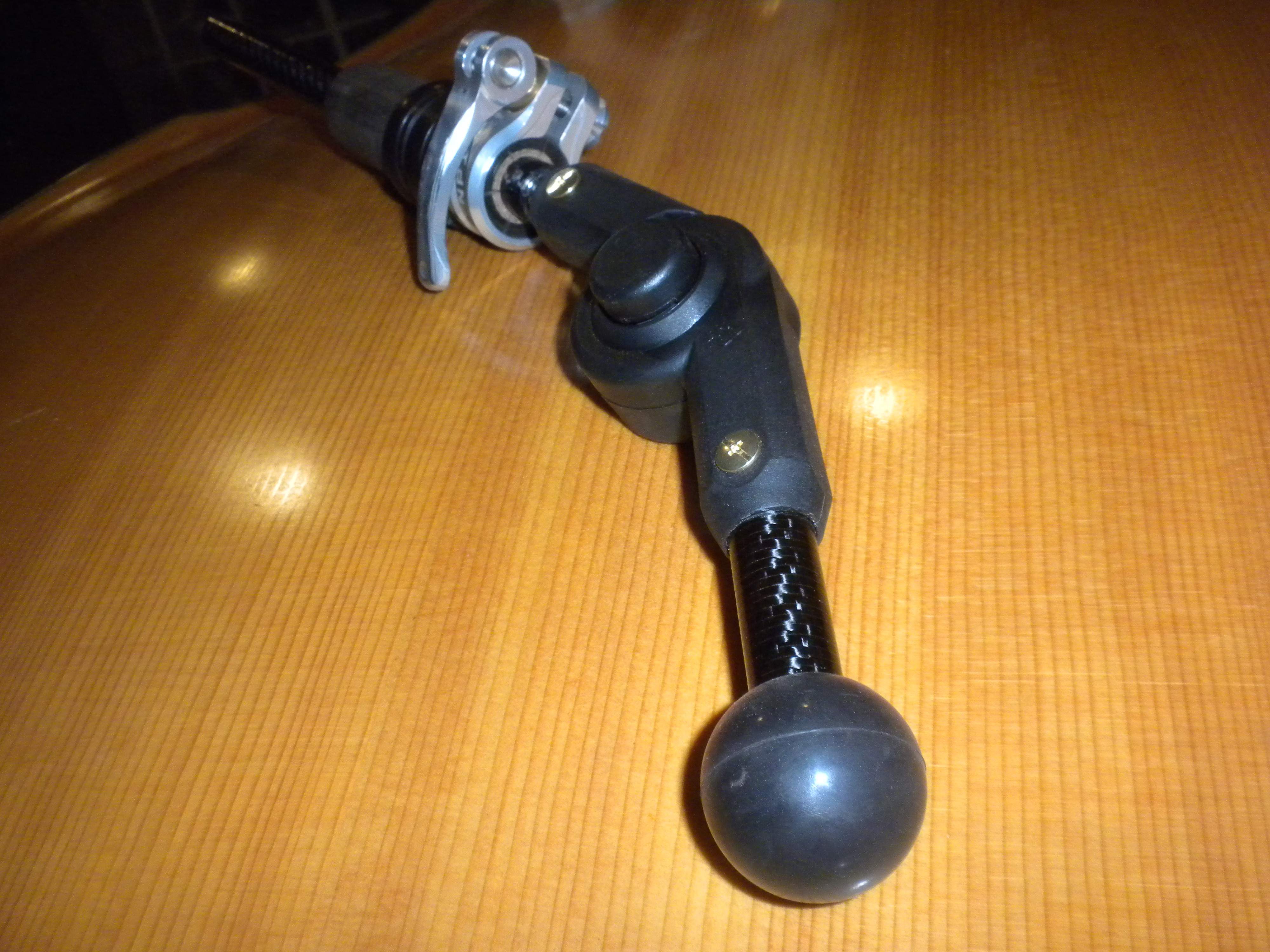

As you can see, they also come with either a nice non slip rubber ball end or a sharp pointy tip for slammin' into those fancy stage floors or into the deck of an old flatbed truck.
For anyone curious and in the area, you can try one out in person on one of my 2009 basses at Bob Beerman's Bass Violin Shop in Greensboro.
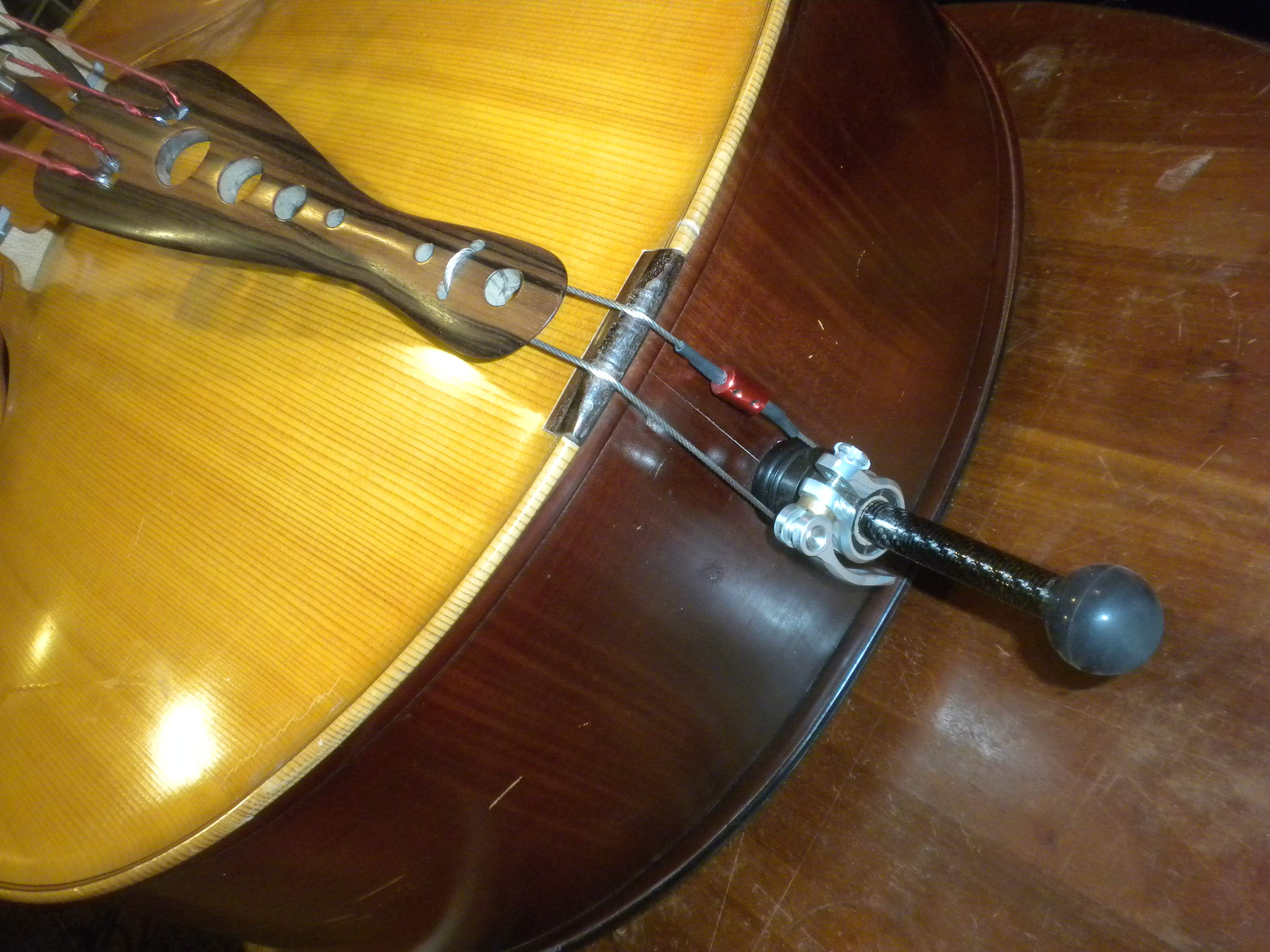
Everyone has a difference of opinion and tone. I can't comment on those but what I can say it that John has introduced a nice domestically made endpin that is worth considering and offers a lot of readily accessible answers to possibilities that keep us bass nerds up wondering late at night....
In the world of aftermarket accessories, there are a lot of endpins to chose from. There are a couple of well proven tanks that I like and there are a ton of them that I like one specific part, but not the complete unit, e.g the collar or the shaft or the main "plug".
As a disclaimer, I have no commercial interest with John or his product and from a player's perspective, I rarely use an adjustable endpin. I make most of mine and those for my customers out of solid material, maple, rosewoods, ebony, titanium, & carbon fiber. I'm a very non delicate oversized gorilla who beats the crap out of all my gear, so a solid one simplified things and there are less parts for me to break. I understand not everyone shares my opinion....
The Beginpin uses a very well machined adjustable locking cam design for infinite adjustability. No specific notches that may or may not be the right height for you.
A quick pry and it opens up :
The main "plug " is a "collet" type design made from real ebony, not phenolic or plastic as found on several popular models that always deform and creep out of a well fit pocket. When retrofitting a new endpin it usually requires a visit to a luthier for proper fit. You'll need either a nice 17:1 endpin reamer to open the hole or nice lathe to turn down the plug to match the existing hole. I use both, 'just depends upon the patient.
The Beginpin is available with around 20 different endpin materials- a huge combination of woods, plus both solid and hollow carbon fiber. This is a huge benefit for folks who are interested in seeing what voice changing the endpins will have on your overall bass sound. No need for endless tinkering & improvising; you can just order a few others that already fit well.
Additionally, John makes an articulated endpin shaft. Even if I didn't want to use this model on my bass, it is extremely valuable to have in a working bass shop because it has approximately a dozen different angle setting that can be adjusted in a couple of seconds- push the quick release button, change, and then it locks in position. My hyper nerd friends & customers who are always asking about different endpin angles can answer their own questions in a few minutes- all without needing and special tools or complicated designs. Push button, click into position, release button while under full string tension- quicker than I can fine tune a string that is a whole step flat.
As you can see, they also come with either a nice non slip rubber ball end or a sharp pointy tip for slammin' into those fancy stage floors or into the deck of an old flatbed truck.
For anyone curious and in the area, you can try one out in person on one of my 2009 basses at Bob Beerman's Bass Violin Shop in Greensboro.
Everyone has a difference of opinion and tone. I can't comment on those but what I can say it that John has introduced a nice domestically made endpin that is worth considering and offers a lot of readily accessible answers to possibilities that keep us bass nerds up wondering late at night....
Attachments

Last edited: