• TalkBass has been independent since 1998. Add your voice.
    Create a free account to reply to discussions, view embedded media, and browse with fewer display ads.
    Join freeLog in
    Want zero display ads or expanded classifieds tools? Compare plans.

The callus > blister > open wound > callus cycle?

Feb 12, 2024
523
1,254
Back in the Pleistocene 13-year-old DCErik got his hands on a late 70s P-bass, and the cycle began. I'd play until I got a blister, keep playing on the blister until it burst, bleed all over my bass, and keep playing until the open wound healed up and toughened. Then I'd get exuberant and get a new blister. Never seemed to toughen up my fingertips (right hand) enough to prevent it entirely when I was digging in, which was most of the time.

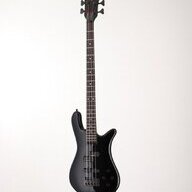
Then, an older and more educated DCErik bought a Spector in 1990, and broke the cycle. Same strings (Roto Swing Bass), but much less digging in as the pickups and preamp were so hot the bass practically played itself, and I had to get used to a much lighter touch and a lot more dynamic range. But as far as I remember I didn't get another blister for the 11 years I was actively gigging with that bass.

So recently I had to leave her at the luthier for 4 months (don't ask), and picked up a used Sterling Ray34 to play in the meantime. Also considered to be a pretty hot bass, but I found myself really digging in again and back on the callus > blister > open wound > callus train. I think this mostly happened when I wasn't turning up my amp's master volume enough, or when using poor backline gear at open mics and was trying to be heard, but I'm sure I've been in that situation before with the Spector and somehow managed not to tear up my fingers. Maybe digging in just a little was enough vs. what I had to do to get loud with the Fender and the Sterling, but that doesn't *feel* true to me.

Anyone else got one bass that doesn't ouch them? All kinds of magic gets claimed w/r/t Spectors, but there has to be a reality-based reason my fingers like it so much.
 
  • Like
Reactions: ReillyProductions
I can set all of my basses up the same. None will draw blood. The only time I got blisters was early on. I learned touch, amp volume and good setups to your style are essential areas you want complete control over. If you still have issues, you might be playing to hard to compensate.
 
I can set all of my basses up the same. None will draw blood. The only time I got blisters was early on. I learned touch, amp volume and good setups to your style are essential areas you want complete control over. If you still have issues, you might be playing to hard to compensate.
No doubt. It's just weird that the active Ray takes so much beating up to get the tone I'm after compared to the Spector.
 
I'm aware that it's me doing the digging in, but I do feel like the Ray and Fender rewarded me for it sonically while punishing me for it physically. The Spector sounds as aggressive with a much lighter touch.
 
  • Like
Reactions: rodl2005
Back in the Pleistocene 13-year-old DCErik got his hands on a late 70s P-bass, and the cycle began. I'd play until I got a blister, keep playing on the blister until it burst, bleed all over my bass, and keep playing until the open wound healed up and toughened. Then I'd get exuberant and get a new blister. Never seemed to toughen up my fingertips (right hand) enough to prevent it entirely when I was digging in, which was most of the time.

Then, an older and more educated DCErik bought a Spector in 1990, and broke the cycle. Same strings (Roto Swing Bass), but much less digging in as the pickups and preamp were so hot the bass practically played itself, and I had to get used to a much lighter touch and a lot more dynamic range. But as far as I remember I didn't get another blister for the 11 years I was actively gigging with that bass.

So recently I had to leave her at the luthier for 4 months (don't ask), and picked up a used Sterling Ray34 to play in the meantime. Also considered to be a pretty hot bass, but I found myself really digging in again and back on the callus > blister > open wound > callus train. I think this mostly happened when I wasn't turning up my amp's master volume enough, or when using poor backline gear at open mics and was trying to be heard, but I'm sure I've been in that situation before with the Spector and somehow managed not to tear up my fingers. Maybe digging in just a little was enough vs. what I had to do to get loud with the Fender and the Sterling, but that doesn't *feel* true to me.

Anyone else got one bass that doesn't ouch them? All kinds of magic gets claimed w/r/t Spectors, but there has to be a reality-based reason my fingers like it so much.
I presume you are using round wound strings to tear up your fingers like that. I played flats on my '65 Jazz in the 60's and then switched to the Fender Black Tape Wound strings in the early 70's. Then my '65 Jazz was stolen along with all my touring gear and I didn't find a good replacement for it until 1985. That replacement came with Dean Markley Blue Steel strings already mounted. I had used Dean Markley Blue Steel and DR Black Beauty strings since 1985 when I got my '82 Jazz until 6-years ago when I got the LaBella Tapes.

Flats may not have the zing you're looking for but the LaBella Tape Wound strings might work great for you. They are super smooth and slippery and are not going to kill your fingers. The White tapes are the brightest sounding of their offerings and the black tapes are the darkest sounding. They also have white over a gold core and white over a copper core, which are somewhere in between the white and black in sound. I chose to put White Tapes on my Passive Jazz Bass and love them. By the way the white tapes are semi-opaque and you can discern the color of the cores through them. The white tapes have a Nickel/Steel-color core.

A real plus on these LaBella tape wound strings is the balance of sound from string to string. With all the round wounds I've used, I typically would play the higher E on the 7th fret of the A string instead of the 2nd fret of the D string because the E on that second fret always sounded kind of weak and thin. Same with the A on the 7th fret of the D string instead of the 2nd fret of the G string. With the LaBella tape wounds the sound of those notes in both places is so similar I just play them at whichever location is closest to what I'm already playing. The notes on the 2nd fret of the D and G strings have plenty of body. They are by far the best balanced sound string to string I've ever found.
 
Get a Strat and deck the trem (that's an important step). String it with 9s and play the snot out of it. Within a few months your bass will never harm your calluses.

I never even thought about this, but now when I'm rewinding the very old tape in my head, yes. Very much so. You summed up my own experience - albeit with a different guitar - much better than I ever could. Thank you.
 
  • Like
Reactions: Killing Floor
I presume you are using round wound strings to tear up your fingers like that. I played flats on my '65 Jazz in the 60's and then switched to the Fender Black Tape Wound strings in the early 70's. Then my '65 Jazz was stolen along with all my touring gear and I didn't find a good replacement for it until 1985. That replacement came with Dean Markley Blue Steel strings already mounted. I had used Dean Markley Blue Steel and DR Black Beauty strings since 1985 when I got my '82 Jazz until 6-years ago when I got the LaBella Tapes.
.
The P-bass used to wear Roto Swing Bass heavy gauge (because I was 13 when I decided that) and I never broke the cycle in 10 years of playing it.

The Spector gets the same in medium gauge.

On the Ray I tried a set of DW tapes because they look F'n sick.

IMG_3747.jpeg

But I didn't like how they sounded, so I switched to Black Beauties. I notice a lot of the nylon is gone near the pickups within a couple of hours, and I've had a friction burn or two on my fretting fingers while sliding. Might be time to try a set of flats, but I have a set of Auroras I want to try first.
 
I haven't got a blister from playing bass in a very long time- presumably that is the a result of (obviously) dangerous technique if your callouses are being torn off. Even back when I was digging in quite a bit that wasn't an issue, and I'm someone who has worked manual labor for most of my life too so my hands see a lot of beating outside of playing music!

Do you think it's a setup issue between instruments? Are you digging in on the Fender/Stingray to get fret growl that comes more easily from a lower setup on the Spector? Also potentially just the inherent voice of the Spector is more aggressive and perhaps more compressed than the other two (compressed in the sense that digging in doesn't have the same payoff so you are probably turning it up more- or it inherently has a higher output due to the presumably active preamp and/or pickups). I find many active instruments have a smaller dynamic range than passives, for better or worse, and I can sometimes find myself digging in on passives more than my actives as a result. Maybe experiment with raising the pickups on the Fender/Stingray to decrease the dynamic range, or take them to a good tech to dial in set-ups closer to the Spector (may well require some fret work). Or just play the Spector instead!! You shouldn't need to bleed to get good tone!
 
Last edited:
  • Like
Reactions: dune and DCErik
I remember having blisters way back when I was 15, playing my very first bass guitar: an Ibanez TR70. My memory is hazey but I do recall painful blisters on my two plucking fingers (and my ring finger on my fretting hand). All I did was take it easy and they turned to callouses at some point and I've never had any more 😯

After that I've been through 7 basses...and a period of about 8 years when I didn't play AT ALL. Never had another blister after that initial "break in" period 😀

ETA: I forgot all about those early times! Good memories 👍👍
 
  • Like
Reactions: DCErik
One of the reasons I ditched Rotos was how rough they felt under my fingers. They gave me blisters like no other brand. And yeah just like OP I played through blisters and pain, thinking it was normal.
I then discovered about proper technique and nickel strings. Both were a good change. Haven't caught a blister for years.
 
  • Like
Reactions: DCErik
Back in the Pleistocene 13-year-old DCErik got his hands on a late 70s P-bass, and the cycle began. I'd play until I got a blister, keep playing on the blister until it burst, bleed all over my bass, and keep playing until the open wound healed up and toughened. Then I'd get exuberant and get a new blister. Never seemed to toughen up my fingertips (right hand) enough to prevent it entirely when I was digging in, which was most of the time.

Then, an older and more educated DCErik bought a Spector in 1990, and broke the cycle. Same strings (Roto Swing Bass), but much less digging in as the pickups and preamp were so hot the bass practically played itself, and I had to get used to a much lighter touch and a lot more dynamic range. But as far as I remember I didn't get another blister for the 11 years I was actively gigging with that bass.

So recently I had to leave her at the luthier for 4 months (don't ask), and picked up a used Sterling Ray34 to play in the meantime. Also considered to be a pretty hot bass, but I found myself really digging in again and back on the callus > blister > open wound > callus train. I think this mostly happened when I wasn't turning up my amp's master volume enough, or when using poor backline gear at open mics and was trying to be heard, but I'm sure I've been in that situation before with the Spector and somehow managed not to tear up my fingers. Maybe digging in just a little was enough vs. what I had to do to get loud with the Fender and the Sterling, but that doesn't *feel* true to me.

Anyone else got one bass that doesn't ouch them? All kinds of magic gets claimed w/r/t Spectors, but there has to be a reality-based reason my fingers like it so much.
How's the setup on these basses?
 
At the age of 63 I finally realized that my hands are a perishable resource. As arthritis gradually encroaches, I've had to shift from mostly finger stryle to mostly pick, having to get some real facitliy with a pick, and it's a steep learning curve. If it allows me to keep playing, it's worth it. If your fingers are bleeding, you need to change your technique, that's not a healthy, sustainable cycle.