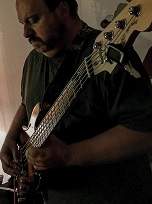
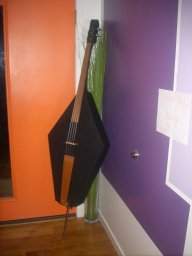
Hi guys,
I'm new to the luthierscorner but I'm active for some time on the wishbass section.
My first work on a bass was to refin a purchased wishbass from Steve himself. It was also my first fretless bass and I totally love it!
Finishing this bass gave me the inspiration to design my own model.
The goal was to make a very comfortable, ergonomical, well balanced 5 string bass.
With all the inspiration from the wishbasses I came up with the EMBEE model.
Because wood is extremely expensive overhere, my first build and lack of good machinery I decided to try to make a full plywood, neck through bass, wenge enforced with a headless and fretless (of course). Hardware is from hipshot, an old gotoh humbucker and rotosound 88's. Pics are all iphone shots so excuse the quality of them.
From my neighbour carpenter I got some 27mm thick birch ply which he had sawn into 40mm strips. In this way I was able to stack a lot of fine strips together to create a nice pattern.
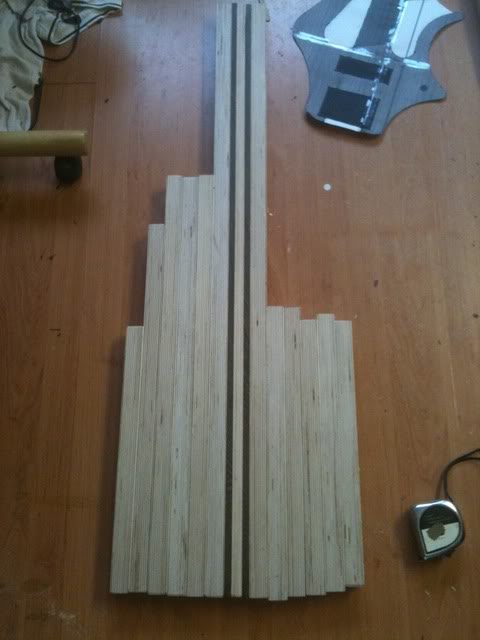
I glued them neck and bodywings and after sanding (in neighbours pro workshop I finished up with a nice, very flat and straight piece of lumber!
I drew my design in sketchup so I was able to make a full size template to cut out the shape. Pretty easy and usefull mainly because the hardware was in backorder for a long time....
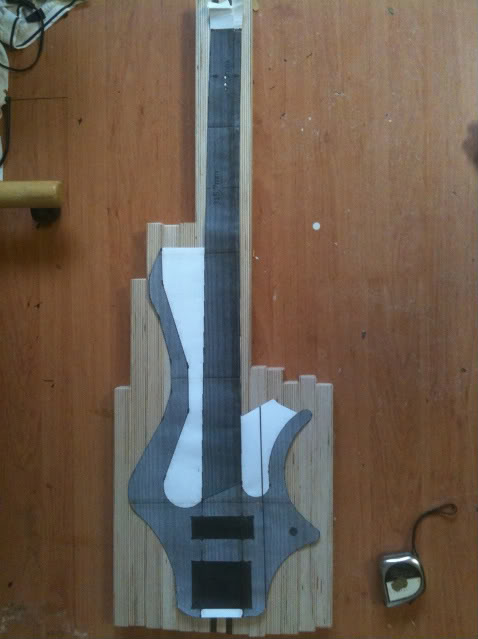
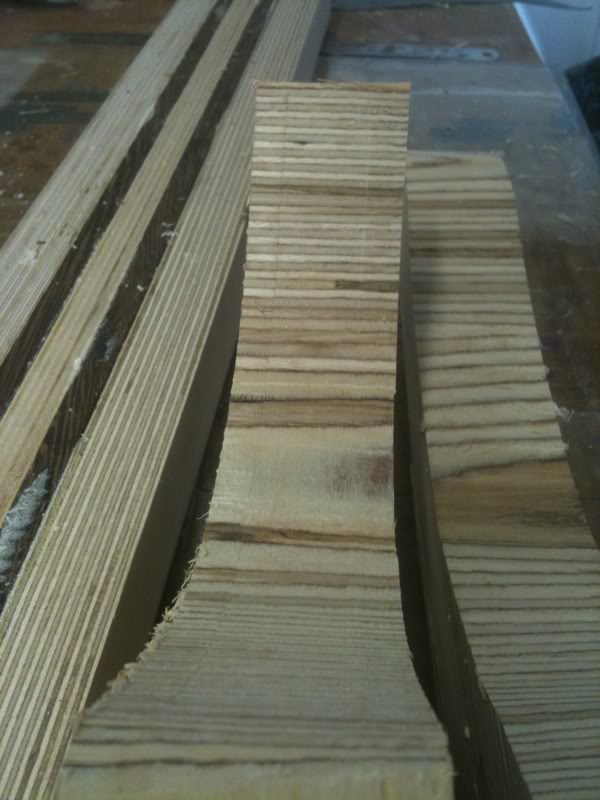
Cutting the stacked ply already gave some ideas about the effect of sanded ply.
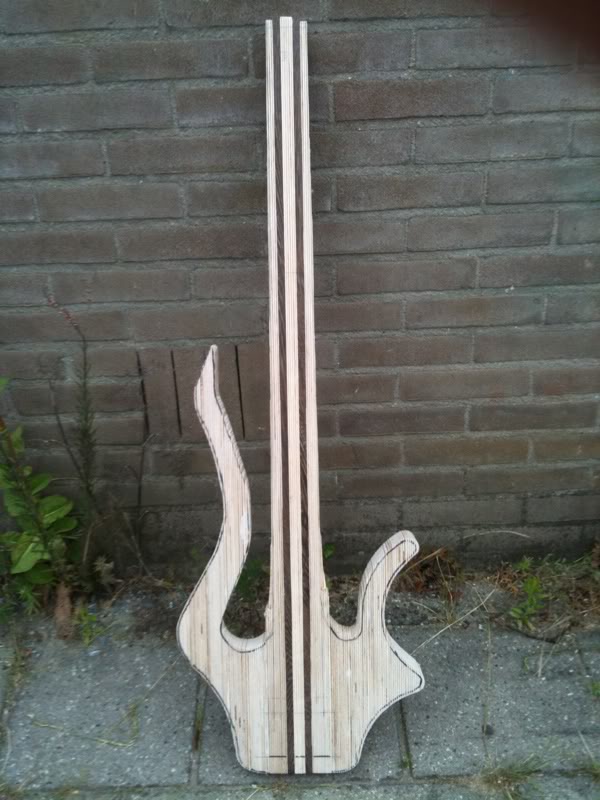
The total shape:
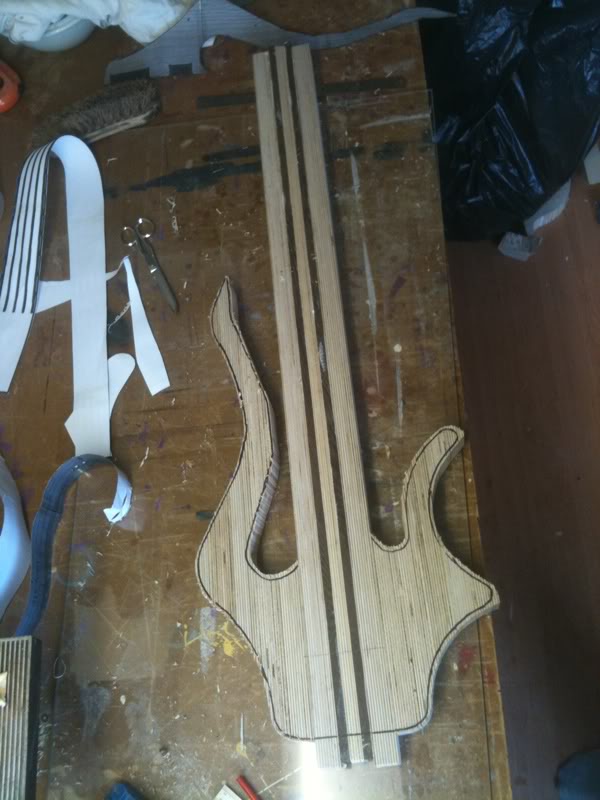
After this I routed the shape of the neck roughly with a handrouter and a guide.
For shaping the neck and body I mainly use my drill and a tool like this:
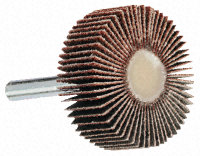 don't know how to call them.
After roughly shaping the "grain" really starts to show!
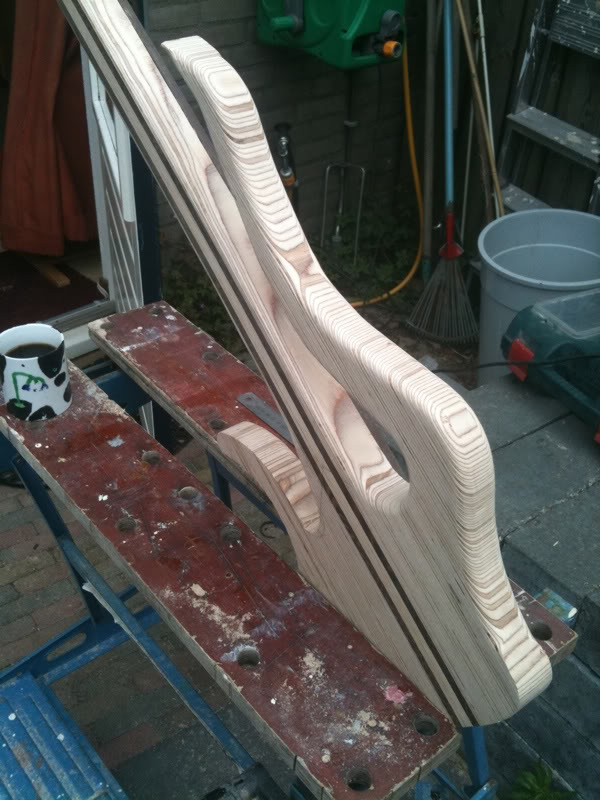
I like fat necks but 40mm without FB is a bit to much and to heavy also. I made a jig so I was able to use my router to route my neck thinner. I freehanded the transition.
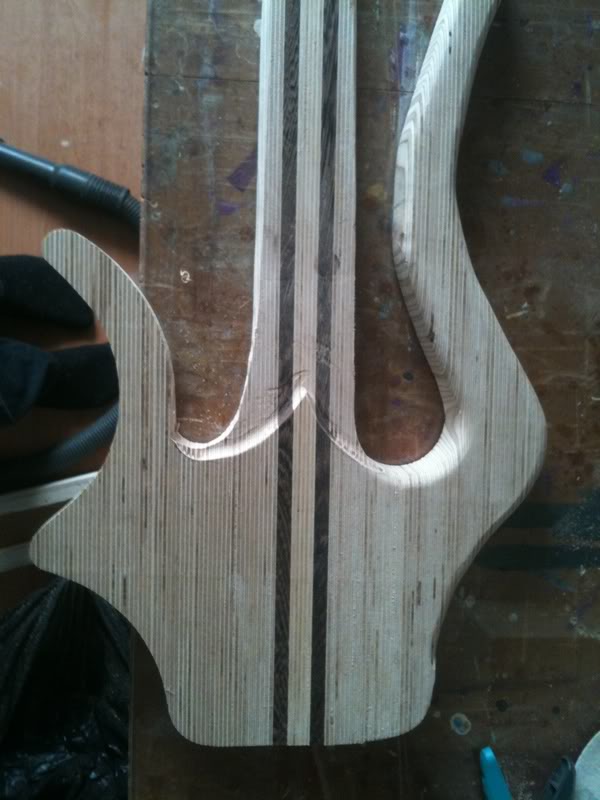
After preinstalling the wengé Fingerboard I was able to really start turning the piece of lumber into a flowing, smooth bass.
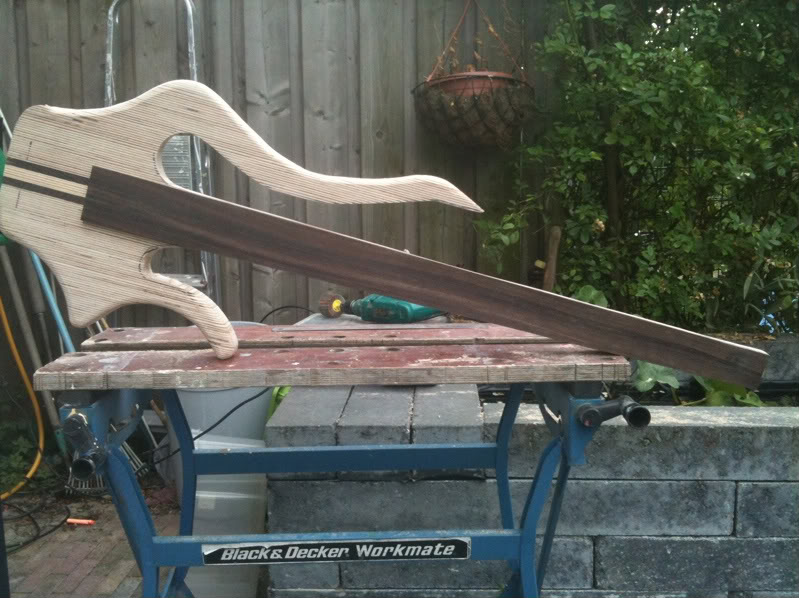
After finishing the shape I started on the hardware.
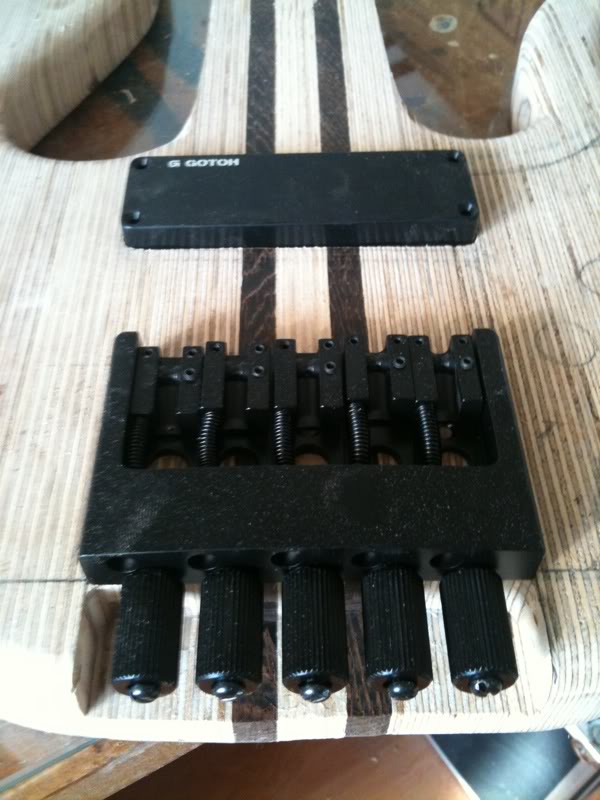
Routing the pup cavity and installing the tunerbridge. It went pretty easy!
After radiusing the FB to 12" it was glued to the neck and the headpiece and nut were installed. A bolt on job, no worries!
The nut was made from scrap wengé of course to fit the FB
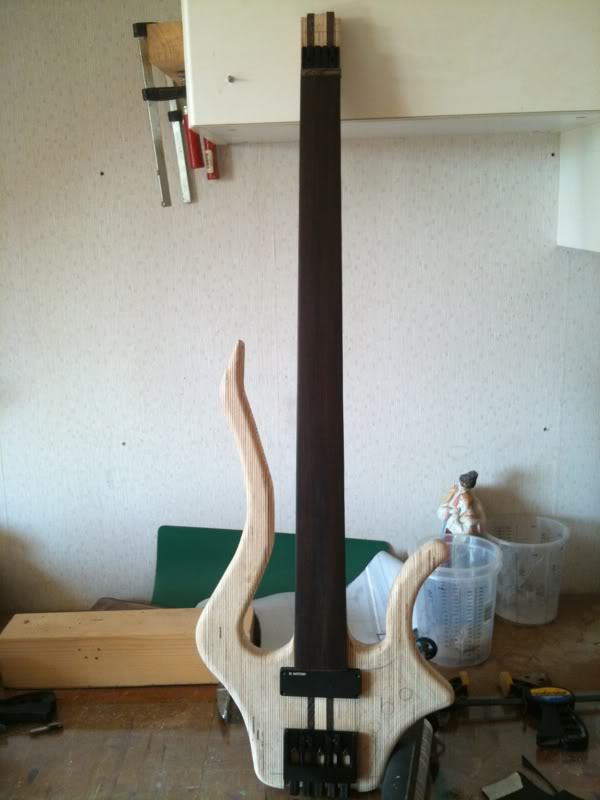
After several coats of sealer I drilled the controlcavity.

Veneered a piece of 1mm ply with wengé.....
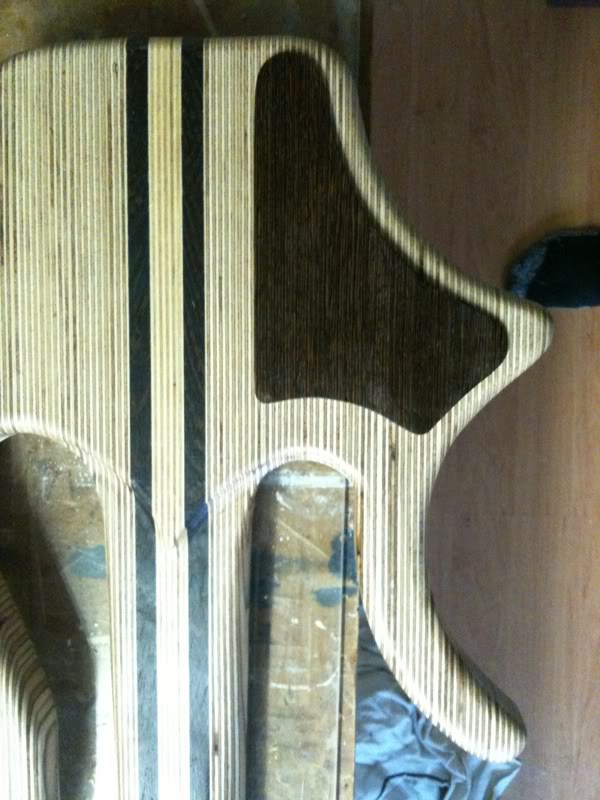
and freehanded a knob for the pickup switch.
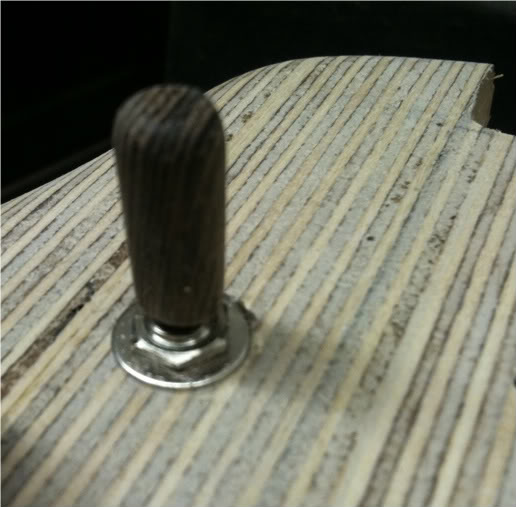
The other knobs were freehanded also but that is just a temporarily solution. I will order nice wengé dome knobs later.
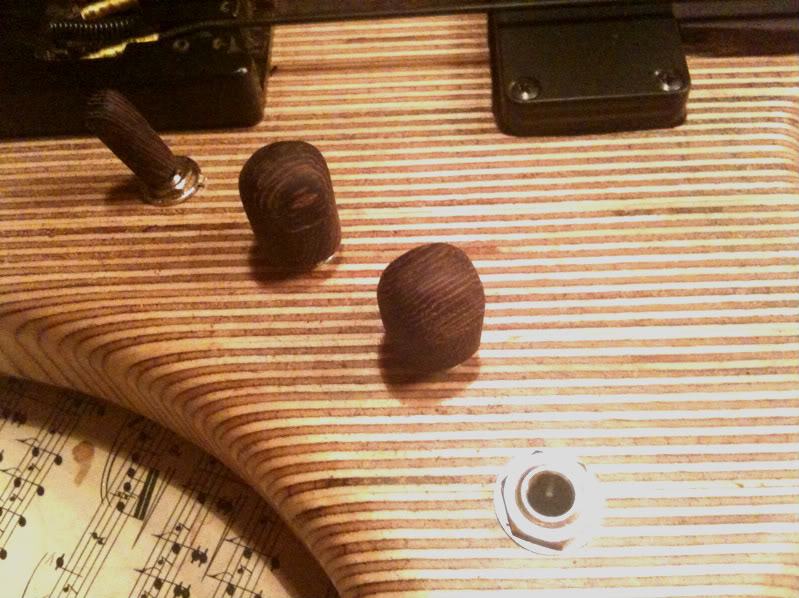
So after hard labour, lots of fun and a lot of mental rethinking this project I finished up with this:
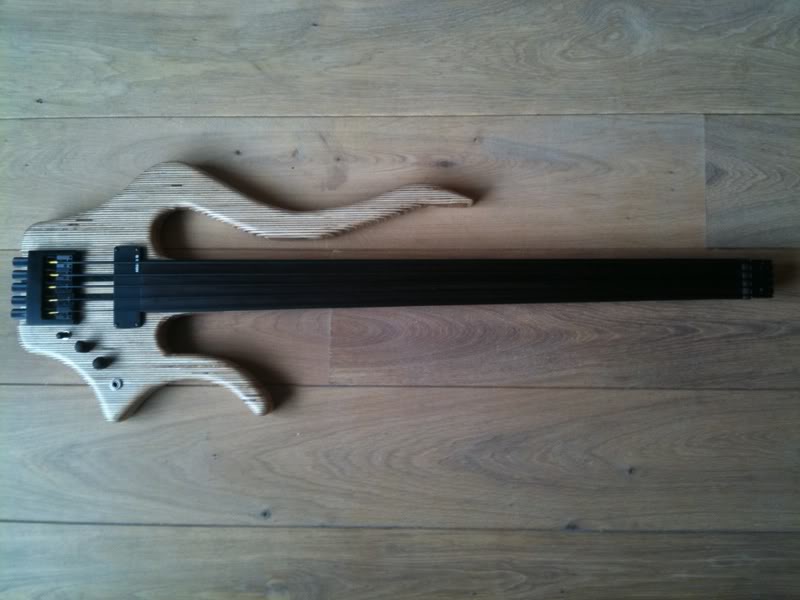
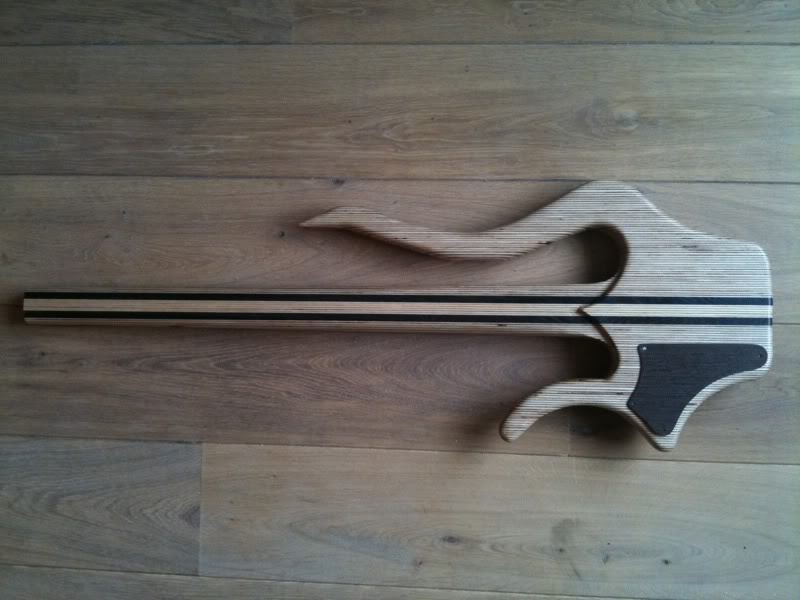
I can honestly say it works! The bass is very sturdy. No problems with bending or cracks. Perfect balance, very comfortable and it sounds awesome and looks the business!
Project well done and I am proud of my first build. OK, still a lot of things that can be inproved on it. Not the best of finishes and absolutely a "arts and crafts" bass in stead of a professional build but that's totally in line with wishbasses and their owners
I hope you liked this "novice" report on luthierswork. Comments are welcome!
I'm new to the luthierscorner but I'm active for some time on the wishbass section.
My first work on a bass was to refin a purchased wishbass from Steve himself. It was also my first fretless bass and I totally love it!
Finishing this bass gave me the inspiration to design my own model.
The goal was to make a very comfortable, ergonomical, well balanced 5 string bass.
With all the inspiration from the wishbasses I came up with the EMBEE model.
Because wood is extremely expensive overhere, my first build and lack of good machinery I decided to try to make a full plywood, neck through bass, wenge enforced with a headless and fretless (of course). Hardware is from hipshot, an old gotoh humbucker and rotosound 88's. Pics are all iphone shots so excuse the quality of them.
From my neighbour carpenter I got some 27mm thick birch ply which he had sawn into 40mm strips. In this way I was able to stack a lot of fine strips together to create a nice pattern.
I glued them neck and bodywings and after sanding (in neighbours pro workshop I finished up with a nice, very flat and straight piece of lumber!
I drew my design in sketchup so I was able to make a full size template to cut out the shape. Pretty easy and usefull mainly because the hardware was in backorder for a long time....
Cutting the stacked ply already gave some ideas about the effect of sanded ply.
The total shape:
After this I routed the shape of the neck roughly with a handrouter and a guide.
For shaping the neck and body I mainly use my drill and a tool like this:
After roughly shaping the "grain" really starts to show!
I like fat necks but 40mm without FB is a bit to much and to heavy also. I made a jig so I was able to use my router to route my neck thinner. I freehanded the transition.
After preinstalling the wengé Fingerboard I was able to really start turning the piece of lumber into a flowing, smooth bass.
After finishing the shape I started on the hardware.
Routing the pup cavity and installing the tunerbridge. It went pretty easy!
After radiusing the FB to 12" it was glued to the neck and the headpiece and nut were installed. A bolt on job, no worries!
The nut was made from scrap wengé of course to fit the FB
After several coats of sealer I drilled the controlcavity.
Veneered a piece of 1mm ply with wengé.....
and freehanded a knob for the pickup switch.
The other knobs were freehanded also but that is just a temporarily solution. I will order nice wengé dome knobs later.
So after hard labour, lots of fun and a lot of mental rethinking this project I finished up with this:
I can honestly say it works! The bass is very sturdy. No problems with bending or cracks. Perfect balance, very comfortable and it sounds awesome and looks the business!
Project well done and I am proud of my first build. OK, still a lot of things that can be inproved on it. Not the best of finishes and absolutely a "arts and crafts" bass in stead of a professional build but that's totally in line with wishbasses and their owners
I hope you liked this "novice" report on luthierswork. Comments are welcome!