Asking this because i do not want to shake walls at home but maybe is not possible to get this breakup at low level with this amp.

TalkBass has been independent since 1998. Add your voice.
Create a free account to reply to discussions, view embedded media, and browse with fewer display ads.
Join free Log in
Want zero display ads or expanded classifieds tools? Compare plans.
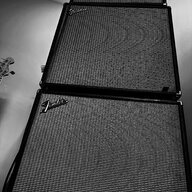

Well there's the volume control on the vintage channel.I have a question,
How di you make the vintage channel break up? There's no gain to push preamp tube, and im presuming the volume is after the passive eq. . . So to push the preamp tube, it's by boosting the passive eq? I tried to get the output tubes by cranking the master volume at the store but I thought I was gonna pass out it was so loud! It hurt so good! Super bassman. . . My ear dominatrix

Well there's the volume control on the vintage channel.
Whatever the case. I just turn it up... not too loud but it seems to break up a li'l.
Perhaps it's the Bassman 115.
And not that I've tried if for a while, but can't you dial in drive on the drive channel and turn the master volume down low?
Just wondering. I saw that some people were able to get a Lil break up in the vintage channel and was wondering how they did it without a gain control. I was also wondering whether that break up was coming from preamp tubes.Well there's the volume control on the vintage channel.
Whatever the case. I just turn it up... not too loud but it seems to break up a li'l.
Perhaps it's the Bassman 115.
And not that I've tried if for a while, but can't you dial in drive on the drive channel and turn the master volume down low?
I've always thought the VOLUME control on each channel was a GAIN control. I usually set it as such anyhoo.Just wondering. I saw that some people were able to get a Lil break up in the vintage channel and was wondering how they did it without a gain control. I was also wondering whether that break up was coming from preamp tubes.
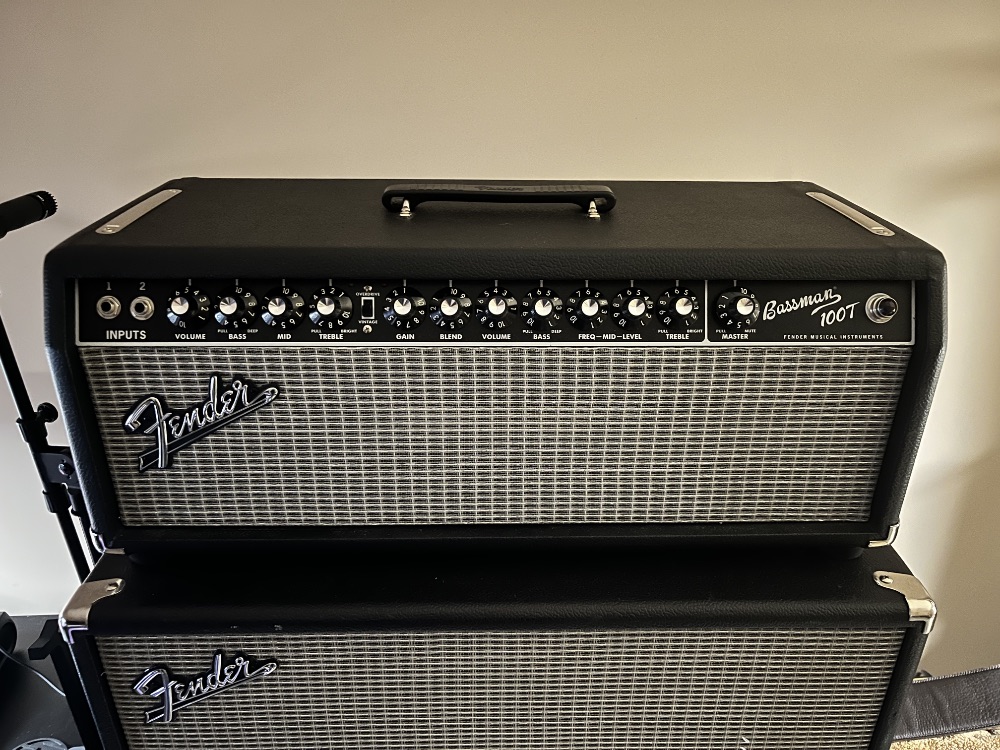

I don't know if this will make sense or not, so bare with me.
Playing at low volume levels (in a house practicing solo with a backing track) is it better to have a smaller cab (115) rather than a bigger one (610) in order to feel the punch? I used to have a DB410 and traded it for a DB112, which was better at bedroom level to control the volume and it felt puncher because I could (in my estimation) push that 1 cone a little harder. Pushing 410s at that volume may have been too loud.
Does that make sense? Asking because getting the tightest and clearest punch is what im after. Usually people would recommend solid state and some may point to barefaced videos about cone size, but you guys are the ones with the experience with amp and cabs
Just wondering. I saw that some people were able to get a Lil break up in the vintage channel and was wondering how they did it without a gain control. I was also wondering whether that break up was coming from preamp tubes.
In my case my music room is the rehearsal space where bimonthly jam sessions are hosted but I take your point.I am late to this conversation, but I don't really understand the appeal of practicing at home with a large amp at all. I use a mustang micro headphone amp for running through my sets at home and for writing on both bass and guitar. My amps live at my rehearsal spaces. I think if you absolutely need to play live without headphones at home doing something like a ToneX into an interface with some good studio monitors would be a lot easier to control, and you could set your amp sim to sound how you want at low monitor volumes.

No matter what headphones or monitors I use, even in studios, I dont like the way bass sounds. I like the cab, the air, the feel. Also, the plug in and play is much easier for me to control than micro headphone amps, audio software not to mention the cables, and sometimes I play without my computer on. Not to mention I play a lot better when I feel the bass. Ive used amp sims before and ive never thought 'waw this sounds good' maybe because im never happy with the sound from monitors or headphones, could be psychological! I wish I were satisfied with a smaller setup.I am late to this conversation, but I don't really understand the appeal of practicing at home with a large amp at all. I use a mustang micro headphone amp for running through my sets at home and for writing on both bass and guitar. My amps live at my rehearsal spaces. I think if you absolutely need to play live without headphones at home doing something like a ToneX into an interface with some good studio monitors would be a lot easier to control, and you could set your amp sim to sound how you want at low monitor volumes.
No matter what headphones or monitors I use, even in studios, I dont like the way bass sounds. I like the cab, the air, the feel. Also, the plug in and play is much easier for me to control than micro headphone amps, audio software not to mention the cables, and sometimes I play without my computer on. Not to mention I play a lot better when I feel the bass. Ive used amp sims before and ive never thought 'waw this sounds good' maybe because im never happy with the sound from monitors or headphones, could be psychological! I wish I were satisfied with a smaller setup.


Newbie question… Big fan of the Rumble 800HD, especially with the vintage button pushed, no OD, knobs: 12/12/12/9… sound in my head! Now, I’m ready to saddle up with a tube amp. Played the SVT (everything flat) through the 410HLF (I own) and it was good… but… you know? Something wasn’t right. Like an ingredient in homemade pasta sauce… Beefy…good…but…
Anyway, I would like to understand the second channel on the SB300. I typically turn down the lows more than I turn them up with the Rumble. Even without the vintage button pressed, the Rumble’s “flat” setting IS the sound. The vintage button makes it the Holy Grail. However, I still turn down the lows to about 10 playing indoors. I feel like all the notes have meat to them AND I have clarity.
Does the second channel still give you the roundness of the tubes (like an SVT) or will I only get that from the vintage channel? Would I have the best of both worlds (SVT + Fender tone control)? Is ch2 just a glorified solid state, no “real” roundness?
I am not entirely sure what you're asking. Do you want the Super Bassman Overdrive channel to sound like an SVT? If so, it can get very close. Maybe it can sound exactly like an SVT, but I have never had the chance to have both amps side by side to try that.
As far as the OD channel - You can blend the gain all the way off on it so that you effectively have 2 clean channels between the Vintage and OD channels. The Overdrive channel has an active, solid state tone stack (it can cut or boost frequencies) but the overdrive/gain on it is tube overdrive, not solid state.
You can certainly set up the OD channel to be clean and round and I have played with it trying to get it to sound identical to the Vintage channel but it never quite gets there. However that's not why you use it. The OD channel is there for some dirt and added tone shaping. The vintage channel is there to be the fat/round thing. It has a passive tone stack and is the classic Fender sound. I use both channels depending on what band I am playing in.
I will say, as someone who has rehearsed (not gigged) with the Rumble 800HD, I much prefer the Super Bassman. The Rumble amps are a bit confusing to me. They have always sounded farty to me when playing solo, but then they sound very good in a mix. The downside is that if I am in a mix and there is a part where some of the other players drop out, the fart comes back.
Regardless of if I am playing at home office volume or gig volume the Super Bassman absolutely rips and feels awesome.