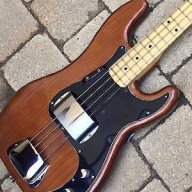
The more I look at basses...the more I appreciate the instruments that I already own.
M. M.
This.

TalkBass has been independent since 1998. Add your voice.
Create a free account to reply to discussions, view embedded media, and browse with fewer display ads.
Join free Log in
Want zero display ads or expanded classifieds tools? Compare plans.
The more I look at basses...the more I appreciate the instruments that I already own.
M. M.

...this reminds me that I just got an email advert from Lemur (well known doublebass dealer) with the tag line something like:The more I look at basses, the more $4,000 does not seem like a lot of money to spend on an instrument.
... and, well if you're going to spend $4,000, why not spend $7,000 and get what you really want?
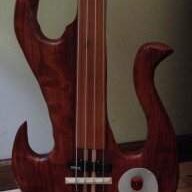
Funnier yet, if I just owned my PBass I could also do about 90-95% of everything I'd want to do.
There's a cosmic truth about electric basses hidden in there somewhere I think.
Also true, though I did cheat and install a Q-filter on my P bass. Still true, even without it.
Otto


For some odd reason this thread makes me think of the taglines in the J. G. Wentworth commercials. "It's my money and I need it now!" and "It's your money, use it when you need it!"
Yes, it's your money, buy the bass you want.
M. M.
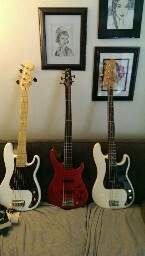
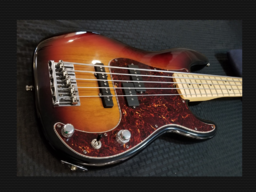

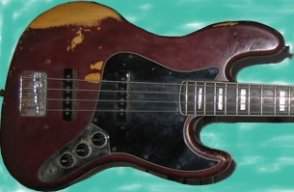

Wouldn't it be necessary to convince one's self to want anything?People convince themselves to want a lot of things.
Busted. I'll confess I threw a set of Aguilar AG-4P-60s in mine, and I've been thinking of adding either a Lawrence Q-Filter with a push-pull...or a Stellartone cap switcher for the last few months now.

I recommend adding the Q as an independent midrange cut, while keeping the standard tone available, just as on the Ripper. On the P, I did that with a stacked control pot with both Q and standard tone. I have suggested to Becky that they update the Q info on the website to include that as a recommended option. I wouldn't want to be stuck with only one or the other.
Time for me to stop straying from the thread topic. Sorry.
Otto

the biggest difference between instruments IS the price you pay, imo. most of the ingredients are similar. some parts just cost more. some builders just charge more. some buyers will just pay more.
one guy pays $7000.00. a year later, another guy buys the exact same bass for $5000.00. a year later, i buy it for $2500.00! a year later, i sell it for....


I have 4 basses and a guitar that all suit my needs, inspire me to play, and look good doing it.
~750 total.
It's not always about price.
Sometimes it's about value.

classical guitarist i know told me 50k isn't outrageous, 20k is a bargain.You want real justification? Talk to a symphonic string player. Many of them spent more money for the bow than I've ever spent on a bass.