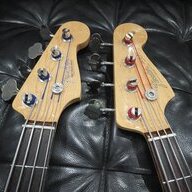
TLDR: I thought that a 22-year-old Fender Highway One Jazz Bass would be an upgrade over a 10-year-old Squier Affinity Jazz Bass. It wasn't.
Ten years ago, I started getting back into playing guitar after a long hiatus and bought a Squier Affinity Jazz Bass for $179 new to use for home recordings. Shortly afterward, I started regularly playing music with friends and, since I had a bass, became the default bass player. Our irregular jam sessions slowly evolved into weekly practices and gigs a few times a year. After a recent three-hour winery gig with the same Squier, I decided that I should probably have a second bass in case something goes wrong at a gig (not that it has given me any reason to doubt it!). Since my current bass was so cheap when I bought it, I figured that I've more than gotten my money's worth and it could become the backup to a newer, more expensive bass. At this point, I started obsessively watching YouTube reviews on various options, gravitating toward another Jazz because I like the one that I have.
After a lot ofwasting time watching YouTube researching potential options, I came across a "2003 Fender MIM Standard in Dakota Red" on Guitar Center's website.
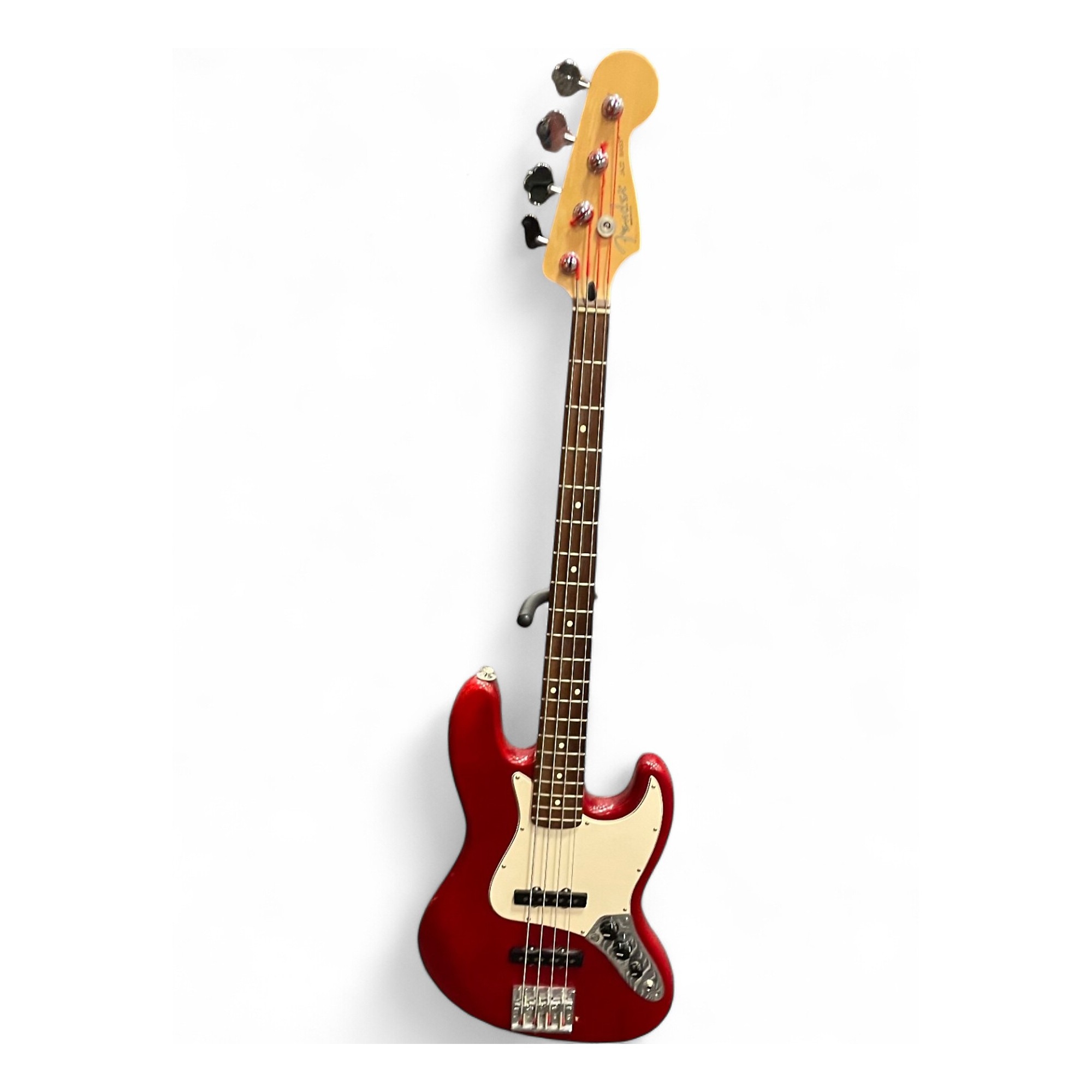
It was definitely a red Fender Jazz Bass but...
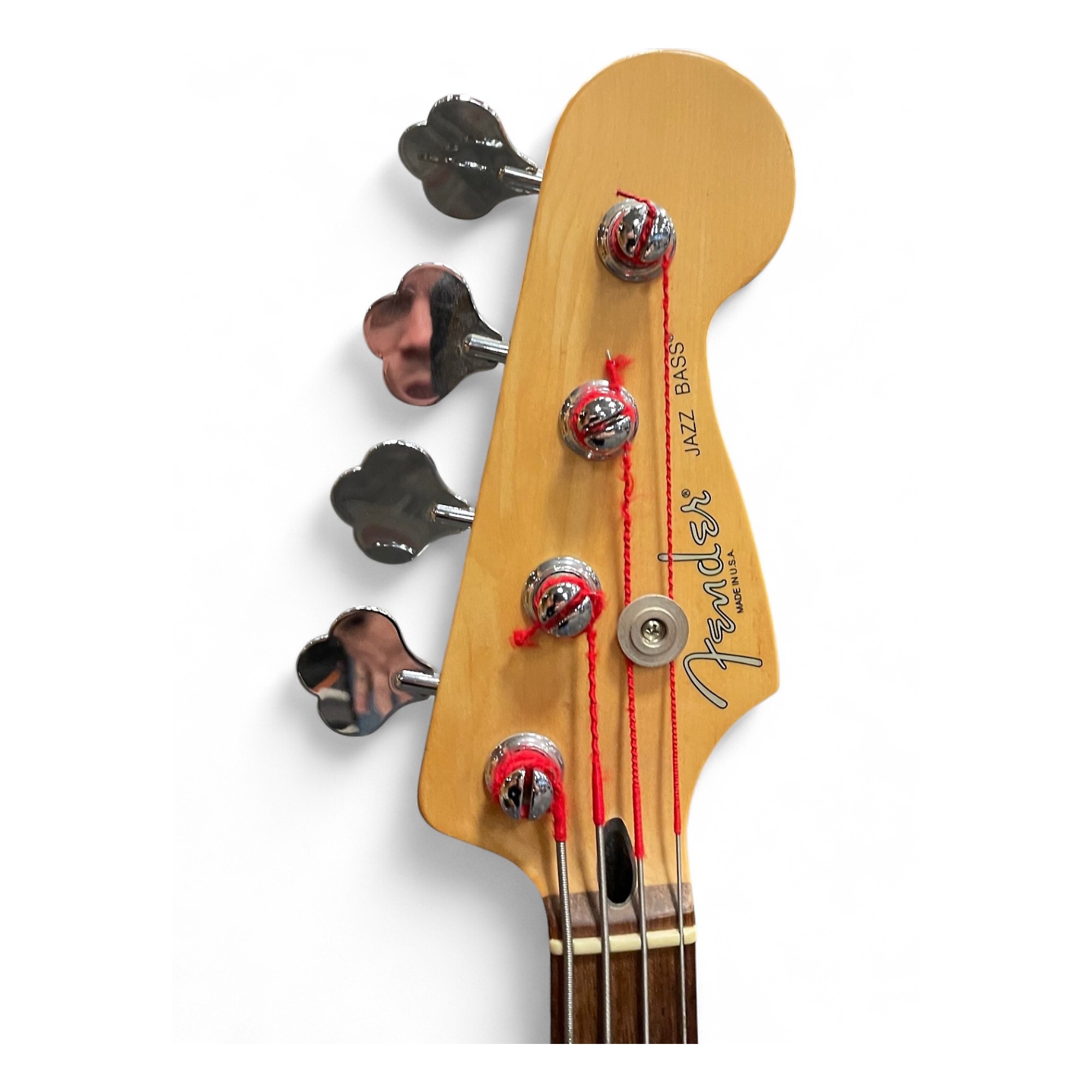
that doesn't say Mexico...
Even with the poor quality of Guitar Center's pictures, I could see that although the bass was listed as MIM and priced the same as another MIM Jazz (about $500), it was actually made in U.S.A. Comparing it to pictures I could tell that it wasn't, however, an American standard. Through some internet sleuthing, I eventually discovered that it was actually a Highway One in transparent red and pulled the trigger thinking that it might be a good deal based on the incorrect listing information. I also knew that I had Guitar Center's return policy to fall back on.
When it arrived, it had been packed very well by GC. The listing specified that it came with a gig bag and, pulling it out of the box was the first sign that this wasn't meant to be. I wondered why the gig bag was so loose on the bass and then looked more closely and saw a pocket for a bow. The gig bag was for a cello.
The bass itself had quite a few small knicks and impressions in the finish but nothing egregious (most notable was a ding next to the bridge and a scrape behind the bridge that looked like it might have been from changing strings - these basses had thin paint as a feature that has been criticized in the years since). It was clear that nobody had taken any effort to remove the accumulated dust from the bass (especially noticeable on the pickups and bridge), either before or after trading it to GC. I did some minor cleaning, including removing the old washer that was on the strap button, and tried it out.
After years of playing a Squier, this was my first experience with an American Jazz Bass and it was... okay. It worked. The tuners tuned, the pots affected volume and tone, and the neck and frets were in good shape. It sounded like a Jazz Bass. It also featured a Badass bridge that was not original to the first series of Highway Ones and must have been added later. The biggest factor in its favor was that the red looked very good on a guitar stand from across the room (where the imperfections were less noticeable). The biggest factor against it was a combination of the poor paint quality (the paint was fine as it was, but I was worried about excessive wear from continued use, especially if this was supposed to be my #1 for swankier gigs) and the pots. Adjusting the volume and tone felt terrible. There was no scratching in the audio output but they felt loose while those on my Squier feel solid and nicely weighted.
And that was it. Within a few hours of unboxing and setting up, I knew that it was not to be. Sure, I could replace the controls but the poor paint quality would still be there. I could repaint it but then its only distinguishing feature would be the words on the headstock. Any changes that I made in pursuit of improvement would be money that I could have spent on a new bass, where I would know the stories behind the dings because I stupidly put them there myself. I also didn't have the energy to clean it up and try to sell it for a bit more money myself given its American heritage. The next day, I drove to the nearest Guitar Center and returned it, pointing out that it had been listed incorrectly and swearing that it had come with the cello gig bag (since the gig bag was not pictured in the listing). I'll have to keep an eye on GC's used listings to see if it reappears.
While at GC, I tried a few Player IIs and also came away unimpressed. Ultimately, there is no problem with the bass that I have, which sounds good and plays well despite its low cost and the name on the headstock. I've realized that one problem with trying to replace a Jazz Bass with a "better" Jazz Bass is that the qualities I like most about my current bass - the satin neck, for example - are things that I would want the new one to have, too. Any minute sound differences from pickups are likely to be lost in the mix at a gig or practice, so that also isn't much of a factor. This is different than if I were buying a new guitar and wanted one with a humbucker after only having single coils, or wanted a different style of bass altogether. Since I basically just want a Jazz Bass similar to the one I have so that I can have a backup for gigs, this experience has been very helpful in narrowing my focus and the order I placed afterward, which is a story for another time since the shipment has not yet arrived.
Ten years ago, I started getting back into playing guitar after a long hiatus and bought a Squier Affinity Jazz Bass for $179 new to use for home recordings. Shortly afterward, I started regularly playing music with friends and, since I had a bass, became the default bass player. Our irregular jam sessions slowly evolved into weekly practices and gigs a few times a year. After a recent three-hour winery gig with the same Squier, I decided that I should probably have a second bass in case something goes wrong at a gig (not that it has given me any reason to doubt it!). Since my current bass was so cheap when I bought it, I figured that I've more than gotten my money's worth and it could become the backup to a newer, more expensive bass. At this point, I started obsessively watching YouTube reviews on various options, gravitating toward another Jazz because I like the one that I have.
After a lot of
It was definitely a red Fender Jazz Bass but...
that doesn't say Mexico...
Even with the poor quality of Guitar Center's pictures, I could see that although the bass was listed as MIM and priced the same as another MIM Jazz (about $500), it was actually made in U.S.A. Comparing it to pictures I could tell that it wasn't, however, an American standard. Through some internet sleuthing, I eventually discovered that it was actually a Highway One in transparent red and pulled the trigger thinking that it might be a good deal based on the incorrect listing information. I also knew that I had Guitar Center's return policy to fall back on.
When it arrived, it had been packed very well by GC. The listing specified that it came with a gig bag and, pulling it out of the box was the first sign that this wasn't meant to be. I wondered why the gig bag was so loose on the bass and then looked more closely and saw a pocket for a bow. The gig bag was for a cello.
The bass itself had quite a few small knicks and impressions in the finish but nothing egregious (most notable was a ding next to the bridge and a scrape behind the bridge that looked like it might have been from changing strings - these basses had thin paint as a feature that has been criticized in the years since). It was clear that nobody had taken any effort to remove the accumulated dust from the bass (especially noticeable on the pickups and bridge), either before or after trading it to GC. I did some minor cleaning, including removing the old washer that was on the strap button, and tried it out.
After years of playing a Squier, this was my first experience with an American Jazz Bass and it was... okay. It worked. The tuners tuned, the pots affected volume and tone, and the neck and frets were in good shape. It sounded like a Jazz Bass. It also featured a Badass bridge that was not original to the first series of Highway Ones and must have been added later. The biggest factor in its favor was that the red looked very good on a guitar stand from across the room (where the imperfections were less noticeable). The biggest factor against it was a combination of the poor paint quality (the paint was fine as it was, but I was worried about excessive wear from continued use, especially if this was supposed to be my #1 for swankier gigs) and the pots. Adjusting the volume and tone felt terrible. There was no scratching in the audio output but they felt loose while those on my Squier feel solid and nicely weighted.
And that was it. Within a few hours of unboxing and setting up, I knew that it was not to be. Sure, I could replace the controls but the poor paint quality would still be there. I could repaint it but then its only distinguishing feature would be the words on the headstock. Any changes that I made in pursuit of improvement would be money that I could have spent on a new bass, where I would know the stories behind the dings because I stupidly put them there myself. I also didn't have the energy to clean it up and try to sell it for a bit more money myself given its American heritage. The next day, I drove to the nearest Guitar Center and returned it, pointing out that it had been listed incorrectly and swearing that it had come with the cello gig bag (since the gig bag was not pictured in the listing). I'll have to keep an eye on GC's used listings to see if it reappears.
While at GC, I tried a few Player IIs and also came away unimpressed. Ultimately, there is no problem with the bass that I have, which sounds good and plays well despite its low cost and the name on the headstock. I've realized that one problem with trying to replace a Jazz Bass with a "better" Jazz Bass is that the qualities I like most about my current bass - the satin neck, for example - are things that I would want the new one to have, too. Any minute sound differences from pickups are likely to be lost in the mix at a gig or practice, so that also isn't much of a factor. This is different than if I were buying a new guitar and wanted one with a humbucker after only having single coils, or wanted a different style of bass altogether. Since I basically just want a Jazz Bass similar to the one I have so that I can have a backup for gigs, this experience has been very helpful in narrowing my focus and the order I placed afterward, which is a story for another time since the shipment has not yet arrived.