Why does a fifth sound "correct" at point A in tune B, but a flat fifth sounds horribly wrong?
i don't think that has anything to do with physics. but more to do with the eveolution of music and the "ear".
A fifth is the ratio 2:3. You can prove this for yourself.
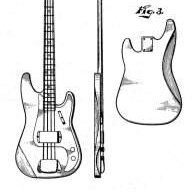
How long is a bass string - 34" right? Measure the distance from the bridge to the 7th fret. It'll be about 22.5" - 2/3 the length of the string.
The 4th is 3/4 the length of the string - this is easy you can eyeball it. The 12th fret is 1/2, so take half of that and you land on the fifth fret (or the 24th fret if you go the other way).
Incidentally, the harmonics are located at these ratios - 1/2 (12th fret), 2/3 (7th fret) 3/4 (5th fret) for this very same reason. The string vibrates in a complex way & includes these sub-vibrations (called the overtone series) of 1/2, 1/3, 1/4, etc. of the string. If you play the full string & then lay your finger down at these points, you hear just the harmonic. Do it a few time and you'll begin to recognize the harmonic sound in the full string sound. (This is easiest to do with the 12th fret harmonic).
Do you really think it's a coincidence that the I, IV, V progression just happens to fall on the same frets the harmonics fall on? Do you really think that it's some trick of the ear that make us gravitate towards these tones & not some random other tones somewhere on the fretboard? It's physics.
The tritone is the ratio of 25:36. It sounds discordant because it's more complex, more chaotic. (fyi about 23.5")
A 2:3 ratio lines up every 6 pulses. A 25:36 ratio only lines up every few hundred pulses (225). You can rhythmically overlay a waltz (3/4) over a 4/4 and it'll sound interesting and maybe even beautiful. But lay a 25 pulse rhythm next to a 36 pulse rhythm and you have chaos. And just try to imagine a harmonic based on 25/36th the length of a string.
To say that 25:36 is dischordant because of a choice we made is like saying 4/4 is preferred as a drum beat over 13/4 because of some choice we made. No, 4/4 is preferred because it's the rhythm of walking - left right left right = kick snare kick snare. We don't gravitate towards songs in 13 because we have no basis for a 13 beat rhythm in the natural world.
We prefer the tempos we do because they're the tempos of walking & running. (ever fall into step with the music on your ipod? do you have workout music for the gym that's at a faster tempo?)
Up until a few hundred years ago, the field was called Philosophy.
Galileo & DaVinci (among others) have serious treatises on music. Galileo's father was a luthier & Galielo called the movement of the planets "the music of the spheres." You're welcome to classify Galileo's other works as "philosophy" too if you like.
As our understanding of music grew, so did the sophistication of the music. Think of the music of the middle ages - monks chanting in unison, or if they wanted to get fancy, the same melody, a fifth apart.
The 20th century saw a deconstruction of all of this. The blues, the electric guitar, recorded music, radio - all this contributed to a "dumbing down" of music. Once if you wanted to be a serious musician you understood the math behind music - it's pretty much the first chapter in music textbooks of the day. Just like modern music textbooks may start with "the major scale" - so did classic textbooks. Only they got into the WHY of the physics behind the major scale, whereas our textbooks just say "memorize these notes."
We don't need to know the physics behind music because the guitar (a fretted instrument with fixed note locations) alleviates of the "burden" of having to know why anything works. At the same time, it's approximations of real harmonies, while allowing us the freedom to move from key to key with ease, robs our ears of the richness real harmony, and is, I suspect, the reason so few of us sing - our ear has been cluttered with approximations & we don't hear the "lock" of pure harmonies the way our predecessors did. A fifth is no longer 2:3, it's a "good enough" approximation and this "good enough" sound means that when we sing along, there's nothing to "lock" onto, so our ears go unused to hearing the real harmonies of physics.
Also +1 Howard Goodal's DVDs, he's got a few different sets and they're all excellent. Highly recommended. Intended for the layman & easy to follow, they're very fun & educational.