They will not go up any further.Before you replace anything, you need to raise the pickups.

TalkBass has been independent since 1998. Add your voice.
Create a free account to reply to discussions, view embedded media, and browse with fewer display ads.
Join free Log in
Want zero display ads or expanded classifieds tools? Compare plans.
They will not go up any further.Before you replace anything, you need to raise the pickups.
I tried to raise them, but they will not go any higher. Any ideas?100% raise the pickups higher. That might make the difference already - especially since you enjoy the tone of the 300 and it has the same preamp as the 500.

new foam under the pickups with a potentially longer screw?I tried to raise them, but they will not go any higher. Any ideas?

New foam or new springs with longer screws.They will not go up any further.

Has anyone had an issue with the bridge tabs bending up on the SR405QM? I've had the bass many years, and rarely play it, but need it for a tune, and the D string flew out of the bridge, and upon inspection, the tab is bent up, and metal fatigue is visible. I bent it back, started to tune up, and it did the same thing. I do not want to buy another bridge if this is a common, or documented problem. Any ideas appreciated thanks. View attachment 5289940
Write to Ibanez this is a known fault and Ibanez usually sends you a replacement bridgeHas anyone had an issue with the bridge tabs bending up on the SR405QM? I've had the bass many years, and rarely play it, but need it for a tune, and the D string flew out of the bridge, and upon inspection, the tab is bent up, and metal fatigue is visible. I bent it back, started to tune up, and it did the same thing. I do not want to buy another bridge if this is a common, or documented problem. Any ideas appreciated thanks. View attachment 5289940
Someone was faster...Known issue and, for some term, replaced by Hoshino under warranty. Don't know if that's still covered under that umbrella.
Riis
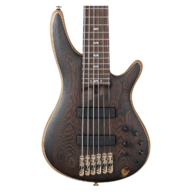
That's a particularly nice piece of Wenge on one of the few basses I'd like to own myself. I already have a few SR 6s so I can't justify it.I always really wanted to play 6 string l, as most of my favourite players do, so I picked up this SR5006. Really nice bass. I think short of going with something truly custom this does everything well and the for and finish are extremely good. Very comfortable to play.

What Preamp to you currently have?
Before buying anything, I would rewire the pickups to bypass the preamp. That way you can really get a feel if you just dislike the preamps or really the pickups.Whatever the stock is on the SR300. However, if I swap the pickups, I would preferably not use the preamp, and just use pedals.
That's a particularly nice piece of Wenge on one of the few basses I'd like to own myself. I already have a few SR 6s so I can't justify it.
Welcome to TB, and enjoy that sweet axe.
Before buying anything, I would rewire the pickups to bypass the preamp. That way you can really get a feel if you just dislike the preamps or really the pickups.
Anyway once you have done it, the Aguilar Humbuckers are a good replacement.
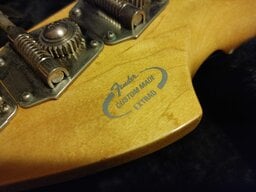
As far as I know, they are a modified SR 500 for the 620/630 one and a modified SR1300 for the 640 as far as I could find. . As you said made in the indonesia factory and an Ashe body instead of mostly mahogany.Hi. I tried posting this elsewhere to no avail.
Anyone know much about the SSR600 series? They were made specifically at the request of Shimamura Music in Japan for the domestic market. Made in Indonesia. This is my actual bass (see below).
Ash bodies, Bart MK1 pups, active electronics. Nice grainy finishes on some of them.
Anyone know of them or have any experience with the series?
There is a SSR620, 630, and 640 that I know of. There may be others. They look gorgeous. All produced in the last decade.
I just bought one from Japan but won't have it for a few weeks. It is flat black. I have another SR (a 5er) and like the necks and weight.
Thanks in advance!
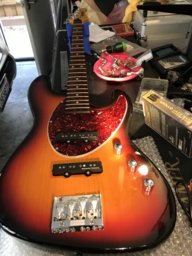
I'll bite. Panga panga is like wenge. I like the combination of wenge or panga panga with mahogany. Walnut is an excellent wood, especially as layers with maple in a neck laminate. It's a punchy hardwood, but I like the mahogany body/wenge fretboard/maple neck sound better--just my preference. Other factors like pickup winds and pickup location may have a more defining impact on the tone, but if you play two similar models with different woods, you might prefer one over the other.I am the proud owner of an Ibanez SR 1350B bass and I love it. It is made with many exotic woods, including Panga Panga, African Mahogany, and Walnut. My question is: what is the importance of the type, quality and finish of the wood of the body of an electric solid body guitar or bass? Beyond aesthetics, what is the impact on the tone, resonance and sound created? Which woods have what affect on the sound?
Using a CNC machines and swapping necks/fretboards and bodies. I and a few friends made bodies out of alder, maple, mahogony and cardboard. We made necks out of maple, mahogony and ash and fretboards from ebony, rosewood (when it was available) and maple.
Strings were always new.
CNC machines were used to get the same shapes
Then we recorded the bass with a DI and compared them and try to decide which one was which. We then used a blind test tool and flag which one was which. We did 3 test runs of blind tests with 2 days in between them to adjust for daily fluctuations.
In terms of body, nobody could reliably say which wood was which (there were small differences, but i.e there were no clear indication which was sounded better and the cardboard one wasn't clearly in last place.
Same was with the neck. The only thing that really made a big difference if the shapes are thee same, was the fretboard, which all of the testers (several hobby musicians, a few professional musicians and 2 mixing engineers), got nearly everything correct.
Btw we also test bodyshape and that made a bigger difference than the different materials in one shape. So a P body sounded much different from a Telebody.
Was a bit of a boring summer during the pandemic.
Hope it helped a bit. Anyway I found out that it doesn't matter at all what bass I play. I still sound like me (with more bass, treble or mids depending on the bassAwesome, thanks for this.
 ).
).