• TalkBass has been independent since 1998. Add your voice.
    Create a free account to reply to discussions, view embedded media, and browse with fewer display ads.
    Join freeLog in
    Want zero display ads or expanded classifieds tools? Compare plans.

The way a P bass should be

These conversations remind me of the apocryphal story about horse teeth and philosophers.

Now, I'm certain I'm not the first person to have thought of this but it (apparently) has not been done in a fair piece so I wrote Fender about the origins of the P-bass pickup covers. Here is the response I received:
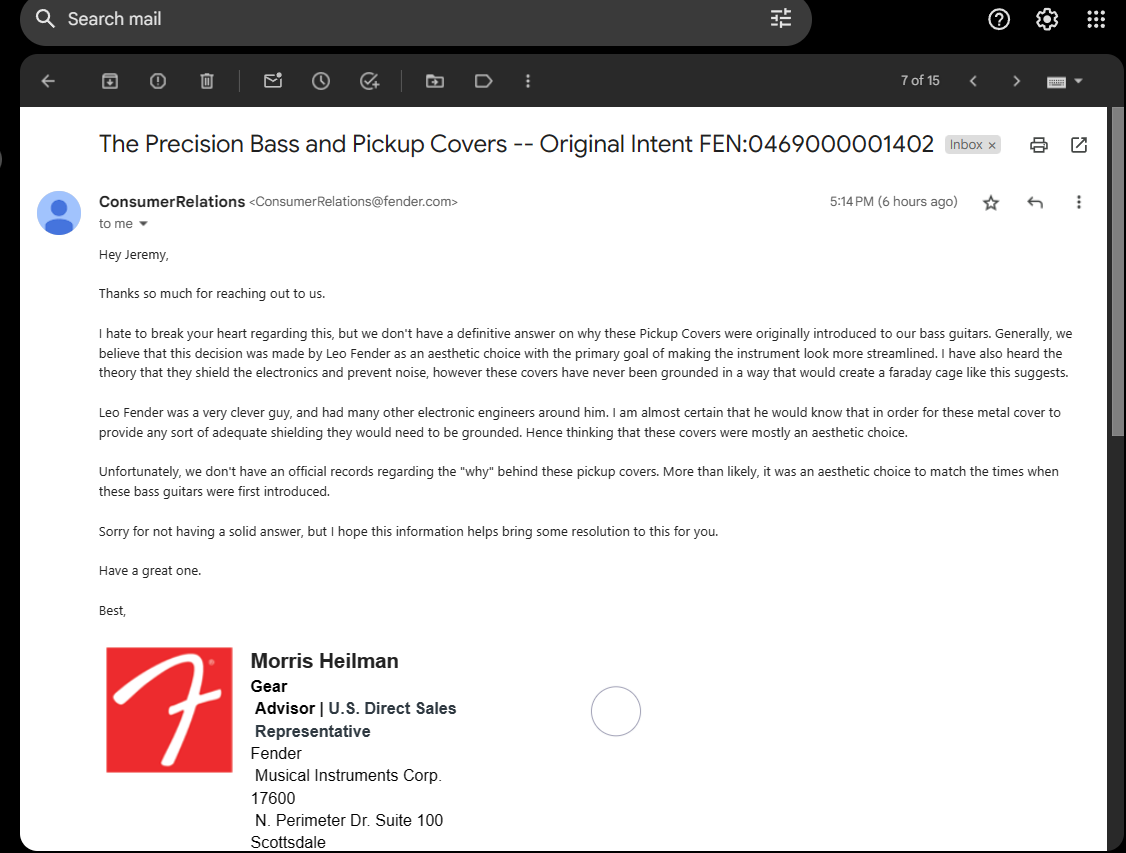
Fender Ashtray Response.png


"Aesthetics" is the most logical and reasonable explanation as others here have pointed out time, and time, and time, and time again.
 
These conversations remind me of the apocryphal story about horse teeth and philosophers.

Now, I'm certain I'm not the first person to have thought of this but it (apparently) has not been done in a fair piece so I wrote Fender about the origins of the P-bass pickup covers. Here is the response I received:

View attachment 5246797

"Aesthetics" is the most logical and reasonable explanation as others here have pointed out time, and time, and time, and time again.
That's good enough for me.:D
+WYKDaAJSpqtfyUo1oHSew_thumb_1169a.jpg
 
I don't know about the scientific or physics properties of metal pickup and bridge covers, but I do believe that you'll run out your tuner's battery if you keep a cord plugged into the input.

Some Rickenbacker players reckon the same thing with the plastic bridge pickup cover on 4003 basses. I remember a guy arguing the toss about it with me on the RIC forum years ago,
 
These conversations remind me of the apocryphal story about horse teeth and philosophers.

Now, I'm certain I'm not the first person to have thought of this but it (apparently) has not been done in a fair piece so I wrote Fender about the origins of the P-bass pickup covers. Here is the response I received:

View attachment 5246797

"Aesthetics" is the most logical and reasonable explanation as others here have pointed out time, and time, and time, and time again.
Even Jamerson said there was a purpose for using both covers beyond the appearance of the bass.
 
Even Jamerson said there was a purpose for using both covers beyond the appearance of the bass.

The problem here is that Jamerson did not create the instrument, Fender did. I do not see a logical reason to accept what a player says (however talented that player may be) over what the manufacturer says.
 
I just did a spectrum analysis on a YouTube video wherein a guy plays the exact same thing with first no ashtray covering the pickup and then with the cover on. The spectrum with the higher, and brighter, trend lines is without the cover. The spectrum with the cover shows the mellowing of the tone.View attachment 5246024View attachment 5246025

I don't know where this comes from, but that is not science. It may look like science, but it's not until we know all the details of what is being measured and how these were generated. Since nothing you claim fits with everyone else's extensive experience, it's all BS until you can provide real evidence to the contrary.
 
I don't know where this comes from, but that is not science. It may look like science, but it's not until we know all the details of what is being measured and how these were generated. Since nothing you claim fits with everyone else's extensive experience, it's all BS until you can provide real evidence to the contrary.

Next you’re going to be saying tort doesn’t make the bass sound better!
 
Some Rickenbacker players reckon the same thing with the plastic bridge pickup cover on 4003 basses. I remember a guy arguing the toss about it with me on the RIC forum years ago,

This is 100% the case on the 4003. The 4001 originally had a "horseshoe" pickup where a metal part of the pickup extended over the top of the strings much like the plastic cover, and had a functional role in the performance of the pickup. Once the horseshoe was abandoned in favor of the high gain bridge pickup, the cover became a purely aesthetic component.
 
  • Like
Reactions: FRoss6788
These conversations remind me of the apocryphal story about horse teeth and philosophers.

Now, I'm certain I'm not the first person to have thought of this but it (apparently) has not been done in a fair piece so I wrote Fender about the origins of the P-bass pickup covers. Here is the response I received:

View attachment 5246797

"Aesthetics" is the most logical and reasonable explanation as others here have pointed out time, and time, and time, and time again.

You didn't think Fender would say that one of their instruments comes with a dead spot, did you?
 

Latest posts