

Enjoy the benefits of a premium membership!
Upgrade Account
-
TalkBass has been independent since 1998. Add your voice.
Create a free account to reply to discussions, view embedded media, and browse with fewer display ads.
Join free Log in
Want zero display ads or expanded classifieds tools? Compare plans.
You are using an out of date browser. It may not display this or other websites correctly.
You should upgrade or use an alternative browser.
You should upgrade or use an alternative browser.
"There's no money above the 5th fret"
- Thread starter TexasThunder
- Start date
More options
Who Replied?


I haven't found any money anywhere on my bass since the 1990s.

About 20 years ago I was doing a blues gig with a guitarist who had a "reputation". Everything was going great until I hit the 7th fret on the D string. He turned around, while still singing into his mic, gave me a scowl and frantically pointed to the nut-end of my neck with a motion to "get back down there". The message was very clear.
I did get paid that night, BTW.
I did get paid that night, BTW.

It's not true, and frankly not useful. It is bad advice.
So feel free to forget it and ignore it, and people who say it, from now on.
So feel free to forget it and ignore it, and people who say it, from now on.


In most bands, the simpler bass lines will keep you employed while wanking like a failed guitarist is going to get you replaced. Styles vary.


I'm about as wanky and artsy as bass players come. But this adage is pretty much true.
Lottery winners who end up making multi-platinum careers playing their music with their buddies don't count. Nobody be posting any pictures of Geddy Lee please.
Go find a gig with a Tier 1 wedding band in your town. You'll be playing basic music that appeals to a broad variety of people and that isn't musically challenging. Maybe even possible to play the whole gig below the 5th fret, though I've never made a point to try. But you'll pull down $400 a night.
Then put together your own quasi-original band that melds Jamiroquai with Steely Dan, Level 42, and Headhunters-era Herbie Hancock. That will be some cool s**t for sure. You're going to be playing for your girlfriend and the bar staff 2/3 of the time, making less than you paid to park.
"Sir Duke" screws up this whole theory, though.
Lottery winners who end up making multi-platinum careers playing their music with their buddies don't count. Nobody be posting any pictures of Geddy Lee please.
Go find a gig with a Tier 1 wedding band in your town. You'll be playing basic music that appeals to a broad variety of people and that isn't musically challenging. Maybe even possible to play the whole gig below the 5th fret, though I've never made a point to try. But you'll pull down $400 a night.
Then put together your own quasi-original band that melds Jamiroquai with Steely Dan, Level 42, and Headhunters-era Herbie Hancock. That will be some cool s**t for sure. You're going to be playing for your girlfriend and the bar staff 2/3 of the time, making less than you paid to park.
"Sir Duke" screws up this whole theory, though.
Last edited:
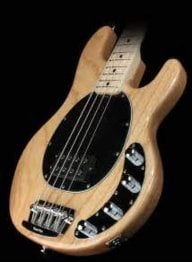
After years of playing my EBMM with a maple neck, I've noticed that all the neck wear is within that area so I would agree. I've also noticed that I never play the G string unless I'm noodling around at home.

there's no money below the 5th fret either.
It can serve as an excuse for not learning the names of the notes above the fifth fret. It's like the claim that you ruin a good song with too many fancy chords. That usually can be interpreted as: I don't know any fancy chords, so you shouldn't play them.
It's interesting to see the interpretations of a simple phrase.
If you play what's expected of you, you will work.
It's basically aimed at guitarists who switch to bass and want to noodle around in the higher registers like they're playing guitar licks. It is essentially saying that you can find every note you need as a bassist without resorting to that kind of noodling.Can someone explain this to me? I'm a drummer turned bassist and completely self taught thus far. I've heard this phrase or seen it written multiple times now, and I really don't understand it. I get that people are most likely referring to the lowest 'pitched' notes on the fret board, but it doesn't make complete sense to me.
If, in fact, this statement is referring to the lowest pitched notes, then I'm really confused. For example...As I understand it, the 'D' located at the 10th fret of the 'E' string, is the same pitch as the 'D' located at the 5th fret of the 'A' string. Same pitch, but one is 'above' the 5th fret.
It seems the saying should be more like...'there's no money above the 10th fret on the lowest 3 strings, and above the 5th fret on the highest string'.?
If you are detecting sarcasm in my thread, it's unintentional. If it seems remedial to you, I apologize.
Thanks in advance for any clarification.
Randy
However, it's a bit misleading because there hasn't been any money below the fifth fret for a long time, either!

Like other "rules" here, this is something i completely ignore.
pssst... there's no money to be made below the fifth fret either.
Play whatever you want and TOTALLY screw the "rules."
pssst... there's no money to be made below the fifth fret either.
Play whatever you want and TOTALLY screw the "rules."

Although Duck Dunn got a lot of mileage out of this statement "There ain't no money above the fifth fret anyway..."
That quote comes directly from Mr. Chet Atkins. It was a joke. It later became a joke between him and Les Paul (I believe) on the Chester and Lester sessions.
The story goes like this:
A session guitarist was recording a solo for a song that Chet was producing. Being incredibly humbled that Mr. Atkins was in the studio for the session, the guitarist was playing all these "fancy lines". However, he could not find a solo that would fit. Seeing as Mr. Atkins was present the guitarist looked at Chet and asked, "what would you play there Mr. Atkins."
Chet's reply? "How about the melody."
The younger player marveled. Chet then added, "you don't need to play anything fancy. There isn't any money above the fifth fret anyway."
I am sure Chet had picked it up from Merle Travis or Joe Maphis, but it was coined as a joke with Nashville session players at the time who were embellishing simple solos WAY TOO MUCH. The producers would look in and say over the talkback, "listen son, there ain't no money above the fifth fret, why are you going up there anyway...."
Mr. Norman Blake still uses this line today. Johnny Cash used to say it often to him in his younger days. It is used as a line to calm down "busy" guitar pickers. Or so they say...
That quote comes directly from Mr. Chet Atkins. It was a joke. It later became a joke between him and Les Paul (I believe) on the Chester and Lester sessions.
The story goes like this:
A session guitarist was recording a solo for a song that Chet was producing. Being incredibly humbled that Mr. Atkins was in the studio for the session, the guitarist was playing all these "fancy lines". However, he could not find a solo that would fit. Seeing as Mr. Atkins was present the guitarist looked at Chet and asked, "what would you play there Mr. Atkins."
Chet's reply? "How about the melody."
The younger player marveled. Chet then added, "you don't need to play anything fancy. There isn't any money above the fifth fret anyway."
I am sure Chet had picked it up from Merle Travis or Joe Maphis, but it was coined as a joke with Nashville session players at the time who were embellishing simple solos WAY TOO MUCH. The producers would look in and say over the talkback, "listen son, there ain't no money above the fifth fret, why are you going up there anyway...."
Mr. Norman Blake still uses this line today. Johnny Cash used to say it often to him in his younger days. It is used as a line to calm down "busy" guitar pickers. Or so they say...
"those who can, do and those who can't, teach and those that can't teach, teach gym" - Woody Allen
Mike Watt said it best and for a lot of things it's true. That being said play what makes you happy and find your tone wherever you canCan someone explain this to me? I'm a drummer turned bassist and completely self taught thus far. I've heard this phrase or seen it written multiple times now, and I really don't understand it. I get that people are most likely referring to the lowest 'pitched' notes on the fret board, but it doesn't make complete sense to me.
If, in fact, this statement is referring to the lowest pitched notes, then I'm really confused. For example...As I understand it, the 'D' located at the 10th fret of the 'E' string, is the same pitch as the 'D' located at the 5th fret of the 'A' string. Same pitch, but one is 'above' the 5th fret.
It seems the saying should be more like...'there's no money above the 10th fret on the lowest 3 strings, and above the 5th fret on the highest string'.?
If you are detecting sarcasm in my thread, it's unintentional. If it seems remedial to you, I apologize.
Thanks in advance for any clarification.
Randy
It refers to the bottom five frets of all (presumably four) strings, and the range of notes covered by them. What that expression means is that most paying audiences aren't interested in bassists who play "all that fancy stuff" further up the neck; they respond best to the effect of a player who keeps it simple, and stays down in that range.
This. You can play D at the 10th fret of the E string, but as this still falls in that RANGE OF NOTES achievable below the 5th fret, it is still in the "money zone" if you adhere to that principle. This philiosophy basically allows anything below fret 20 on the E string, fret 15 on the A string, Fret 10 on the D string and Fret 5 on the G string. But if you don't want to shift a lot, you'll probably end up grabbing those notes down closer to the first 5 more often than not.
None of what I said is meant to imply that I think you have to adhere to that rule, but I do think it's a good idea to get pretty competent down there first. After that experience and ear will guide you on when you can venture up the neck impactfully.


