Enjoy the benefits of a premium membership!
Upgrade Account
-
TalkBass has been independent since 1998. Add your voice.
Create a free account to reply to discussions, view embedded media, and browse with fewer display ads.
Join free Log in
Want zero display ads or expanded classifieds tools? Compare plans.
You are using an out of date browser. It may not display this or other websites correctly.
You should upgrade or use an alternative browser.
You should upgrade or use an alternative browser.
Things You Don't See Anymore Part 3
- Thread starter Richland123
- Start date
More options
Who Replied?


I heard they’re re-releasing these again to keep up with the times. Ha!
Not being political but doesn’t this 50 year old doll look a little like Joe Biden?
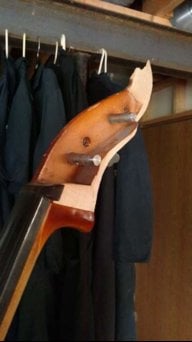
I see a little bit of Kevin Spacey in that doll. (OK, pun intendedNot being political but doesn’t this 50 year old doll look a little like Joe Biden?
View attachment 4665818
 )
)
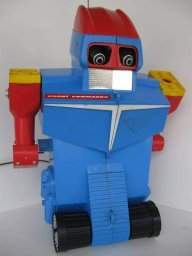
As it turns out, also some


Ok Rich what the heck is that thing!?!
Ok Rich what the heck is that thing!?!
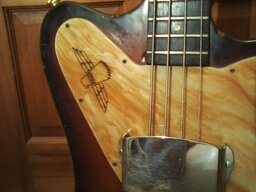
Sinus Transillumination
Transillumination is a diagnostic technique in which a bright light is projected toward or through the area to be examined. The technique was first described for the diagnosis of sinus disease in 1888. As better diagnostic lighting was developed, the use of paranasal sinus transillumination increased. In the early 1900s, the testing equipment had improved enough to allow for a comparison of the translucency of both sides of the face and underlying sinuses. At that time, transillumination had its proponents and opponents; some of the latter consider it to be unreliable. Even as radiographic imaging improved in the early twentieth century, transillumination still remained useful to the family practitioner because it was simple, inexpensive, easy to perform, and painless. Indeed, newer and more technically advanced methods of transillumination were developed, one of which was the “transilluminator”.
During the first half of the twentieth century, radiography, transillumination, and the clinical examination were all helpful in diagnosing sinus disease. During the second half of the twentieth century, newer A and more advanced radiologic techniques such as computed tomography and magnetic resonance imaging diminished the role for transillumination in the diagnosis of sinus disease. However, in recent years, a new use has been found for it in sinus surgical procedures involving balloon dilation. In these procedures, transillumination is used to identify a sinus and to confirm that the balloon has entered the sinus correctly. In fact, transillumination has replaced the need for fluoroscopy during balloon sinuplasty. The old technique has found a new usefulness in the treatment of sinus disorders.
Sinus Transillumination
Transillumination is a diagnostic technique in which a bright light is projected toward or through the area to be examined. The technique was first described for the diagnosis of sinus disease in 1888. As better diagnostic lighting was developed, the use of paranasal sinus transillumination increased. In the early 1900s, the testing equipment had improved enough to allow for a comparison of the translucency of both sides of the face and underlying sinuses. At that time, transillumination had its proponents and opponents; some of the latter consider it to be unreliable. Even as radiographic imaging improved in the early twentieth century, transillumination still remained useful to the family practitioner because it was simple, inexpensive, easy to perform, and painless. Indeed, newer and more technically advanced methods of transillumination were developed, one of which was the “transilluminator”.
During the first half of the twentieth century, radiography, transillumination, and the clinical examination were all helpful in diagnosing sinus disease. During the second half of the twentieth century, newer A and more advanced radiologic techniques such as computed tomography and magnetic resonance imaging diminished the role for transillumination in the diagnosis of sinus disease. However, in recent years, a new use has been found for it in sinus surgical procedures involving balloon dilation. In these procedures, transillumination is used to identify a sinus and to confirm that the balloon has entered the sinus correctly. In fact, transillumination has replaced the need for fluoroscopy during balloon sinuplasty. The old technique has found a new usefulness in the treatment of sinus disorders.
Very Illuminating…Thx!
That's for sure!Common sense

Very Illuminating…Thx!
I knew someone would make light of this.....


I remembered these ads so much. Usually on the last page of some extra in my newspaper. (Parade Magazine,etc)