• TalkBass has been independent since 1998. Add your voice.
    Create a free account to reply to discussions, view embedded media, and browse with fewer display ads.
    Join freeLog in
    Want zero display ads or expanded classifieds tools? Compare plans.

Think Bag End subs can keep up with Meyer tops?

I currently run a pair of Bag End D18E with up to 8 Yamaha 115 Club tops for a very functional point source rig (if not slightly off-putting due to the "rat fur" covering) for mostly outdoor festival gigs. I currently have the Elf processor, but an Infra MXB is en route to me for tryout next week (it's a balanced version which supposedly adds some extra oomph over the older Elf model). They sit exactly where I want them to with the tops I currently use, and I even end up turning down 1000 watt amps (one each) while running the tops at about 3000 watts total.

So, despite the lukewarm reception they get, I know they can move some air.

Last year, I started upgrading my monitors from Yamaha to Renkus Heinz. The Yamahas were and are good, but the RH are a bit better (marginally, but noticably). This has me wanting to move up to a name brand that's at least a little more rider friendly (Yamaha Clubs are actually very good boxes, but people tend to judge 2-way carpet covered cabinets in a negative light even if you can make them sound great).

Partly out of a sense of nostalgia, I scoured eBay for some Meyer MSL3, and found a guy letting 8 go for less than we're scheduled to bring in this festival season. My favorite local venue after I got my own place used 8 of these as FOH, 4 as side fills, and 2 as Drum monitors. Maybe they actually sounded killer (as I remember it), maybe my fondness of them comes from the shows I saw there, maybe it's a physiological affinity to louder being better (they are UNGODLY LOUD!!!!), but I remember these being the bee knees and am very interested in selling off the Yamahas and grabbing these guys up.

A technical benefit of these is that they run very high SPL on only 400 watts per box, so I already have plenty of amp to drive them. Since I don't always get a lot of electrical service at many gigs, a very efficient system in which I can run the amps at low power and still get plenty of volume and throw could help the shows run more smoothly. 2 of these could replace all 8 Yamahas, and all of them together could quadruple the size of the shows I currently work.

A downside is that they are heavy, massive, use older Cannon style connectors (will have to custom-build cables), require an external processor I'll have to hunt down to run at their full potential, and still leave me as a point-source guy in a world quick to choose the line array guy (even when a line array isn't necessarily the best PA option for the gig).

What I also worry about is whether Bag End D18E subs can keep up with with these tops which remind one of a jet engine, both in looks and loudness potential. I'm thinking 1 sub per 2 tops should suffice, and I would only need 2 more Bag Ends, but I might need to go 1 to one with exotic tops like these.

Has anyone here used both? Do you think they could work well together?
 
I'm going to not a chance.

You can change the EP connectors with Neutrik the MPR series, they made to fit in place the EP connectors.
The Meyer's are bi amped so once you find the processor you will need to re configure your amp racks.

With that old of a used speaker it's anyone's guess if the drivers are still in good condition or have been replaced by who knows what.

Here's some info http://www.walkersound.co.uk/PDF/MSL-3_oi.pdf
 
Infra subs work primarily below resonance where sensitivity drops off at a rate 12dB per octave. To get flat response, the processor introduces a boost of 12dB per octave. Because of this, the amount of SPL they can produce at lower frequencies is extremely limited.

Sensitivity of one S18 is 96dB 1W/1m at 80hz. Assuming resonance is at 80hz: At 40hz the sensitivity would be around 96-12 = 84dB 1W/1m. At 20hz the sensitivity would be around 96-24 = 72dB 1W/1m

Power handling is listed as 400W AES continuous and 800W Program. If you are curious, the decibel change from 1-400W is 26dB and the decibel change from 1-800W is 29dB.

Calculated SPL (sensitivity + decibel change):
80hz 400W = 96 + 26 = 122dB
80hz 800W = 96 + 29 = 125dB
This is not a lot of headroom at 80hz, but it is certainly usable.

40hz at 400W = 84 + 26 = 110dB
40hz at 800W = 84 + 29 = 113dB
Output at 40hz is pretty marginal.

20hz at 400W = 72 + 26 = 98dB
20hz at 800W = 72 + 29 = 101dB
98dB at 20hz is pretty much useless for live music.

I used to run four S18 compact. I experimented and felt that running them lower than 40hz made them sound worse at max SPL. Not sure what the current term is, but the ELF 1 processor has a variable HPF called concealment. When the cabs are pushed to max SPL and the lows are allowed to run below 40hz, the concealment becomes audible.

From the S18E spec sheet (I.E official Bag End numbers).
upload_2024-3-1_19-57-9.png


If you run a pair tight packed, you get +6dB from mutual coupling.

The would put the SPL at
10hz = 95dB
20hz = 107dB
40hz = 119dB
80hz = 130dB

I believe these figures are based on the 800W program power rating...so they are a bit optimistic.

While I would run an 800W amp for each S18, I would adjust the processor to limit the amps to 400W.
 
  • Like
Reactions: agedhorse
Meyer MSL3 Specs:
Frequency Response 75-20,000 Hz +1- 4dB
Maximum SPL with Amplifier rated at 400W/4 ohms/ch.: 130 dB continuous, 135 Peak
HF Distribution Pattern: Horizontal 70 degrees, Vertical 60 degrees

As a minimum I want to the subs to be able to produce at least as much SPL as the mains...Ideally the subs would be capable of 3-6dB more.

Lets go with 130dB and see how many S18s are required to produce this SPL at 40hz.

Per Band End a single S18 will do 113dB at 40hz but I believe this is based on the 800W program power rating. I would back the limiter down to 400W, which would drop the SPL by 3dB to 110dB.

We assume you get +6dB for each doubling of cabs. This is optimistic and I believe it gets progressively more optimistic with more doublings. But lets use this figure.

1 S18 = 110dB
2 S18 = 116dB
4 S18 = 122dB
8 S18 = 128dB
16 S18 = 134dB

I believe we could figure out the exact number of cabs.

We need a 130-110 = 20dB change

So we need to solve for [Log(X) x 20] = 20

Log(X) = 20/20

Converting to exponential form

10^(20/20) = 10

Proof
[Log(10) x 20] = 20dB

So if I did this right, you would need 10 S18s for 130dB at 40hz.
 
@Wasnex

I appreciate you working that out!

I'm counting on 2 things to work in my favor: 1) I currently have a pair of the D18 (dual 18 cabs) which from Bag End's spec sheet are rated to 124dB at 40Hz on 800W program; and 2) by switching the Elf for the Infra MXB (FedEx is delivering this later today), I should get a processor which pushes the front end of the amp harder due to being balanced (I'm not expecting this to be a huge difference, although anecdotal evidence on prosoundweb from a guy running Quartz subs says he went from literally thinking his cabs weren't running on all drivers to worrying about the structural integrity of the building--I'm sure there's exaggeration there for effect).

While I haven't done logarithms since sophomore year of undergrad, doing the ROT math of doubling cabs = 3dB increase, 2 of my cabs should produce 127dB and 4 should approach 130dB at 40Hz, but it would require 8 to hit 133dB. I may be off the mark here, but hopefully I'm close.

While a large splay of MSL could still run away from that, but the promoters who hire me would fire me on the spot if I ever ran FOH that loud! In reality, I tend to run between 93dB-100dB at the crowd front, as that tends to be what people find enjoyable. My reason for getting a Meyer rig would be more to open up new opportunities with shows that have picky tech riders than to make people's ears ring for a day or two after leaving the show. I would also gain the benefit of the amount of throw the MSL line in particular has, which could lead to getting hired for larger venues and events.
 
  • Like
Reactions: Wasnex
AP1GczMdHYkcsUucibEvnTss-09FgoxdRxh4bx_KgxYxmTHLvkYGLuk3f40W-pW08mUKhNBLxZCR5u5Ku3IvXsoaZpAwkBI4SxLoRdjkr5nWSEqX_Ata4H3zIL-Pc_I98wv3wjTGmJK6gv8l_CwMtuvi5ekUzuKekCYJkAZUlXEwgfjKv-w0rv3zgQueGHvSeZJ0__BG71wqFcX9FteGM8Vj5b9Bv_3vk---ENlDvQO12c-wjQ03w6bkojaMu2cMqGkezpOH6yX-NKFrmXpRTEEnyVa7TdPxgkmhVIfLdc_uRKsWy-Dq4MQaDiHVZeCk1tNXqMsrGhLbyI73f8789dcMtc5eL50Yw4iVeZsLPFl-sv32xmx6vPaLCzVgqjzhILO09xGWbyqdpCE6Vna4PaRq2n9wesin-vZhgywXevHZ-Scjv6WBZNXoA7i06pin6gYGL69Jywn7oSA60ucqPo2O2qXvZ6VpBMAbc2LkSIxLsS_v5eafk0MUcx8DHxyEZGeHMsoJAopfDm7RO5KSSvjifLqaf0wIccLZtrn5hAElTlk6Ys90RGDjK-_EYk5vrO1VEVefxrn7PC4bUCNl8EqahdbNmNhGCjP__F3UZOk3eL09eP1oIfZLD8IETttZuJpu7_58dF_xJtYtEXf6wE1B7a4OzsKTI48kRYxEEjlvJRc5gcMXqpebcHjV8WtyWZJH2sA_QbZeDyH8IwB6SgQaoWRPZAgZFHYl6m3cArEOnxmgJlkr_RMDyQVdKqejoLIklGK_nnsaLi3_A8VdCfxcrUjQykDrBvtf8VUMPzR4SLSDtg8mjA3_1Grq0__DBYKKdEr-Eby_YNOeH7p-myS0wp-xFVUtL3ztPvT1D23EzsctD9LjyVsAx1wUYKuA8IHnVPoJhi1pLZRMMws7Ig4APIrqajQ=w1192-h1590-s-no


AP1GczMTBFRvBAHpGslwczVHIeI5jfb4mzreFu1-KXeOt3QNPHjFWrZ3grKMIzfCuA2N_C71CPqhrqEwjrFooeZlBtDyW1rxSj_8onG-tFhI5qMJ3cMxNg-F24v0fWc_Z-zJQS4QeSIHCPUa6e5G-DOPA4nLXTJNl815MvMKp-mPn9LPe8khEWCPKBnjeobfTgKuQfQDMPq-dlfNnttszke0rL9JHZUnaKqIPJCL13y4HOxoPF-ZGSnRzX_DQRP-MOsqrokDL5hGyaYtwdmWQdxPITTfnNWNt4NZCWqaydxpKcELGJjG9rmAFsS00xorAK2xyuzy3e30wtkozmMLaiLBOmyl1oY_9mz28N6K-Z7tbHGOC2DU-FY3JlyCG6qOPWbJ2xAQnihp4CK32NUl6ORkRGiMMWCqBbgZg0ucMFT29j0avQL0CB5v-1_3Y7vT9zzzKHiM5Wa3vPxPkEZl076FbLqwOe2e-EDkuhMf0CvcOkFVlZHTL-HJTOQPQy1GKS8frpAygj8kUisBeIY_xFWH3WBageryRut5-qz_DVf45HoW6vhzozXtZErZx23TM48ripnO_MZvD9XYqubKpBiNB8cs_LpYnt365ojxGywnVxx7v8pwun3vt10FzCZ6jyxaVmbqnDeNHxHtnAPg6T3FnJx0JijBKLrjzkc1hmFrMF8dkf9s7AiXKIDNOPKX0qIIr_QxHNTP3zzeDAOAERTUIfg0hSb_Cp2i7uWoGJE-M4w61kHXnnxtXSWX6WyUGHHj2x_js-hpF2JAj4h64Q2nL60GxieEDFXVcZIIHYQ3qhGhLAy-QSVW4oOKCwJ2gJaqKZHf2fTQBNu3Jb9bFC9FtLS_1-nbeZRylPKSHk2Q7y8RPFKotqSgaHMREtcLIDDL9eNS-7ckMRK0I9fjiC0wpv0nkgE=w1192-h1590-s-no

AP1GczOgZdXBUOwKZHaeJOu4PH6e9wirqVbIw2wYx4W-AN6-Njox6JrTaKRsG6sexYIMDLKiDQodP1-7_jXO3So1yaxasbvQD8K6AqZP_KXFxYCpIZgo56z5-UXvHfBJszQ-BM81zW4557-XG5tJzO4BsvRyG3PaJty5x8Yk0Is25xfmGysm0jlUzSDxn1xh8zbGQObbnC5X5ka0sHXqUKGcfcdDFmEKIvODNAogQaPdLyTX3RVcA-_cT3l_aF8CwJt0uefzSB3JLkmjP3V0Z4AZU0UHRivcAFvzvy7U16hyfhi0LfPTW3AIAYCiLuoXa07FnDNsSUESryzK29Hk_iHRX8xl14mHOCBlNqaab0yfeYRwLhTO3yCvsiow6sp5A4eYpWNnuSMRe4Z0BG5ojpvs-LnrkEYqqEJXb5vPQevXLue-dYR-YsQo5maNGdwwFBFZUT73Zf9MOS4_0cwCfSE344YczreDUTOHr6rpT5mAa8oKpczzbepYXSKUp_mS1NJzQzmumg08sXsDZDr_TNFQI6JLlgTuh_qP0mJ3qFoXCPnr_EachUGttiTOzwqFN3p_Phvu7zNxtWVPlFjN3XQTAbAdpFv-V9UEGQ9HoyNwKROyxjLykVPYikDPbiogbikDCWtxiVrUOwaOxg6n9rrvupoTC0uC6qzgrd7XwpCbM4ScfoKDkYioMYO1sN_OmDS3H0jmEnr7TpktFhhb2wao_ZDOV58sO_Yhp6uXQ1TQ3az55yn1V2GOAh-0J9sI0jOkl2kAbePJRFsrWLDQELMgNqfVZeZ0xZJ5AmYQKoMLOGTdexOGBPDmhcBieYjoJhfOlcFtAU154dULfBYpdsUigsxHc9D4EWVIOlpJ6SfJ-_PukNBVa8wto-KLTGCd4UOvWvSkJioOOuBFL6RSLnNGkL3eh1s=w2120-h1590-s-no


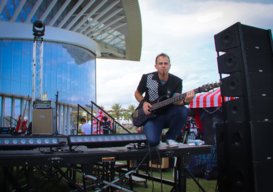
How I currently use what I got. Serves me well, but kind of limits me to local events where I may work 17 hours straight (setup, striking, packout) for a promoter who can realistically only afford a few hundred dollars. I'm definitely hoping to move up a level.

As for getting MSL3s at 240+lbs high enough for crowd coverage, scaffolding would be my preferred option as it's lightweight, fairly easy to move, and doesn't take up a lot of storage space when broken down.
 
Last edited:
  • Like
Reactions: staurosjohn
That's what I was talking about !!

Not sure I would supply PA and work for 17 hours for a few hundred dollars!

Yeah! We've proven we can do it (to include being the only stage to run on schedule at more than one of these events) and met some awesome bands to work with. A university with some money to spend is all to happy to pay us line item prevailing rates, and another insurance company who hosts city events and has hired us in the past has some DEEEEEEP pockets and has been unsatisfied with the guy he hired after I moved an hour away (which I'm still willing to drive). These two together could have us paying cash for Meyer FOH by the end of the year, which opens doors in this business.

We did what we had to do starting out, but I think we're at a point where we don't have to take lowball gigs anymore. Unfortunately, the step up to that next level has some cork-sniffers who look down on carpet covered 2 way boxes even if you have them dialed in just right and bring enough rig for the gig.
 
doing the ROT math of doubling cabs = 3dB increase


Doubling cabs increases sensitivity by +3db and also doubles the power handling. If you double the power you get a second +3db for +6dB total. If the power is held constant you only get +3dB.

The D18 spec sheet shows
upload_2024-3-2_10-40-31.png


The first thing to note is the sensitivity is expressed at 2.83V. Since the D18 is a 4 ohm cab, this is 100dB at 2W/1m. Subtracting 3dB gives you 97dB 1W/1m (80hz).

Per the specs, sensitivity only drops by 6dB at 40hz. So Sensitivity at 40hz = 91dB 1W/1m.

As before, the 124dB at 40hz is based on 1600W program. Again, I would limit the amps to the AES continuous rating for the cab (800W), resulting 121dB continuous

If you want 130dB you need 130 - 121 = +9dB

How many cabs for +9

[Log(X) x 20] = 9

Log(X) = 9/20

10^(9/10) = X
X = ~2.82 cabs

Proof [Log(2.82) x 20] = ~9dB

Since we are dealing with complete cabs, round it up to 3 cabs

Of course if you don't plan to push the MSL3s to the limit, you can use less subs.

Sound drops off at 6dB for each doubling of distance.

If one D18 can make 121dB at 1M

You get the following
2M = 115dB
4M = 109dB
8M = 103dB
16M = 97dB

You can calculate the decibel change using.
Decibel change = [Log(R1/R2) x 20]

Where:
R1 = 1m
R2 = 16m​

Decibel Change = [Log(1/16) x 20] = ~-24dB

Subtracting the decibel change over 16m from the SPL at 1m

121 - 24 = 97dB (same as above)
 
Last edited:
  • Like
Reactions: dBChad
switching the Elf for the Infra MXB

If the old processor is setup properly and can drive the amps to the required output voltage, the volume will not change. The limiting factor is the power handling of the D18.

Voltage for 800W at 4 ohms
V = sq rt(800 * 4) = 56.57VRMS​
Voltage for 1600W at 4 ohms
V = sq rt(1600 * 4) = 80VRMS
It's likely the minimum impedance will be less than the nominal rating, but I don't see the value on the spec sheet. You could estimate -20% for Zmin (use 3.2 ohms)

Voltage for 800W at 3.2 ohms
V = sq rt(800 * 3.2) = 51VRMS​
Voltage for 1600W at 3.2 ohms
V = sq rt(1600 * 3.2) = 71.55VRMS​