Hi all
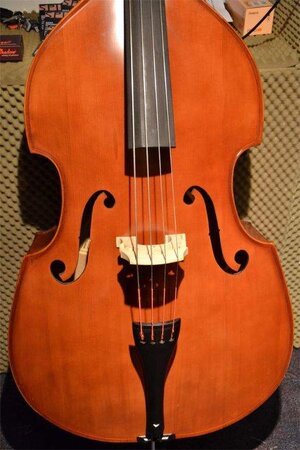
I bought my first DB about 2yrs ago and started up with DB lessons, recording, practice (and reading here ) and so on. I wanted to pratice more at home so, for a while, I've been searching for a second DB. Some weeks ago I spotted a Strunal on the internet and went for a check. It was a Strunal 535 3/4 and everthing seemed fine... the only thing I didnt like were the strings. Anyway I bought it all the same. The previous owner bought it new, kept it for about 2 yrs and almost never used it.. so it looked really quite new and sounded "new" too.
I ordered a set of Spiros and a shadow 950 like I had on my old DB. I then changed the strings one after the other and really saw to it that the tension was maintained. Anyway everything went well and I tightend the strings.. to half... waited a half day... then to full. Shortly afterwards I tuned the bass and started playing and enjoying the new spiros and sound... it just didnt last long...
About after some 3 mins of playing the whole tension was gone and I see the tailpiece flying up towards my head :-(. At least it didnt reach into my face and I didnt drop the bass. The tailgut tore (see the pic). Luckily I only had a few dents on the top after this happened.
Have any of you had this before? At least the soundpost didnt fall down (that was the first thing I checked). I had some stranded steel so I "repaired" it temporarily and its up and running again and sounds really quite good.
...but I'd like a permanent solution "down there".
I read about tailpeices and tailguts here and on the internet but I'd like to hear your views on this topic..
- Any suggestions for combinations of Tailpiece/Tailgut?
- I looked at the velvet Tailpiece but after this experience I'd rather have something metallic down there. Have any of you worked with the Velvet chord?
- If you use the Velvet chord (or any other Tailgut) are you supposed to change it after a periond of time?
- Does the Combination Tailpiece/Tailgut really make such a difference in sound?
- Any thoughts on Kevlar/Nylon/stainless steel in comparison to standed steel?
thanks for any answers
I bought my first DB about 2yrs ago and started up with DB lessons, recording, practice (and reading here
) and so on. I wanted to pratice more at home so, for a while, I've been searching for a second DB. Some weeks ago I spotted a Strunal on the internet and went for a check. It was a Strunal 535 3/4 and everthing seemed fine... the only thing I didnt like were the strings. Anyway I bought it all the same. The previous owner bought it new, kept it for about 2 yrs and almost never used it.. so it looked really quite new and sounded "new" too. I ordered a set of Spiros and a shadow 950 like I had on my old DB. I then changed the strings one after the other and really saw to it that the tension was maintained. Anyway everything went well and I tightend the strings.. to half... waited a half day... then to full. Shortly afterwards I tuned the bass and started playing and enjoying the new spiros and sound... it just didnt last long...
About after some 3 mins of playing the whole tension was gone and I see the tailpiece flying up towards my head :-(. At least it didnt reach into my face and I didnt drop the bass. The tailgut tore
(see the pic). Luckily I only had a few dents on the top after this happened.Have any of you had this before? At least the soundpost didnt fall down (that was the first thing I checked). I had some stranded steel so I "repaired" it temporarily and its up and running again and sounds really quite good.
...but I'd like a permanent solution "down there".
I read about tailpeices and tailguts here and on the internet but I'd like to hear your views on this topic..
- Any suggestions for combinations of Tailpiece/Tailgut?
- I looked at the velvet Tailpiece but after this experience I'd rather have something metallic down there. Have any of you worked with the Velvet chord?
- If you use the Velvet chord (or any other Tailgut) are you supposed to change it after a periond of time?
- Does the Combination Tailpiece/Tailgut really make such a difference in sound?
- Any thoughts on Kevlar/Nylon/stainless steel in comparison to standed steel?
thanks for any answers