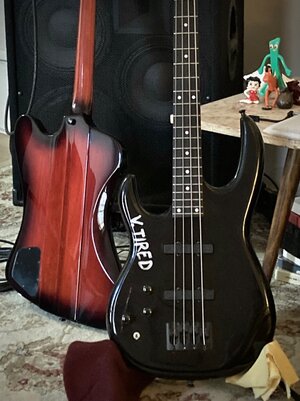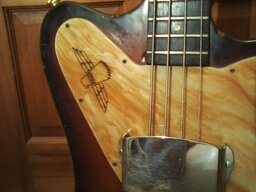
Right back atcha.Just wanted to wish everyone a happy, healthy Merry Christmas.
Or festivas, or what ever you’ll celebrate.
Much love to you all.

TalkBass has been independent since 1998. Add your voice.
Create a free account to reply to discussions, view embedded media, and browse with fewer display ads.
Join free Log in
Want zero display ads or expanded classifieds tools? Compare plans.
Right back atcha.Just wanted to wish everyone a happy, healthy Merry Christmas.
Or festivas, or what ever you’ll celebrate.
Much love to you all.
I just use whatever the factory put on the bass(es). I ain't gots the knowledge/ability/wherewithal to f---* with the 'innards'.First a little background and clarity so we’re all talking the same thing.
General reference, discussion, data and opinions on a “Blend Pot” are a mess because it’s more often than not mistakenly called that. In most cases when people talk Blend Pot pros and cons they are actually referring to what is technically a “Pan Pot”. It’s the potentiometer that is commonly used in guitar and bass applications and is a dual gang stacked pot layout with a single shaft and center detent.
A Pan Pot (commonly called a Blend Pot) at center detent is in effect 50% volume level from each pickup. Basically the same as setting each of your traditional layout Volume Volume knobs at 5 (unless yours go to 11, in which case it’s 5.5). As you turn from center detent to either extreme the volume of the pickup you’re favoring increases and the volume of the other pickup decreases. The net effect is a noticeable volume drop (and in some cases a slight dulling of the tone due to resistance loading) at center detent. To picky players that’s a real issue, to on stage performers the negative impact is offset by the ease in use of only having to adjust one volume knob on the fly on stage. Of course a volume pedal or master volume would do the same thing.
There is such a thing as a TRUE Blend Pot that operates completely different and is well worth having if you can find one that will work with your bass. It’s quite different, with the center detent actually being 100% volume level from each pickup. Like setting each of your traditional Volume Volume knobs at 10 (or 11 if you’re a Spinal Tap guy). The obvious advantage is zero volume drop and minimal loading at center detent, and in effect it sounds exactly how you would expect a Volume Volume layout to sound as the two pickups interact at various volume settings relative to each other.
The catch - good luck finding a True Blend Pot. Fender has them but most if not all are made for plate or pickguard mounting, so the shaft may not be long enough for a through body installation. Someone in the club here did go on a quest about a year ago to find a true blend pot for their Tbird application, I think it might have been @Thumper but I’m not positive, and I don’t recall if he actually found one or ended up with something else.
To confuse the issue further - Fender does make a True Blend Pot, but because everyone else makes a Pan Pot and calls it a Blend Pot Fender decided to start calling theirs a Pan Pot in some cases. Again, good luck finding a true blend pot, it’s a mess out there.

First, Merry Christmas ya'll! Secondly, George, it wasn't me. I'm very much in the VVT camp, all of my builds have been set up this way, and also with a series/parallel switch (which I almost never use). Where you really helped me was with VTVT on the Thunderbird using 2015 PUPs.First a little background and clarity so we’re all talking the same thing.
General reference, discussion, data and opinions on a “Blend Pot” are a mess because it’s more often than not mistakenly called that. In most cases when people talk Blend Pot pros and cons they are actually referring to what is technically a “Pan Pot”. It’s the potentiometer that is commonly used in guitar and bass applications and is a dual gang stacked pot layout with a single shaft and center detent.
A Pan Pot (commonly called a Blend Pot) at center detent is in effect 50% volume level from each pickup. Basically the same as setting each of your traditional layout Volume Volume knobs at 5 (unless yours go to 11, in which case it’s 5.5
There is such a thing as a TRUE Blend Pot that operates completely different and is well worth having if you can find one that will work with your bass. It’s quite different, with the center detent actually being 100% volume level from each pickup. Like setting each of your traditional Volume Volume knobs at 10 (or 11 if you’re a Spinal Tap guy). The obvious advantage is zero volume drop and minimal loading at center detent, and in effect it sounds exactly how you would expect a Volume Volume layout to sound as the two pickups interact at various volume settings relative to each other.
The catch - good luck finding a True Blend Pot. Fender has them but most if not all are made for plate or pickguard mounting, so the shaft may not be long enough for a through body installation. Someone in the club here did go on a quest about a year ago to find a true blend pot for their Tbird application, I think it might have been @Thumper but I’m not positive, and I don’t recall if he actually found one or ended up with something else.
To confuse the issue further - Fender does make a True Blend Pot, but because everyone else makes a Pan Pot and calls it a Blend Pot Fender decided to start calling theirs a Pan Pot in some cases. Again, good luck finding a true blend pot, it’s a mess out there.

We know this guy!

Leave the bass giblets alone.I just use whatever the factory put on the bass(es). I ain't gots the knowledge/ability/wherewithal to f---* with the 'innards'.
*ool
Yep! I've opened up the cover and looked a few times. It's similar to opening the hood(bonnet?)on modern cars: nothing I know anything about.Leave the bass giblets alone.


On basses with 2 pu's and V-T-V-T, I install a 'kill switch' mini-toggle to save optimal settings between sets instead of turning two disparate V's off.Let us know if you hear a difference. IIRC you get a bit more loading on the pickups with a blend pot.
I've gotten used to VVT, but my preference is one Volume.

The ability to sight read would be good for most musical theatre material.One of my birthday presents from Sharon this year was the vinyl soundtracks to the Wicked movies. Last night I played through half of Wicked before quitting because my brain hurt. Numerous key changes, mode changes, tempo changes, you name it. Great practice material.
I agree that on a one pu bass V/T is all you need and I love that about the one pu basses I play. But the EMG set-up is pretty simple/logical for a two pu bass. They also recommend having the master volume last before the jack. (pu blend / B-T stack / master V / jack) Because my right hand is primarily near the bridge (my personal preference - I know most bass-players play near the neck) having the volume away from being nudged mid-song is also a good call. That regularly happens playing my '64 II live...Too much for this old fart to remember.
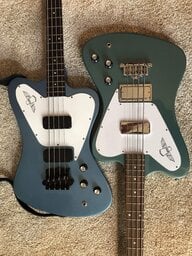
Back at Jeff!Just wanted to wish everyone a happy, healthy Merry Christmas.
Or festivas, or what ever you’ll celebrate.
Much love to you all.
Merry Christmas Thunp!First, Merry Christmas ya'll! Secondly, George, it wasn't me. I'm very much in the VVT camp, all of my builds have been set up this way, and also with a series/parallel switch (which I almost never use). Where you really helped me was with VTVT on the Thunderbird using 2015 PUPs.
Or Big Band, concert band, backing up shows(individual performers). We had to do that on our hotel gig in the early 80's. No rehearsal-15 minute talkover to do a 45 minute show. We did that 6 nights a week; different act every night.The ability to sight read would be good for most musical theatre material.
Since I use my IV as a II, and run the volume @ 10 (I don't go to 11), I just turn it all the way on or off as needed. Also I usually play-fingers-in between the handrest and the bridge cover, but sometimes near the base of the neck for mellow songs.I agree that on a one pu bass V/T is all you need and I love that about the one pu basses I play. But the EMG set-up is pretty simple/logical for a two pu bass. They also recommend having the master volume last before the jack. (pu blend / B-T stack / master V / jack) Because my right hand is primarily near the bridge (my personal preference - I know most bass-players play near the neck) having the volume away from being nudged mid-song is also a good call. That regularly happens playing my '64 II live...


Same. I just play around until I find what sounds best for each bass and leave it. I'm simple. When I got my Carvin from Greta, all the knobs were taped up so they couldn't move. She used that bass on tour with Moby. I get it.I just use whatever the factory put on the bass(es). I ain't gots the knowledge/ability/wherewithal to f---* with the 'innards'.
*ool

True but I’m working on matching what I can play to what I hear. There’s not a lot of low brass or strings in this case, so there’s lots of room but I absolutely have to get notes right.The ability to sight read would be good for most musical theatre material.

Neither do I, so my luthier gets all my nit pickiness requests.I just use whatever the factory put on the bass(es). I ain't gots the knowledge/ability/wherewithal to f---* with the 'innards'.
*ool

I’d forgotten about that bass!Same. I just play around until I find what sounds best for each bass and leave it. I'm simple. When I got my Carvin from Greta, all the knobs were taped up so they couldn't move. She used that bass on tour with Moby. I get it.
You have a local luthier?Neither do I, so my luthier gets all my nit pickiness requests.
And obliges me gracefully, even though we both know I’ve got some loose screws.
Sure do, the shop is about 5 minutes away from where I live.You have a local luthier?
I’d forgotten about that bass!